|
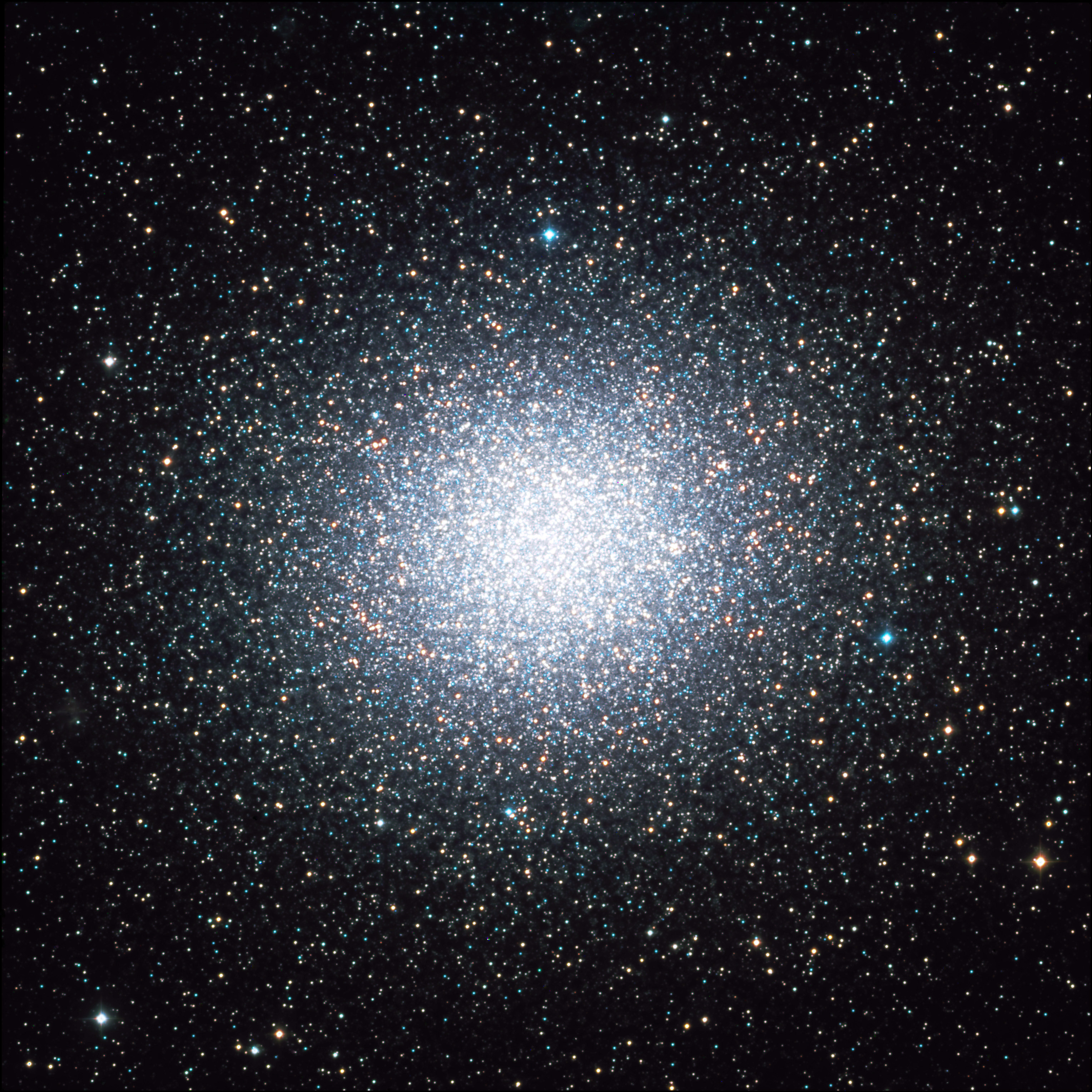
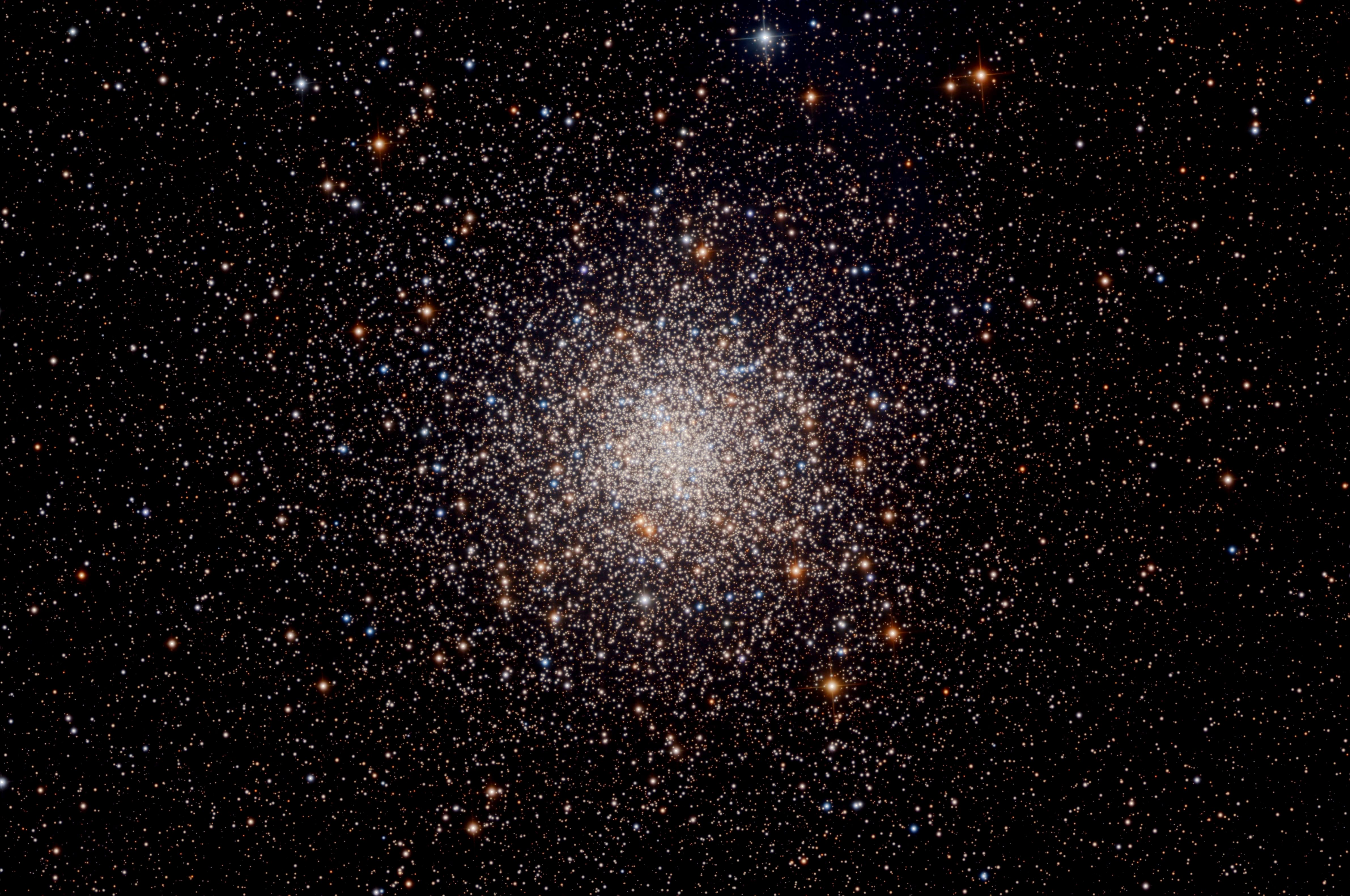
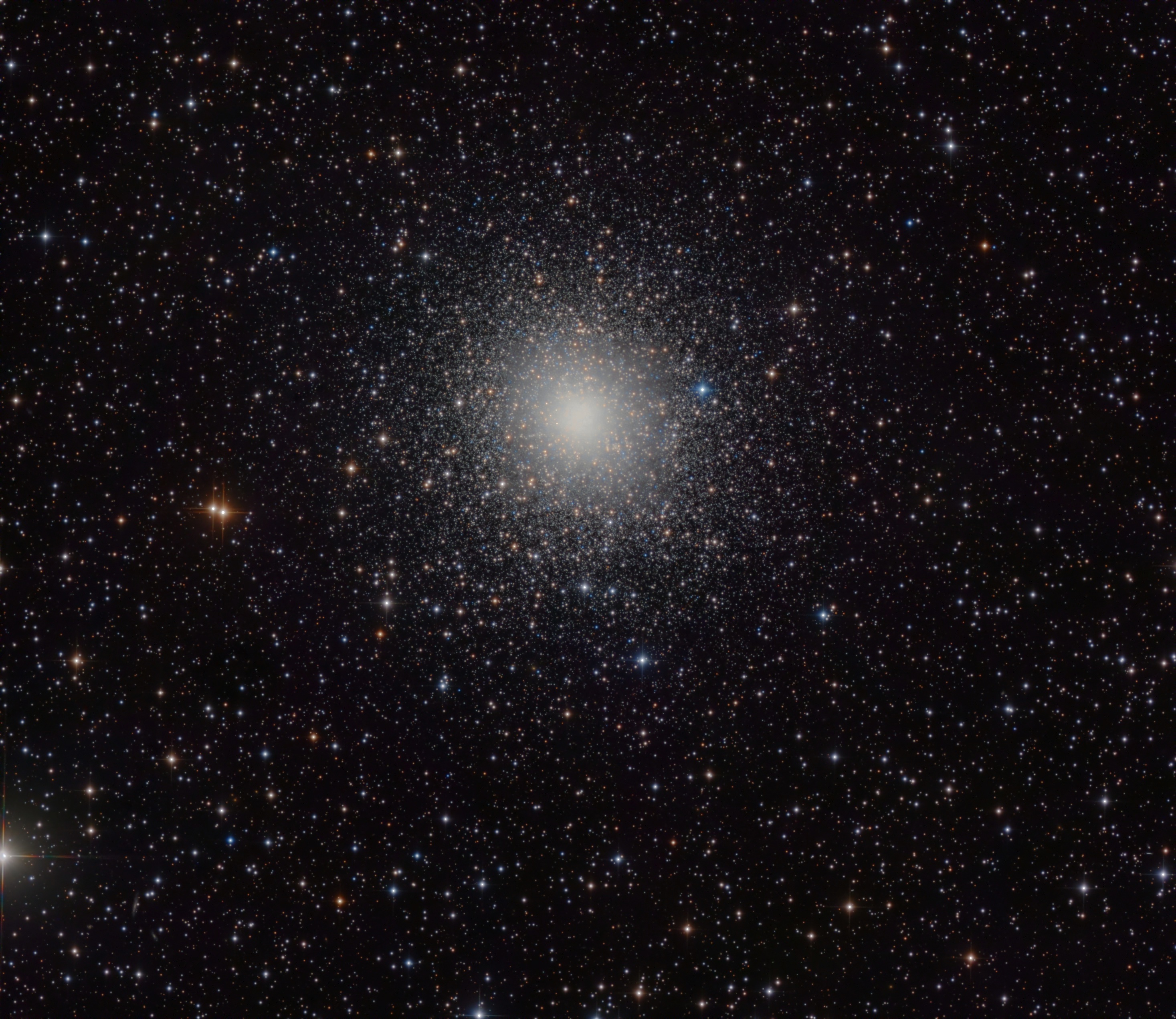
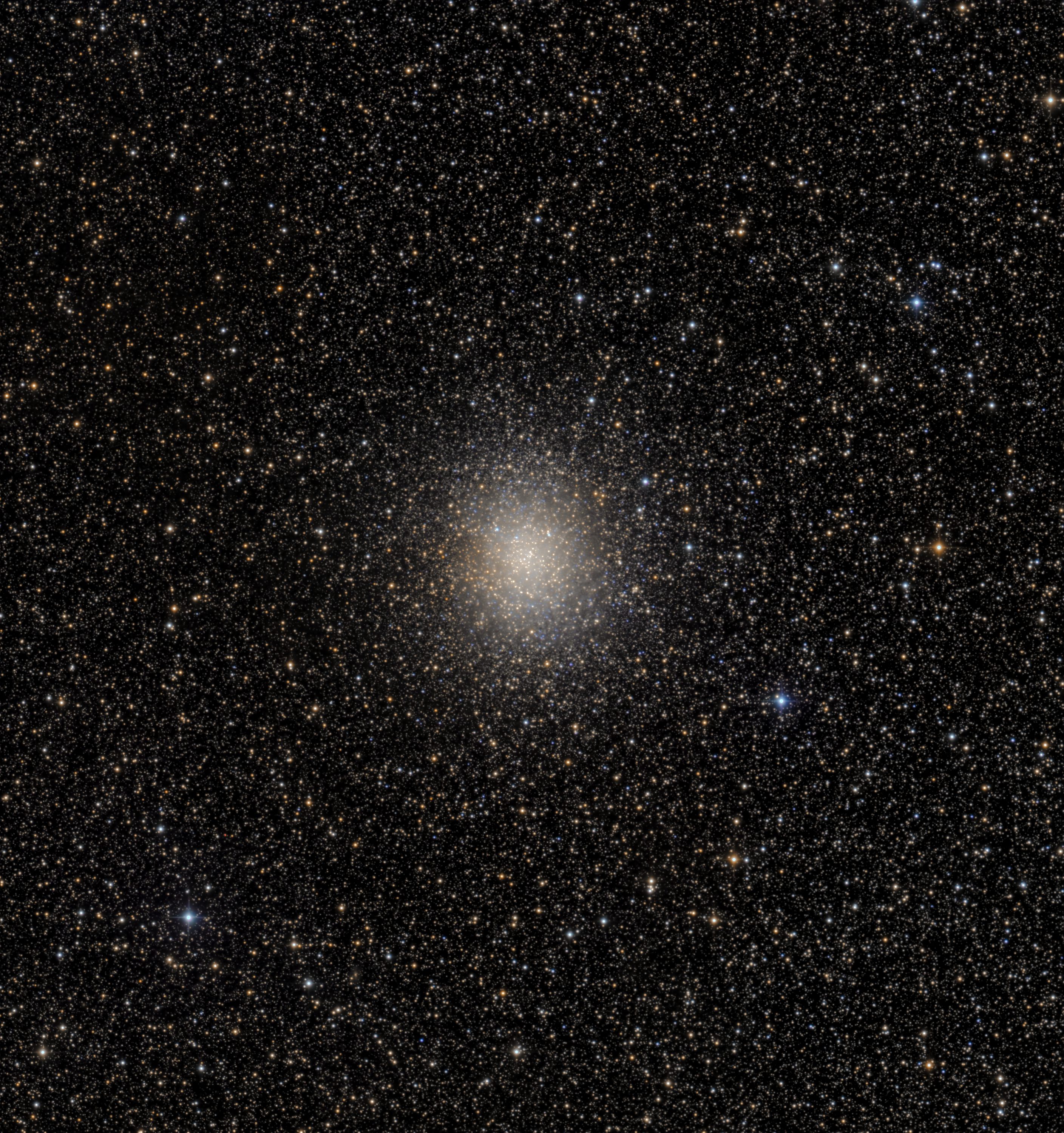
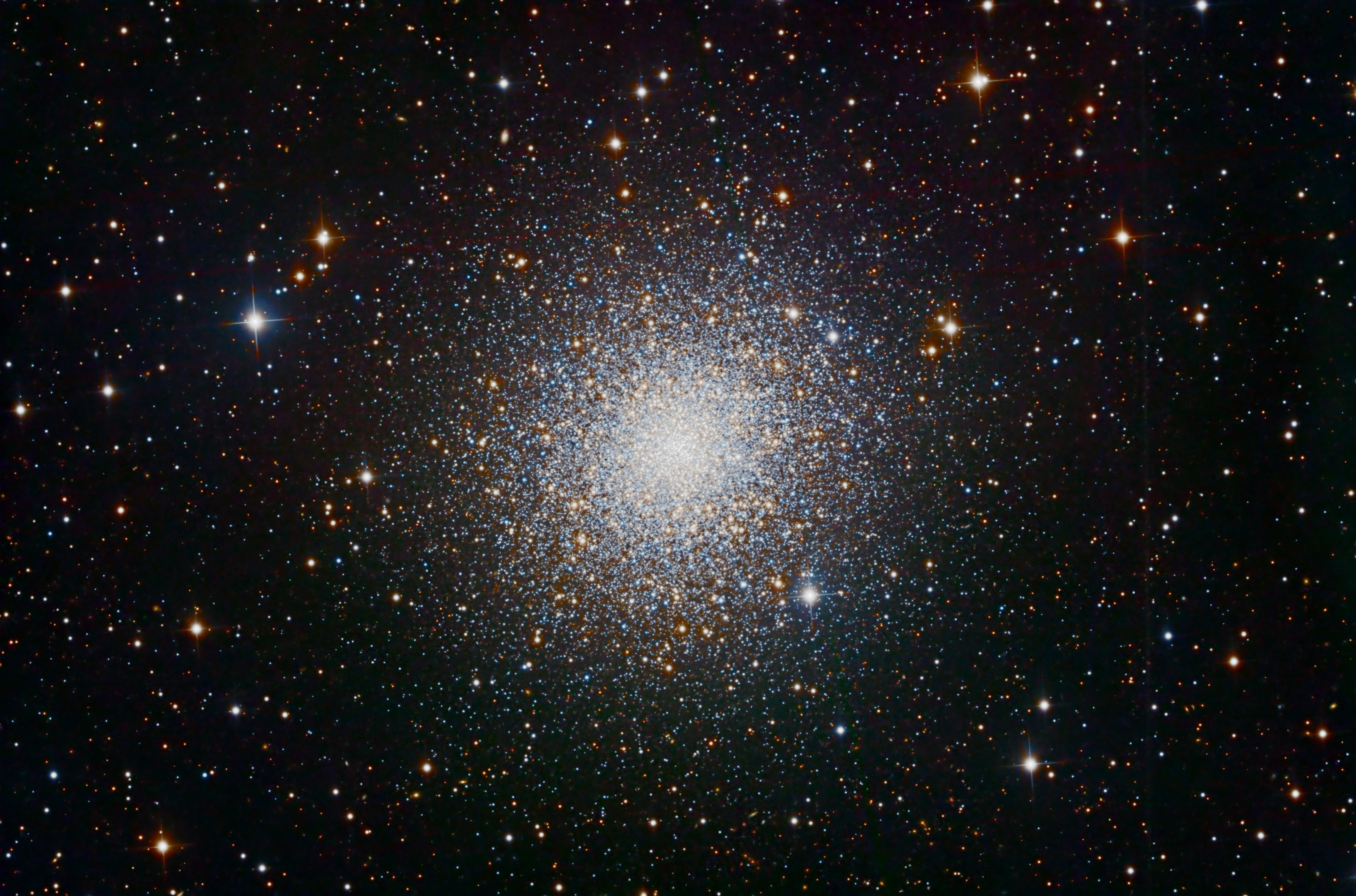
NGC 5139 - Omega Centauri
Omega Centauri was first cataloged by Ptolemy in Greece in 150 A.D. At a
distance of 16,000 light years and a diameter of 150 light years, it is
the most massive globular cluster in the Milky Way. It is estimated to
contain around 10 million stars and has a total mass of 4 million solar
masses. The stars in the core of Omega Centauri are so crowded that they
are estimated to average only 0.1 light years away from each other. It has
been speculated that Omega Centauri is the core of a dwarf galaxy that
was disrupted and absorbed by the Milky Way.
|
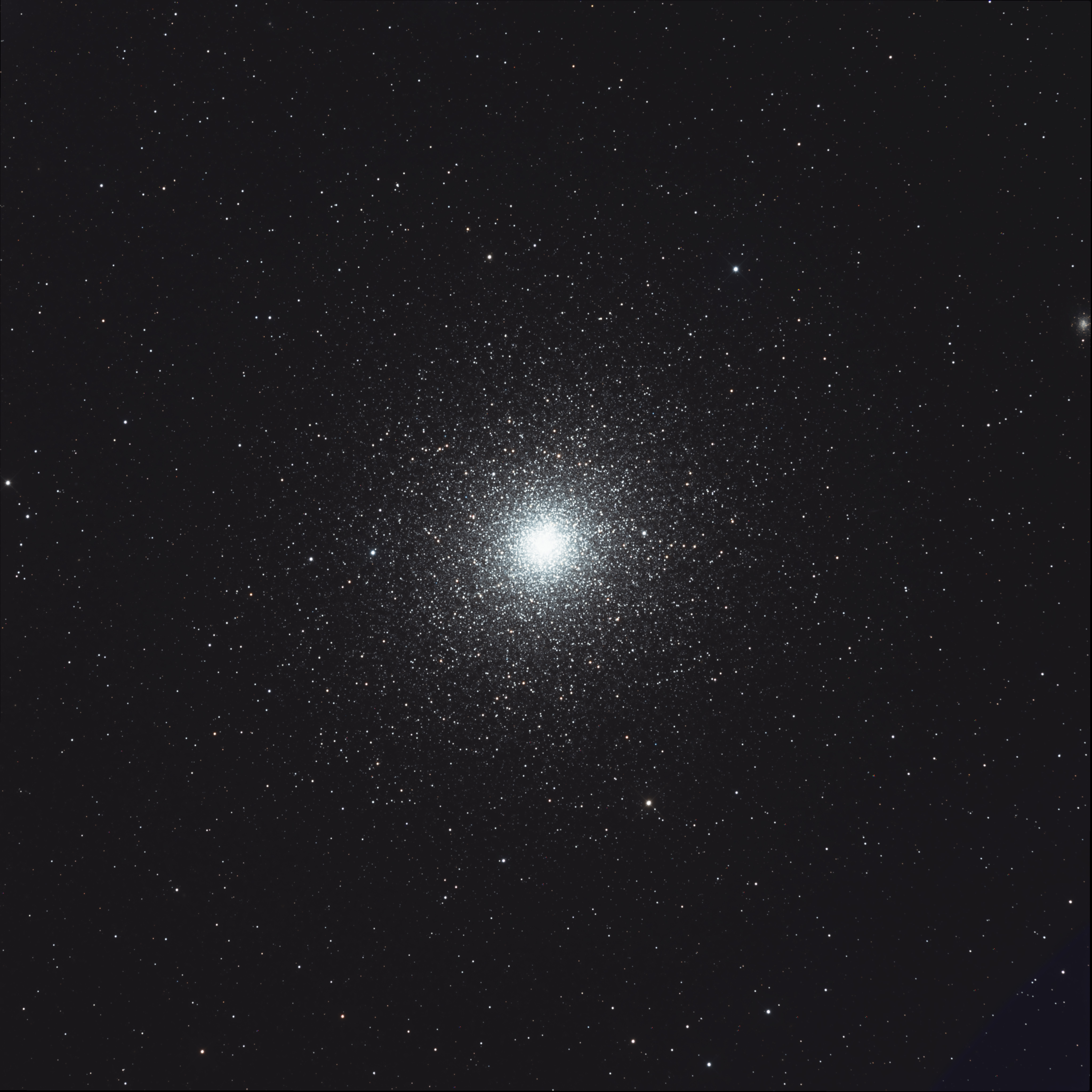
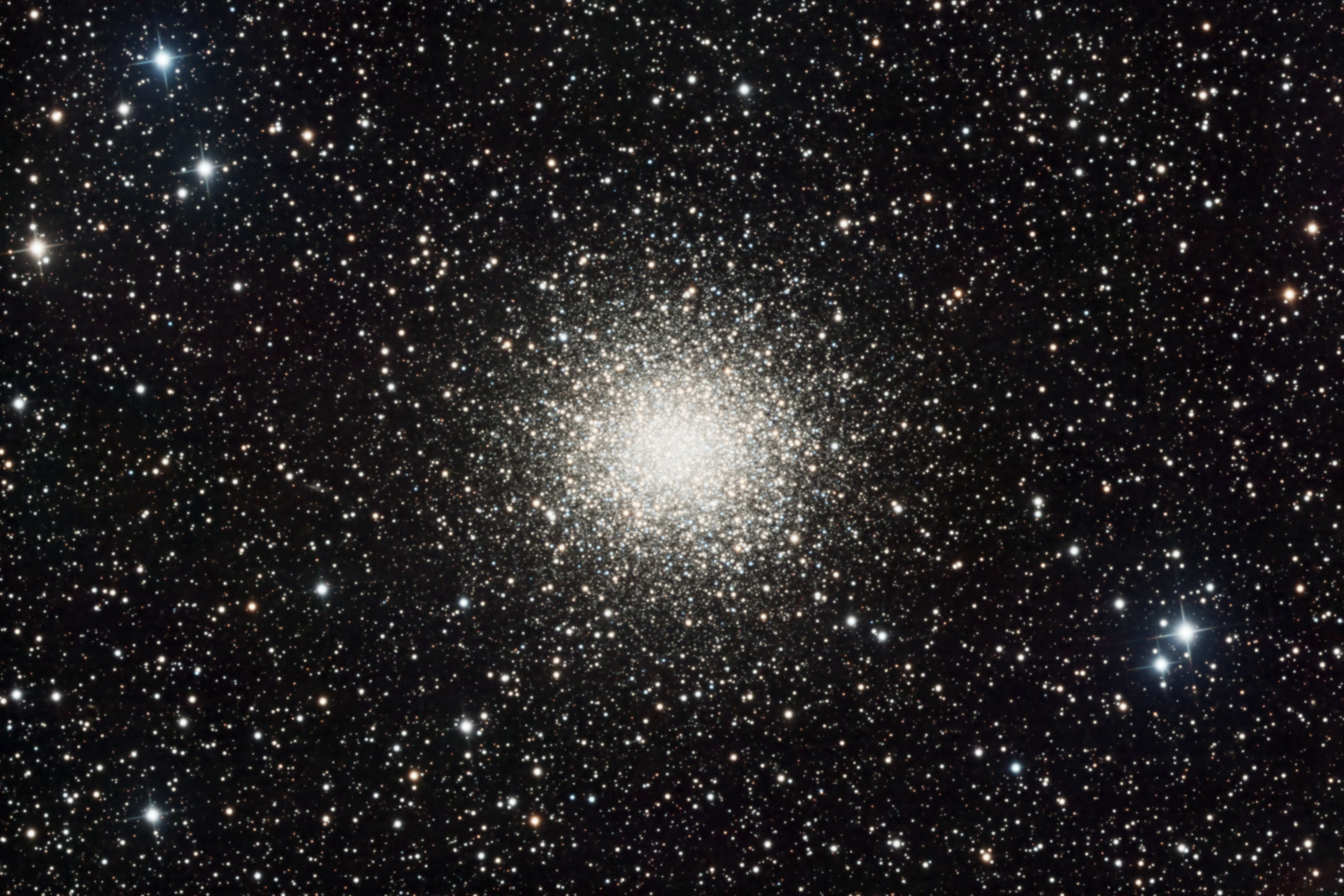
NGC 104
This globular cluster was first recorded in 1751–52 by Nicolas-Louis de Lacaille,
who initially thought it was the nucleus of a bright comet. In the constellation Tucana,
and lying 13,000 light-years away, NGC 104 (47 Tucanae) is the second brightest
globular cluster behind Omega Centauri. Current thinking is that this globular
cluster contains about 10,000 stars and may be around 13 billion years old, which
is unusually old. This cluster contains numerous x-ray sources and also has 25
known millisecond pulsars. In December 2008, Ragbir Bhathal of the University of
Western Sydney claimed the detection of a strong laser-like signal from the direction
of 47 Tucanae.
|
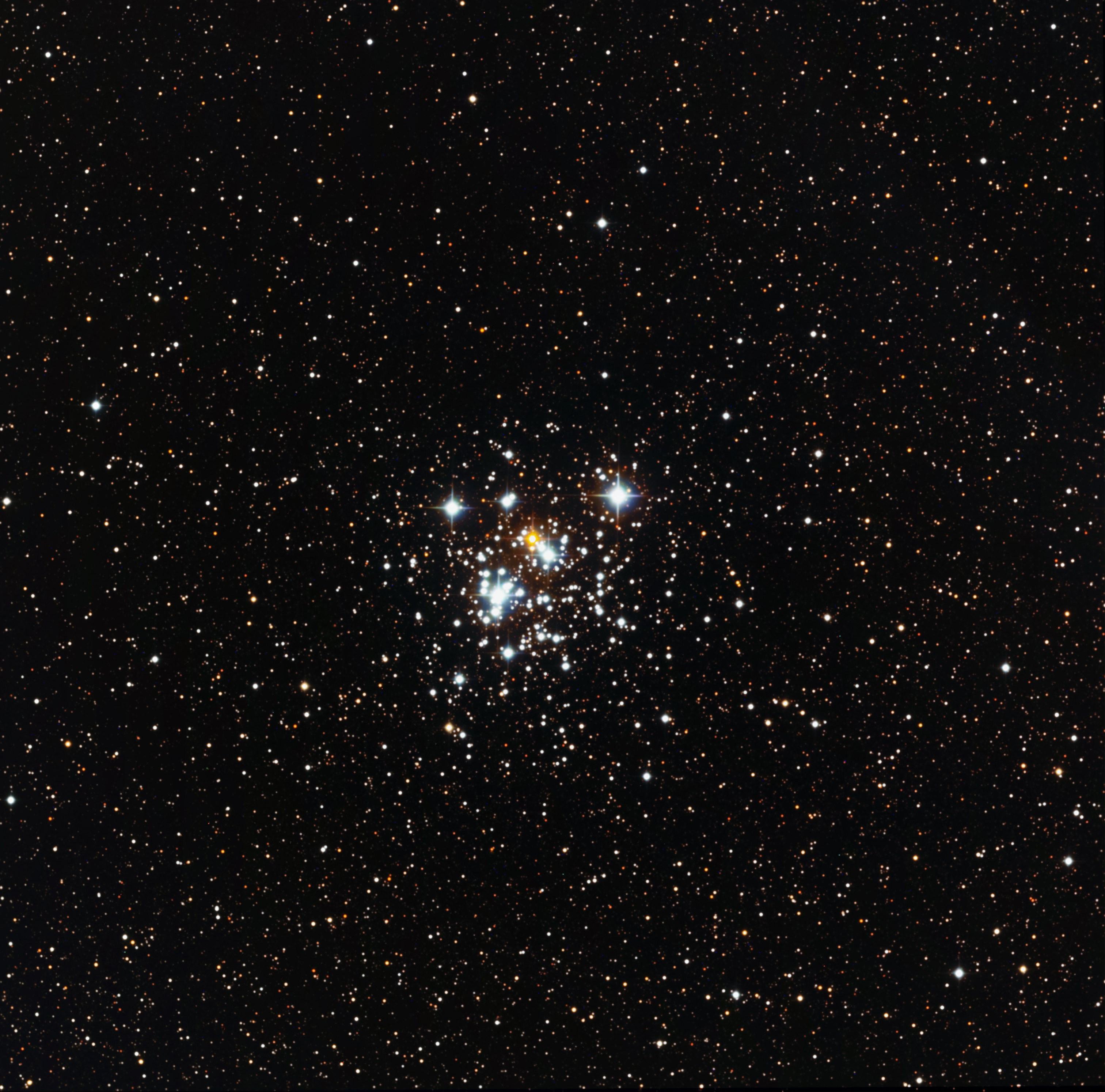
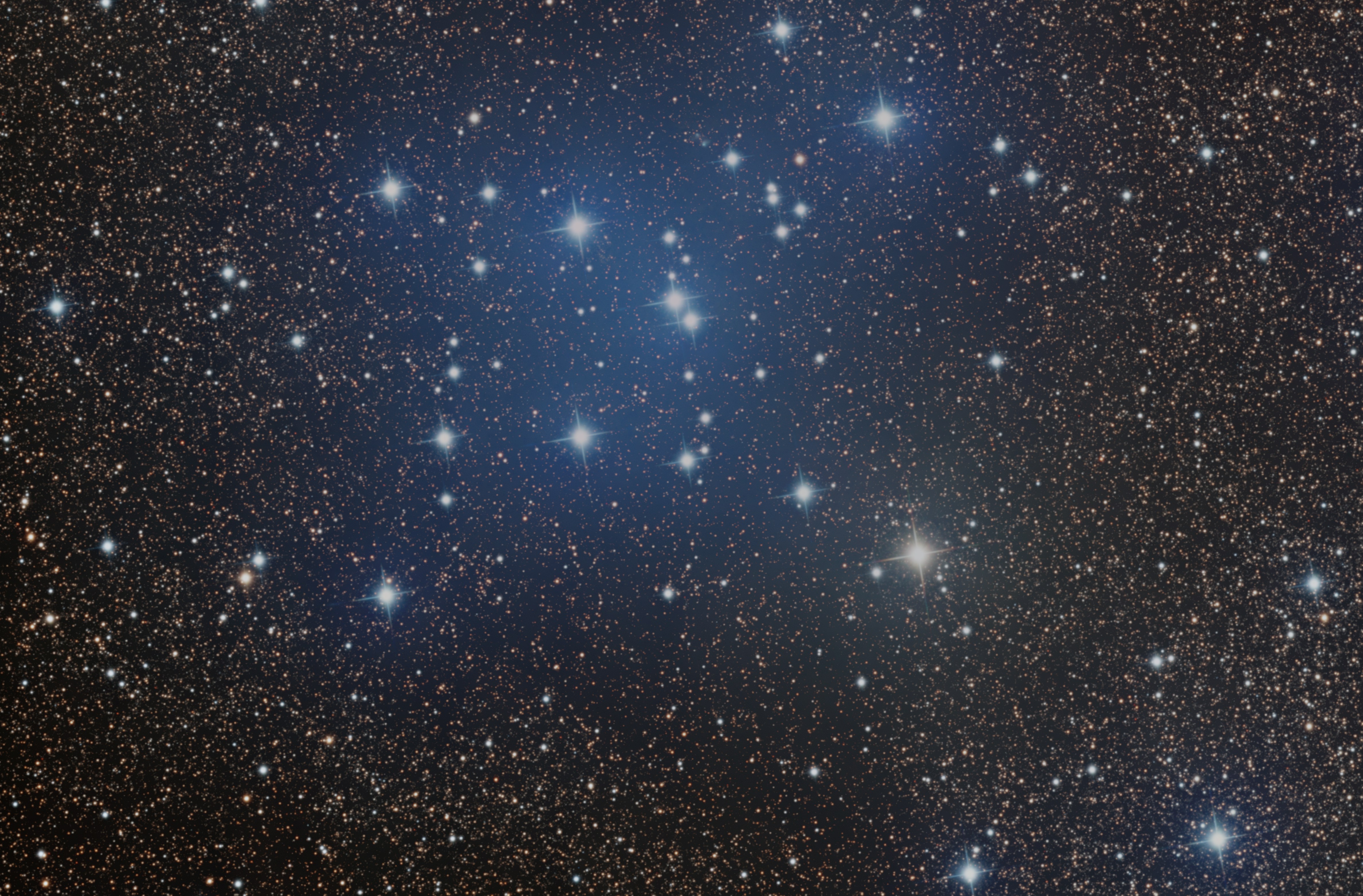
NGC 4755 - The Jewel Box Cluster
Nicolas Louis de Lacaille first discovered this open cluster in the constellation
Crux back in 1751–52 while populating his catalog at the Cape of Good Hope in South
Africa. The cluster was later named The Jewel Cluster by John Herschel, who described
it as "a superb piece of fancy jewelry." Herschel recorded over 100 members of this
cluster in 1834–1838. Its age is estimated at around 14 million years and is one of the
youngest known clusters. It lies about 6,400 light-years from Earth.
|
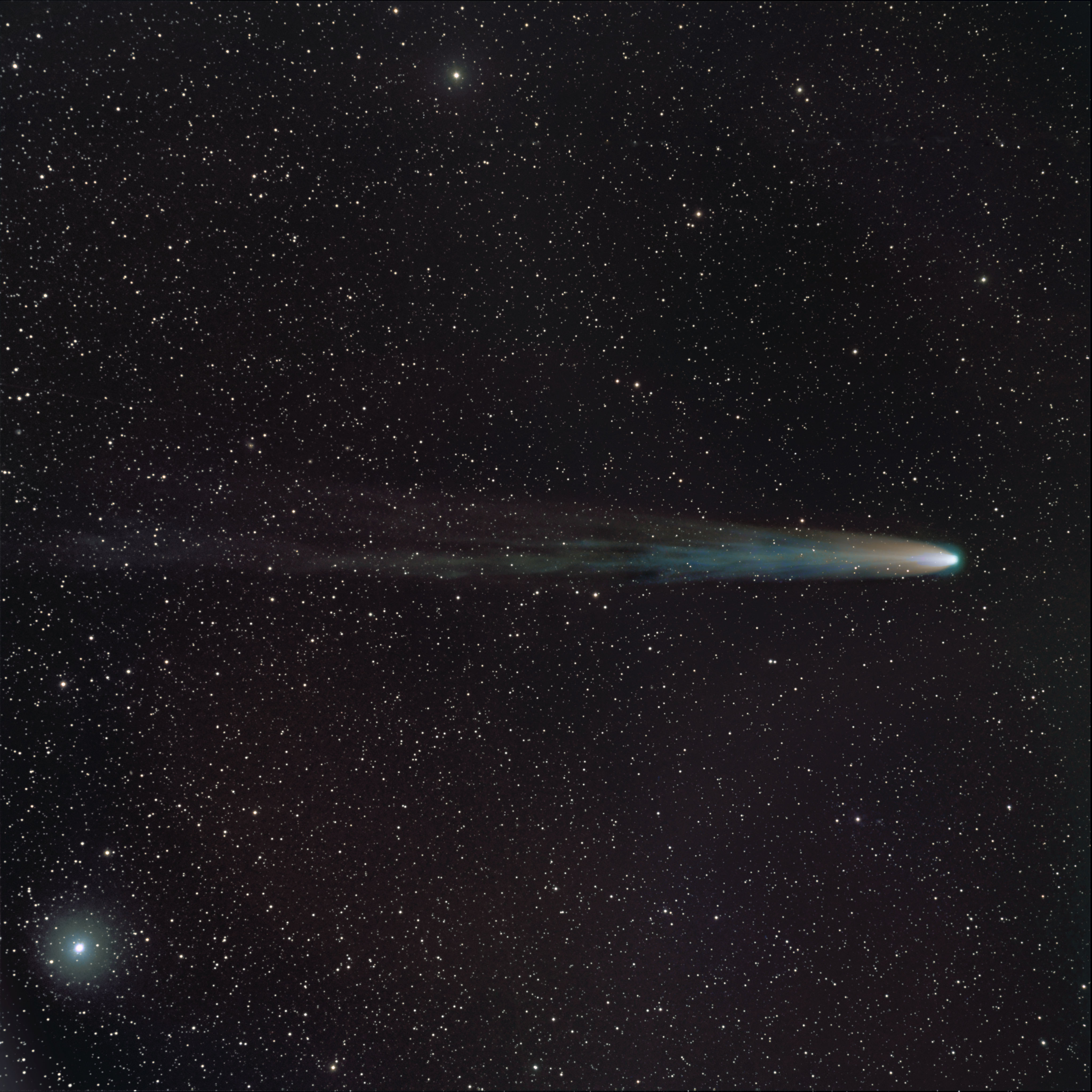
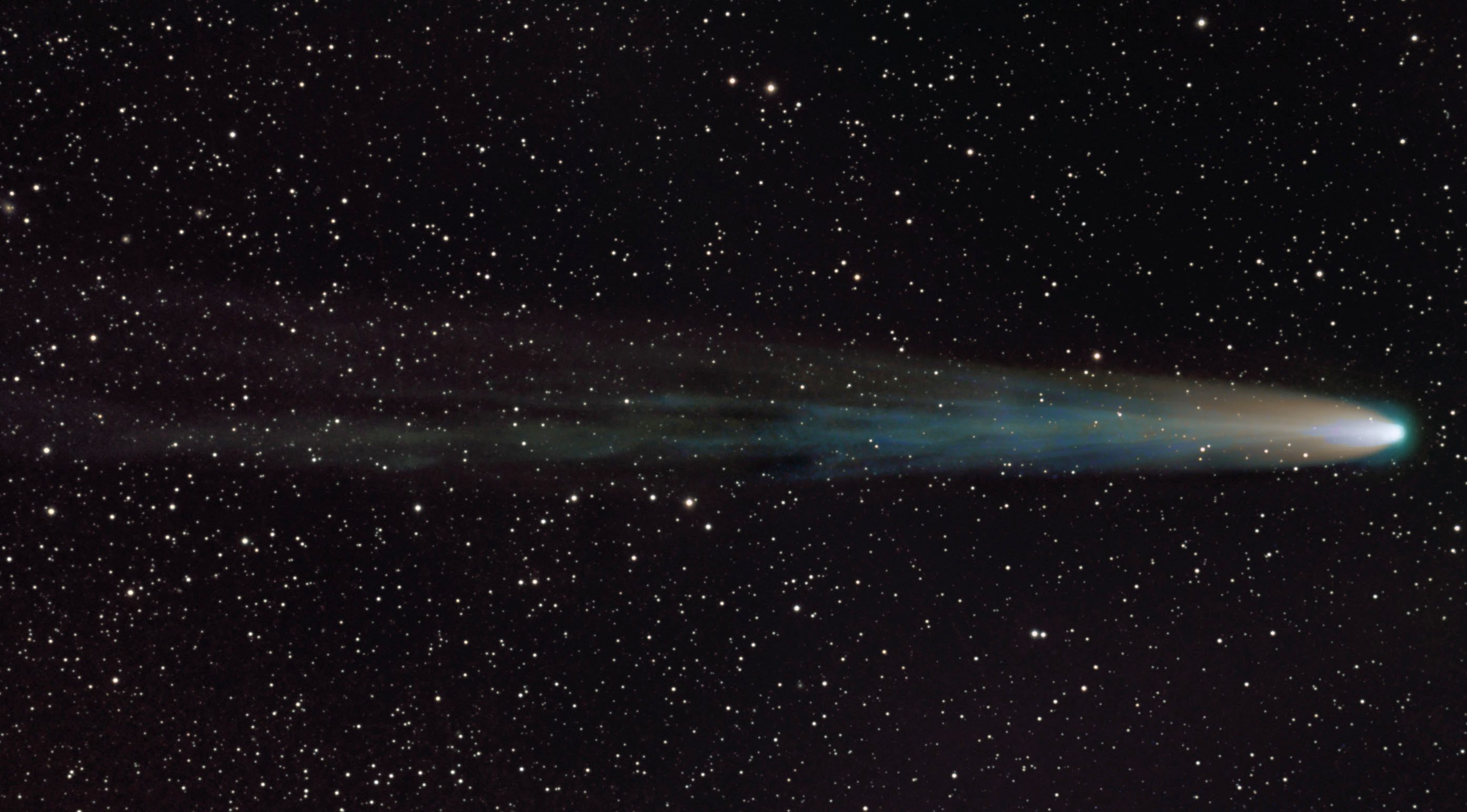
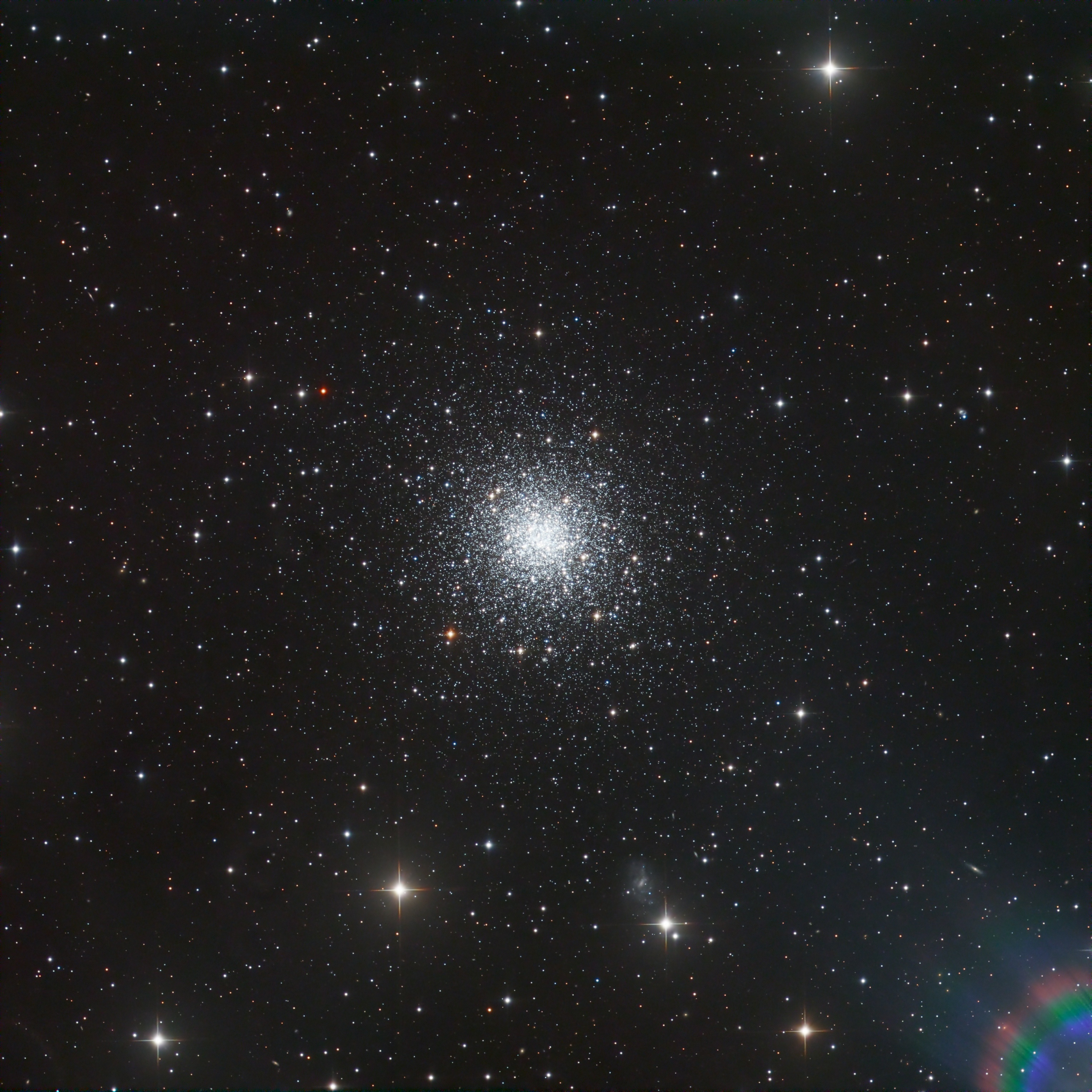
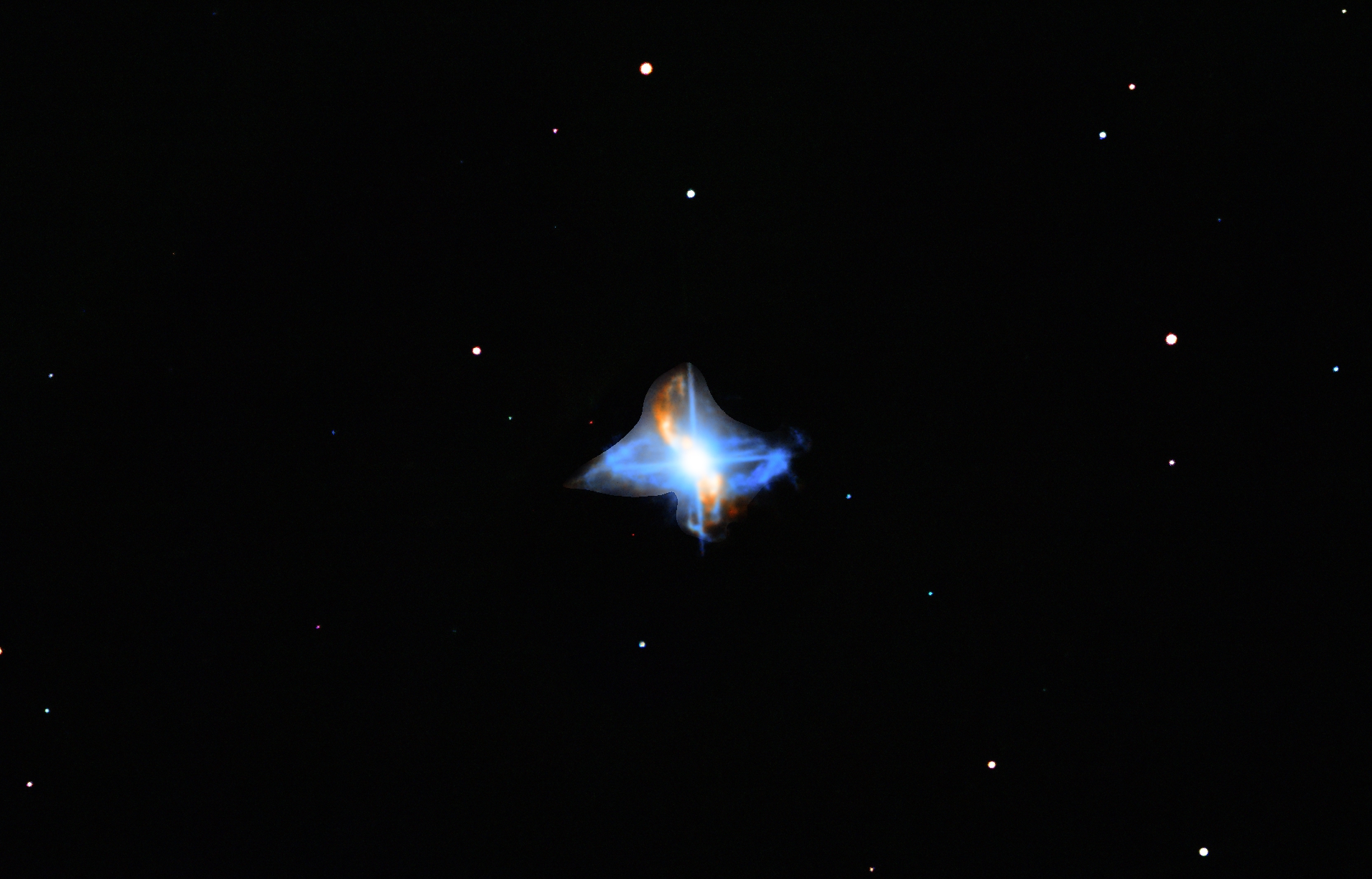
Comet Leonard C/2021 A1
Comet Leonard, a long period comet, was discovered by G. J. Leonard on January 2, 2021 at the
Mt. Lemmon Observatory in Tucson, AZ. When first observed it was 5 AU (470 million miles)
from the Sun. Its nucleus is about 0.6 miles in diameter. It has been inside the orbit
of Neptune since May of 2009 and is believed to have an orbital period of 80,000 years.
It has spent the last 40,000 years inbound from 350 billion miles away. After its closest approach
to the Sun it will be ejected from the solar system, but will return sometime in the
distant future.
|
- Location: El Sauce Observatory, Chile
- Date: January 1, 2020
- Mount: Mathis MI-1000
- Telescope: Planewave CDK24 f/6.6
- Camera: FLI PL9000 @-25c (CHI-1)
- Exposure: 3x5min each RGB Total: 15min
|
- Location: El Sauce Observatory, Chile
- Date: October 21, 2020
- Mount: ASA DDM85
- Telescope: ASA 500N
- Camera: FLI PL16803 @-25 (CHI-2)
- Exposure: 6x3min each RGB Total: 1hr
|
- Location: El Sauce Observatory, Chile
- Date: April 9, 2021
- Mount: Mathis MI-1000
- Telescope: Planewave CDK24 f/6.6
- Camera: FLI PL9000 @-25c (CHI-1)
- Exposure: 6x5min each RGB Total: 30min
|
- Location: Heaven's Mirror Obs, Australia
- Date: December 31, 2021
- Mount: Paramount MX
- Telescope: Takahashi FSQ-106E (AUS-2)
- Camera: FLI PL16803 @-25c
- Exposure: 2x2 min each LRGB Total 2min
|
|
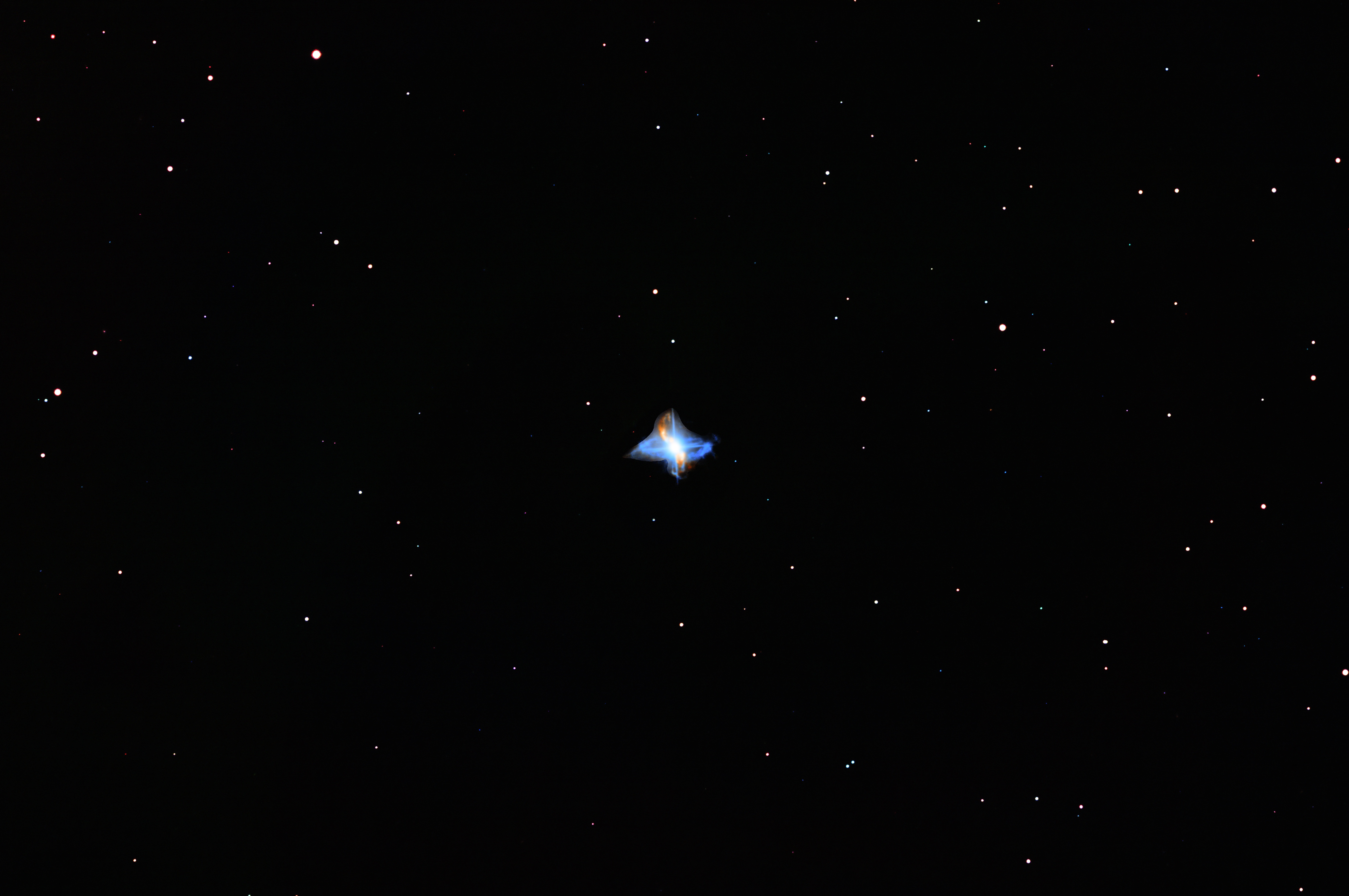
Comet Leonard C/2021 A1 - cropped
This is a cropped version of the image to the left.
|
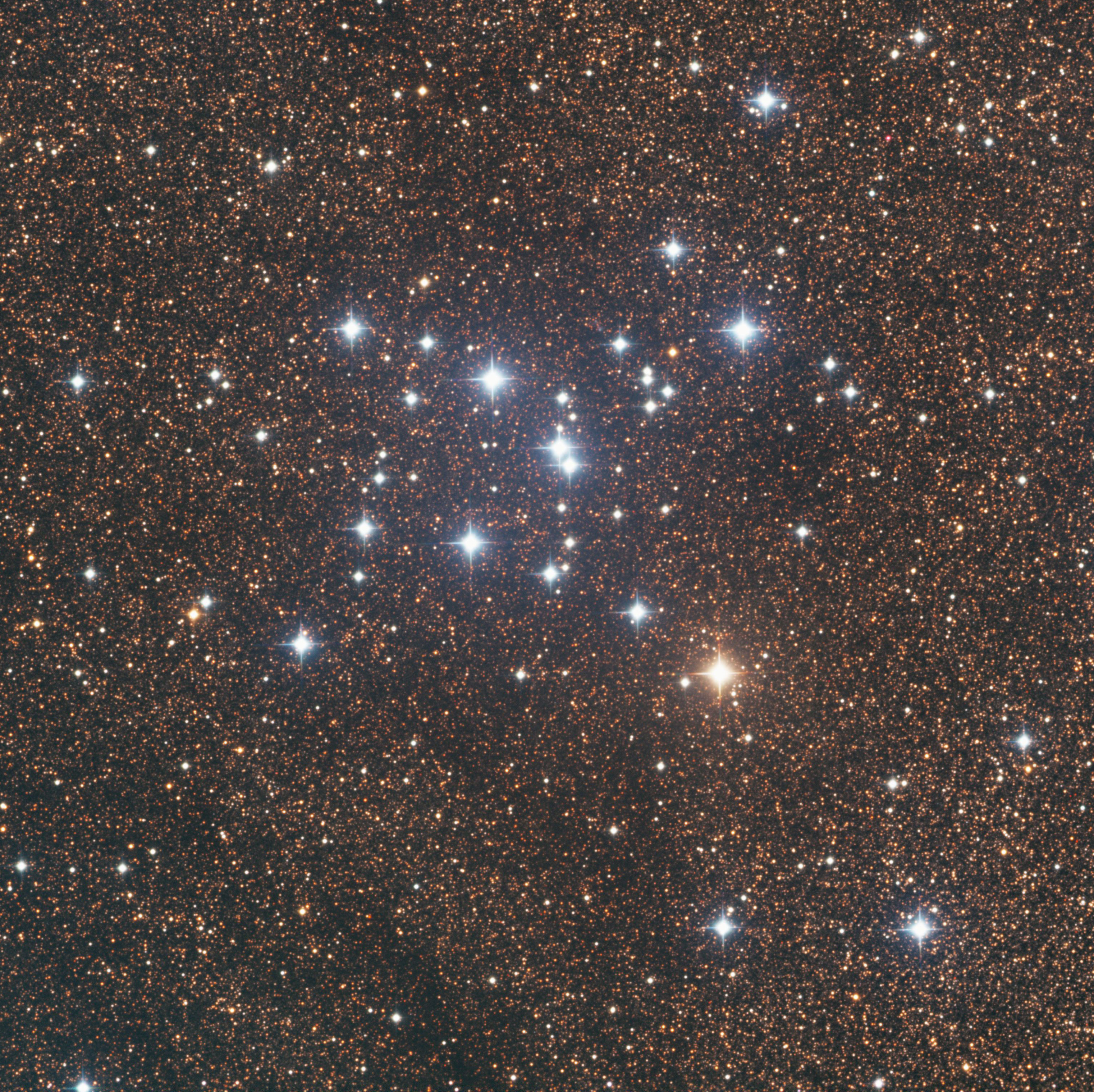
M7 - Ptolemy's Cluster
This is a different version of Ptolemy's Cluster. The first version that I did
(on the row above) was done with CCDStack and Photoshop. This version was done
entirely with PixInsight and came out a bit differently.
|
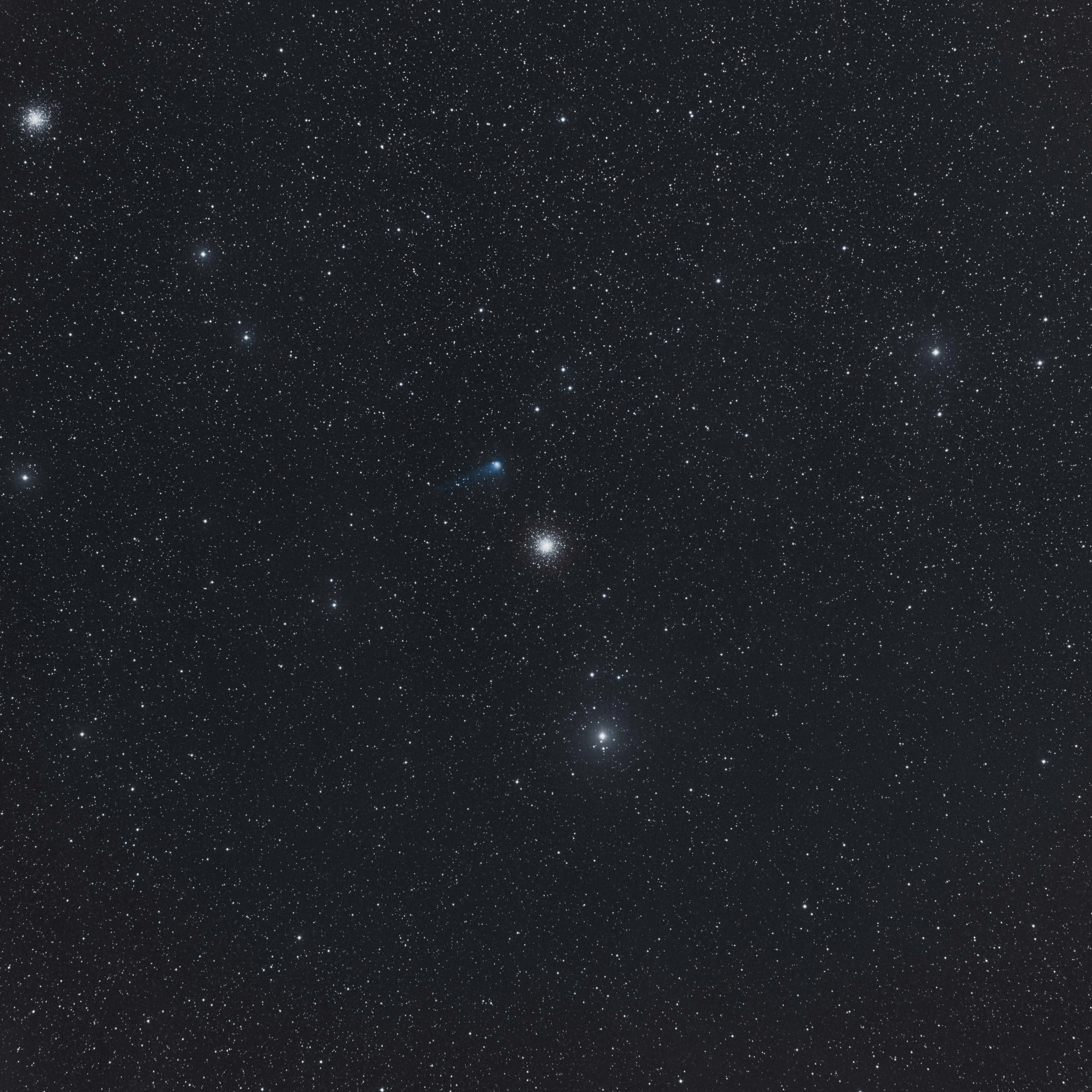
Comet C/2017 K2
This comet was discovered back in 2017 when it was out near the orbit of Saturn.
It originated in the Oort Cloud, and when discovered, it was the farthest
distance recorded for a first observation of a comet. From Hubble Space Telescope
studies, its diameter is about 11 miles and its tail runs about 500,000 miles long.
Models from JPL Horizons estimate that it started in the Oort Cloud (50,000 AU, 0.8 ly)
and took millions of years to get here. Its outbound leg back to the Oort Cloud
should be about 18,000 years.
|
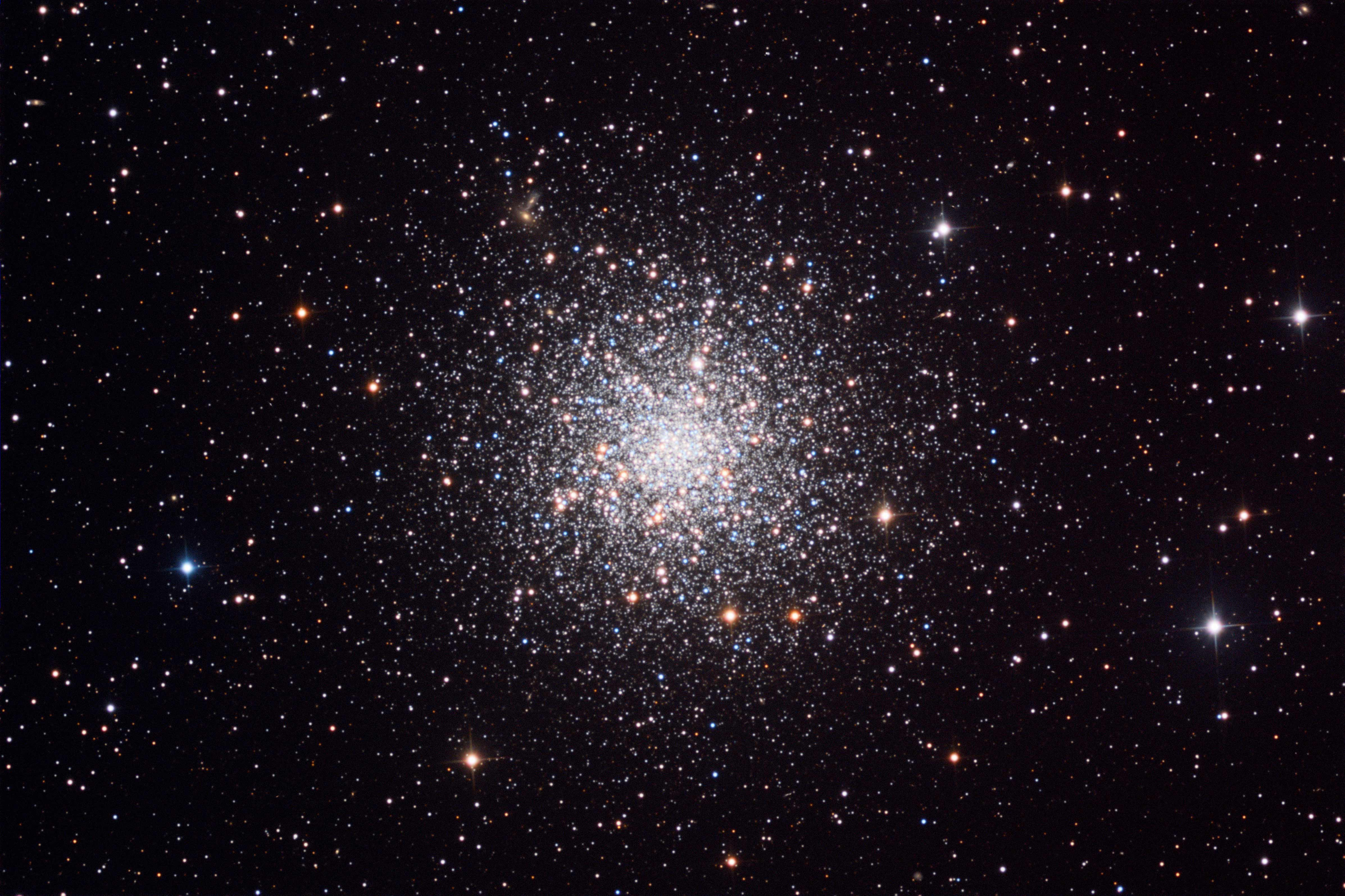
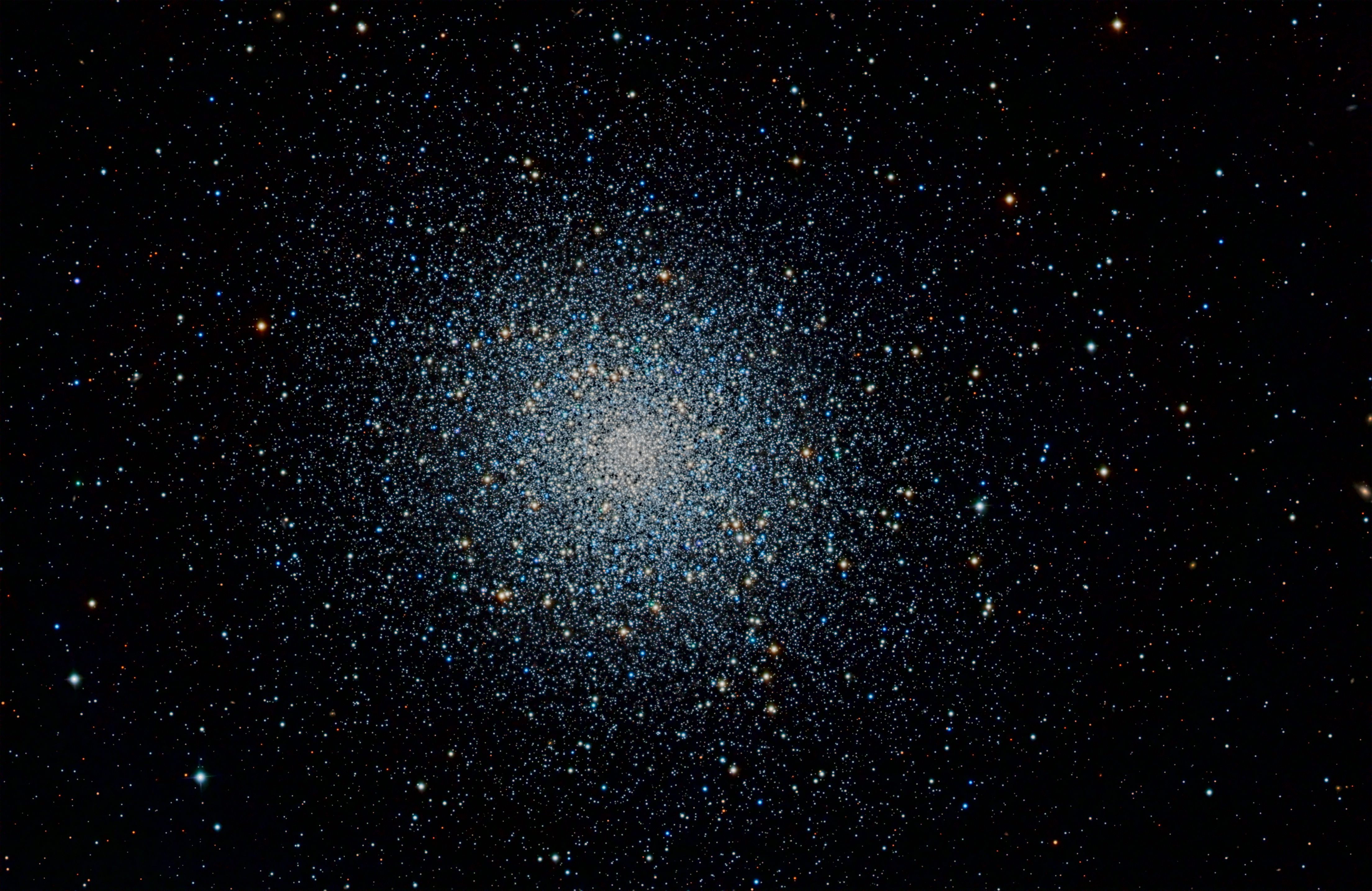
Messier 12
Messier 12 is a globular cluster in the constellation Ophiuchus. It was discovered
by Charles Messier in 1764, who described it as a nebula without stars. From Earth,
M12 is about 16,400 light-years away and has a diameter of about 75 light-years.
It has an unusually low number of low-mass stars—probably due to them being stripped
off as the cluster passed through the plane of the Milky Way.
|
- Location: Heaven's Mirror Obs, Australia
- Date: December 31, 2021
- Mount: Paramount MX
- Telescope: Takahashi FSQ-106E (AUS-2)
- Camera: FLI PL16803 @-25c
- Exposure: 2x2 min each LRGB Total 2min
|
- Location: El Sauce Observatory, Chile
- Date: April 28, 2022
- Mount: Mathis MI-1000
- Telescope: Planewave CDK24 f/6.6
- Camera: FLI PL9000 @-25c (CHI-1)
- Exposure: 17x5min LRGB Total: 1hr 15min
|
- Location: IC Astronomy, Oria, Almería, Spain
- Date: July 22, 2022
- Mount: Paramount MX+
- Telescope: Takahashi FSQ106EDX4 (SPA-3)
- Camera: FLI PL16083
- Exposure: 2x3min for LRGB Total: 3min
|
- Location: El Sauce Observatory, Chile
- Date: May 16-18, 2023
- Mount: Mathis MI-1000/1250
- Telescope: Planewave CDK24
- Camera: QHY600m @-25 (CHI-1)
- Exposure: 2x5min LRGB Total: 1hr 40min
|
|
Brocchi's Cluster - Collinder 399 - The Coathanger
This cluster really isn't a cluster; it is an asterism located in the constellation
Vulpecula. The asterism consists of 6 stars that line up in a distinct shape.
It was first described by the Persian astronomer Al-Sufi in 964. It was
considered to be a star cluster up until 1997, when it was determined that
none of the stars are affected by each other's gravity. It is commonly known
as The Coathanger. Can you see it?
|
Comet C/2022 E3 (ZTF)
Discovered on March 2, 2022, comet C/2022 E3 is a long-period comet that originated
in the Oort Cloud. Its bright green glow comes from the Sun's radiation exciting
diatomic carbon and cyanogen. The nucleus is about a kilometer in size and it rotates
once about every 8.6 hours. Its tails of dust and gas extended for millions of kilometers.
|
Messier 4 - The Spider Globular Cluster
This globular cluster was first observed in 1745 by Philippe Loys de Cheseaux. Then,
in 1764, it was cataloged by Charles Messier. It is the first globular cluster in
which individual stars were resolved. This cluster resides in the constellation
Scorpius. It is 75 light-years across and is about 60,000 light-years
away from us, making it one of the closest globular clusters to Earth. The Hubble Space
Telescope found white dwarf stars within it that are among the oldest in our galaxy—
at about 13 billion years old. One star was found to have a planet that is 2.5 times
the size of Jupiter.
|
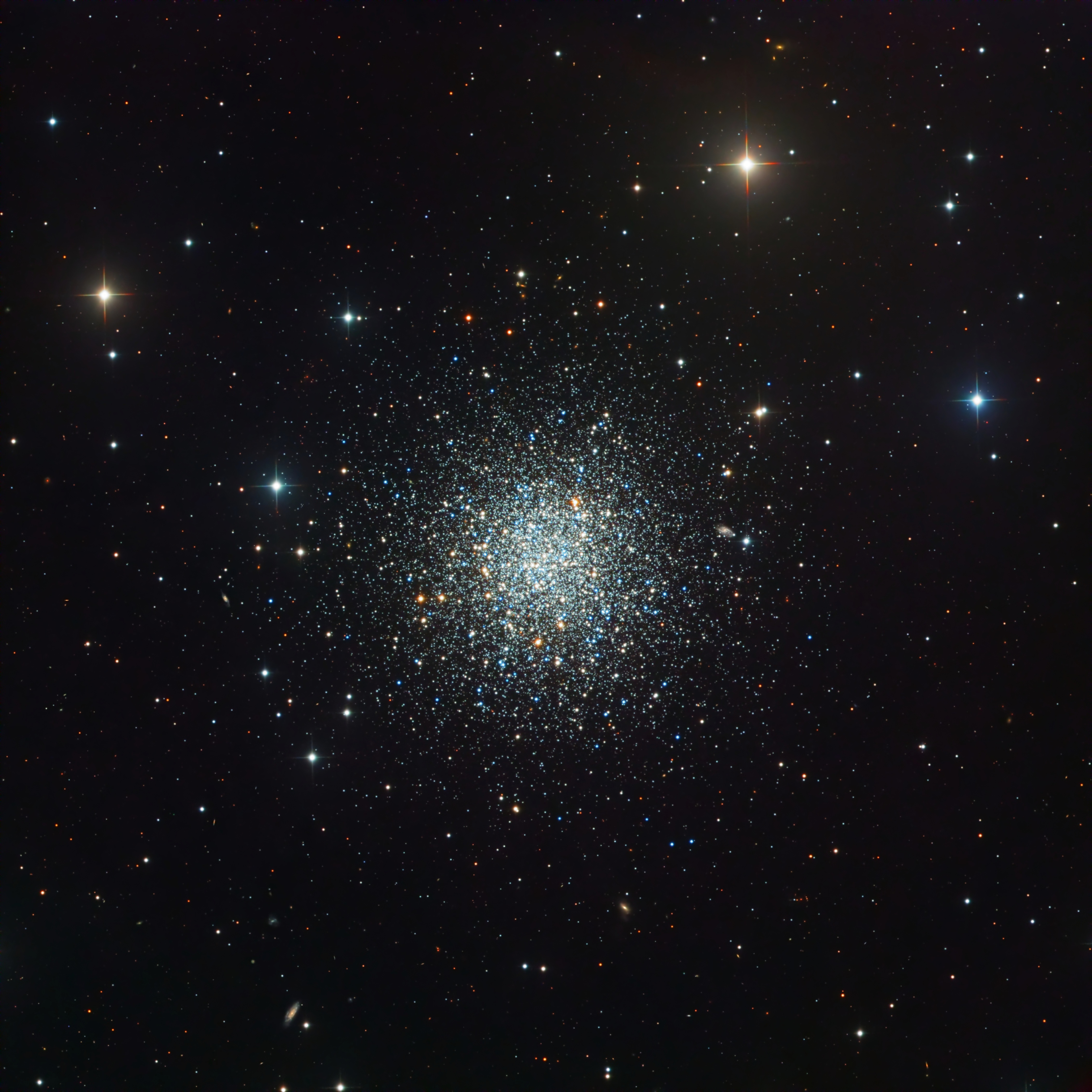
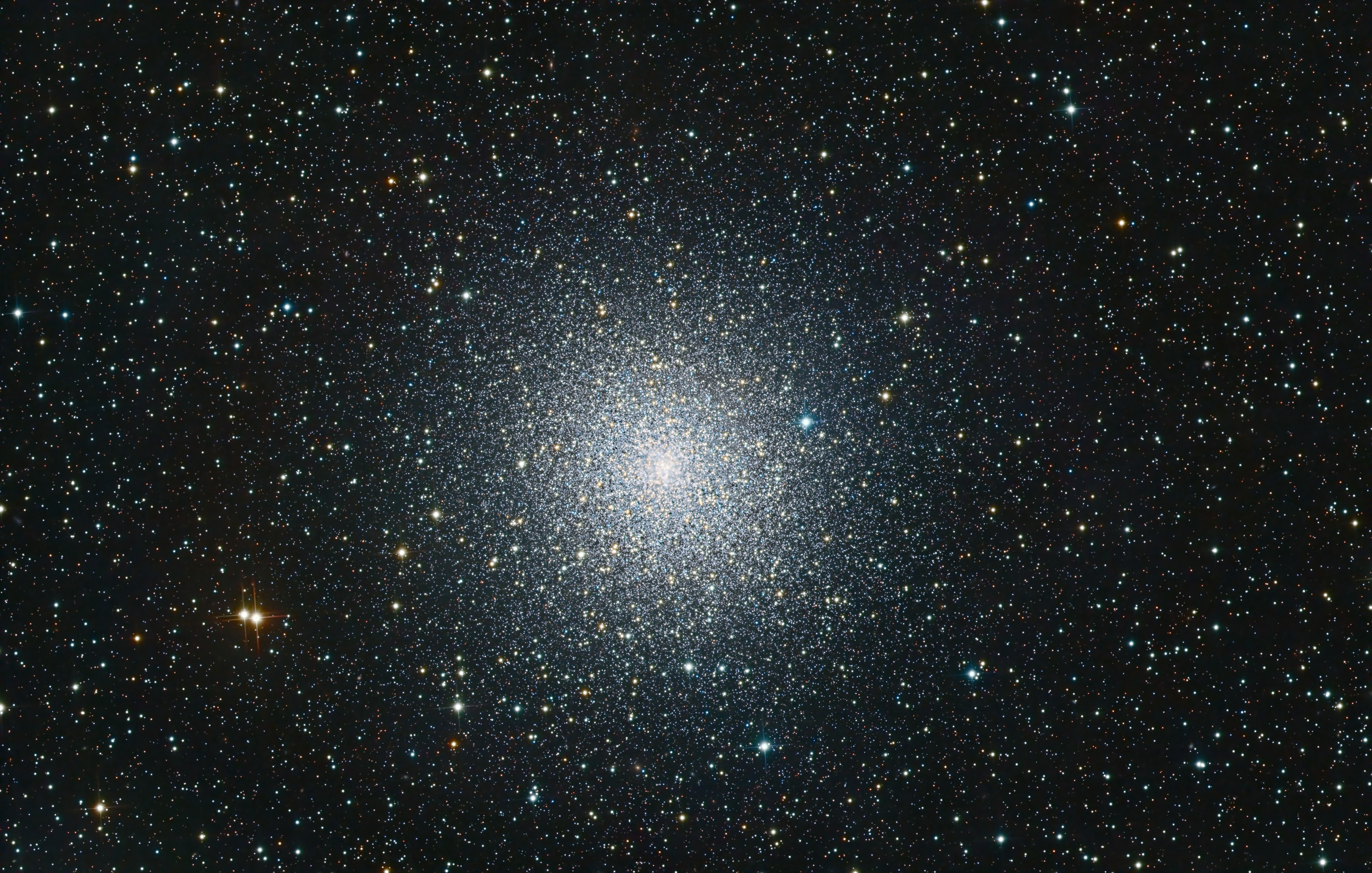
NGC 2808
This globular cluster is one of the oldest and largest clusters in our galaxy.
Located in the constellation Carina (the keel of Jason's mythological ship,
the Argo), it was probably captured from a dwarf galaxy that collided with the Milky Way.
It is estimated to be 12.5 billion years old and contains more than a million stars.
|
- Location: Heaven's Mirror Obs, Australia
- Date: April 2023
- Mount: Paramount MX
- Telescope: Takahashi FSQ-106E (AUS-2)
- Camera: QHY600m @-25c
- Exposure: 5x300 sec each RGB Total: 1hr 15min
|
- Location: IC Astronomy, Oria, Almería, Spain
- Date: February 1, 2023
- Mount: Paramount MX+
- Telescope: Takahashi FSQ106EDX4 (SPA-1)
- Camera: FLI PL16083
- Exposure: 9x30sec for LRGB Total: 4.5min
|
- Location: El Sauce Observatory, Chile
- Date: May 2024
- Mount: Mathis MI-1000/1250
- Telescope: Planewave CDK24
- Camera: QHY600m @-25 (CHI-1)
- Exposure: 112x5 min LRGB Total: 8hr 50min
|
- Location: El Sauce Observatory, Chile
- Date: March 17, 2021
- Mount: Mathis MI-1000/1250
- Telescope: Planewave CDK24
- Camera: FLI ProLine PL9000 @-25
- Exposure: 42x10min LRGB Total: 7hrs
|
|
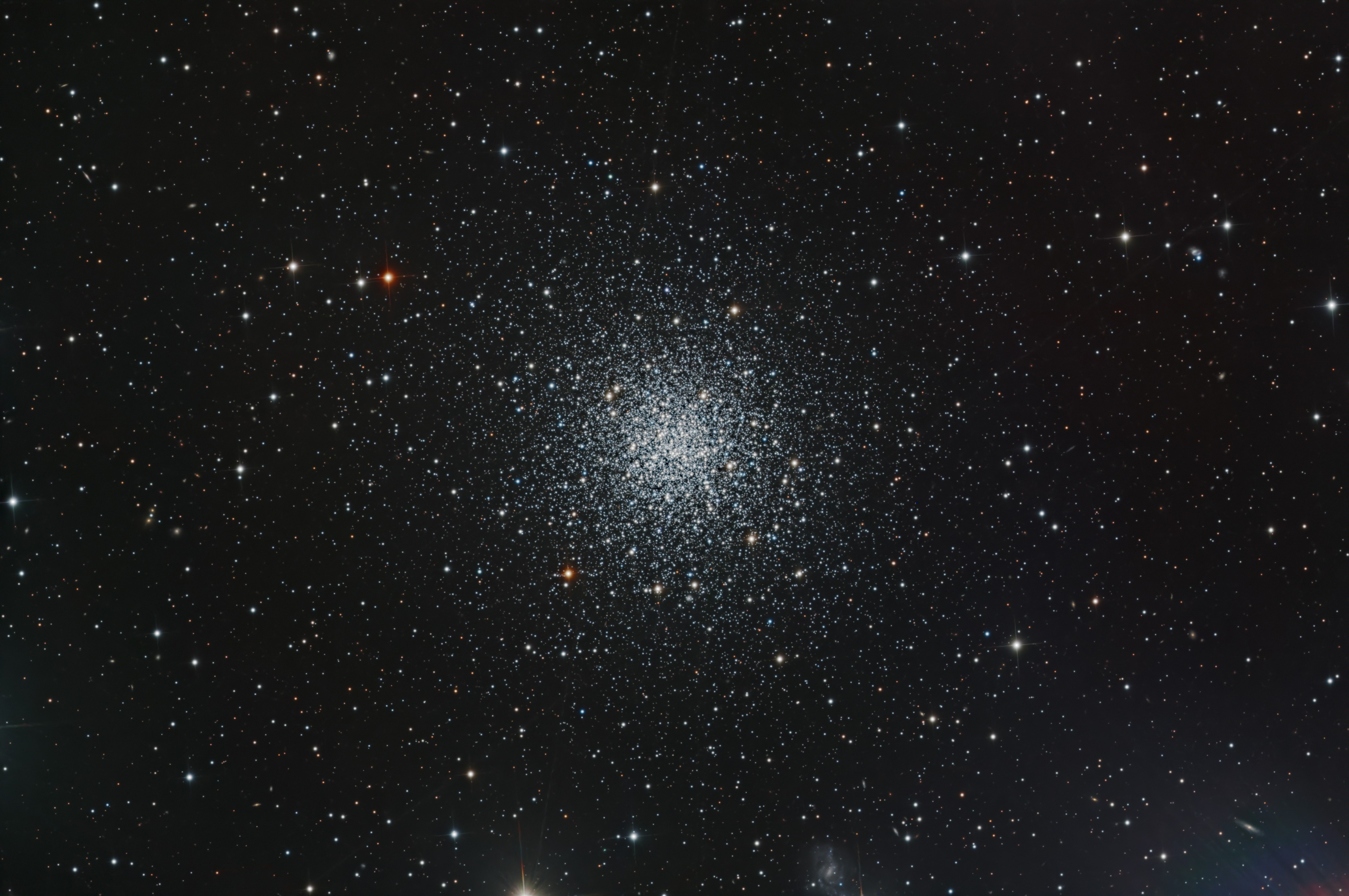
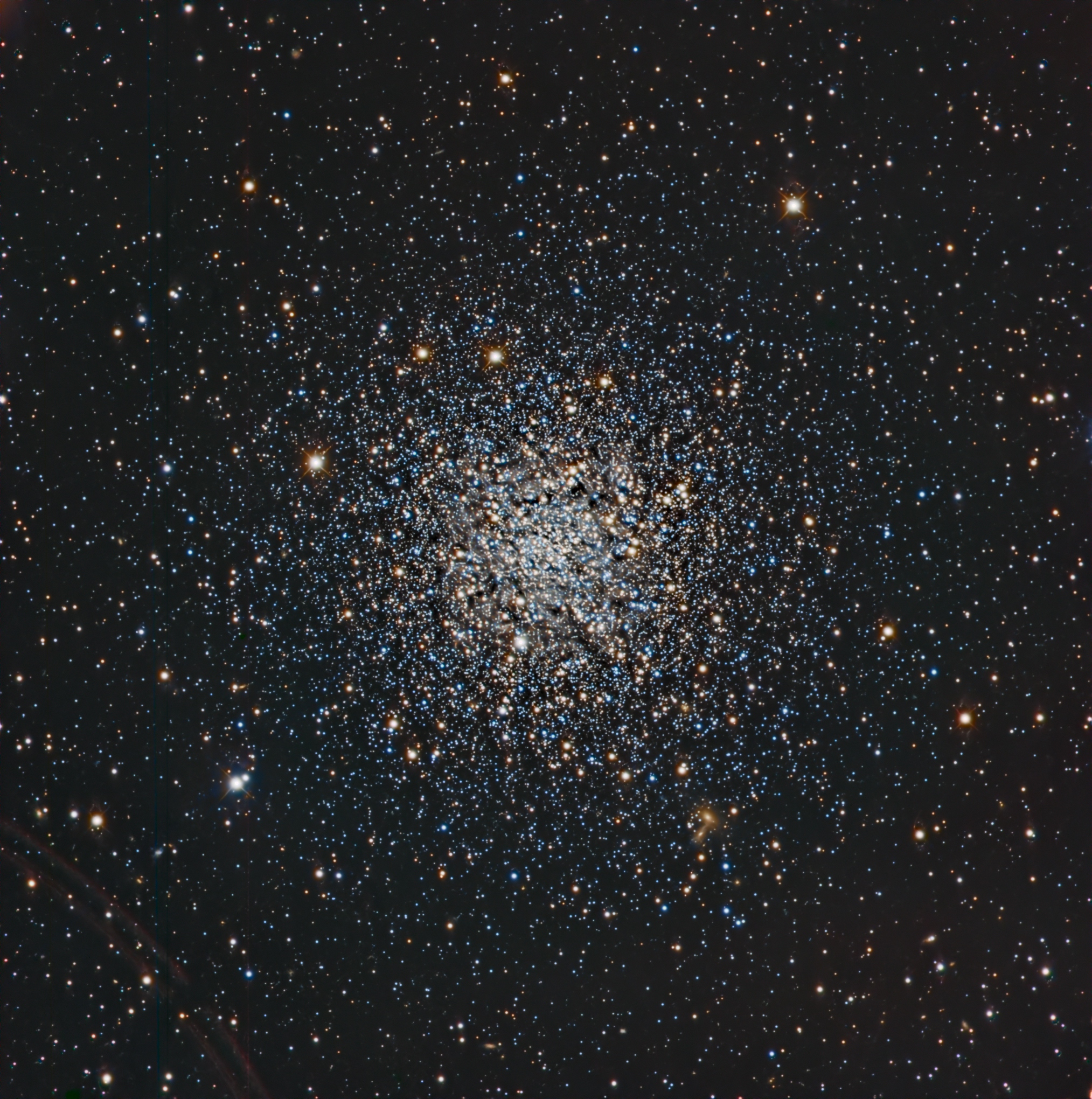
NGC 288
Continuing with a few more globular clusters, NGC 288 is located in the
constellation Sculptor. It features a well-defined and clear central region.
So far, astronomers have identified 6 stars with planets. If you scroll around
on the larger version of this image, you'll notice numerous background galaxies in the area.
|
Messier 19
This globular cluster is in the constellation Ophiuchus and is about 11.9 billion
years old. Its mass is about 1,100,000 times the mass of our Sun. It was added to
Messier's list of comet-like objects in June of 1764.
|
NGC 6397
Located in the constellation Ara, NGC 6397 is about
7,800 light-years from Earth. It holds about 400,000 stars and is the second closest
globular cluster to Earth (after Messier 4). There appear to be numerous white
dwarfs, neutron stars, and black holes. Its age is estimated to be around 13.6 billion years.
|
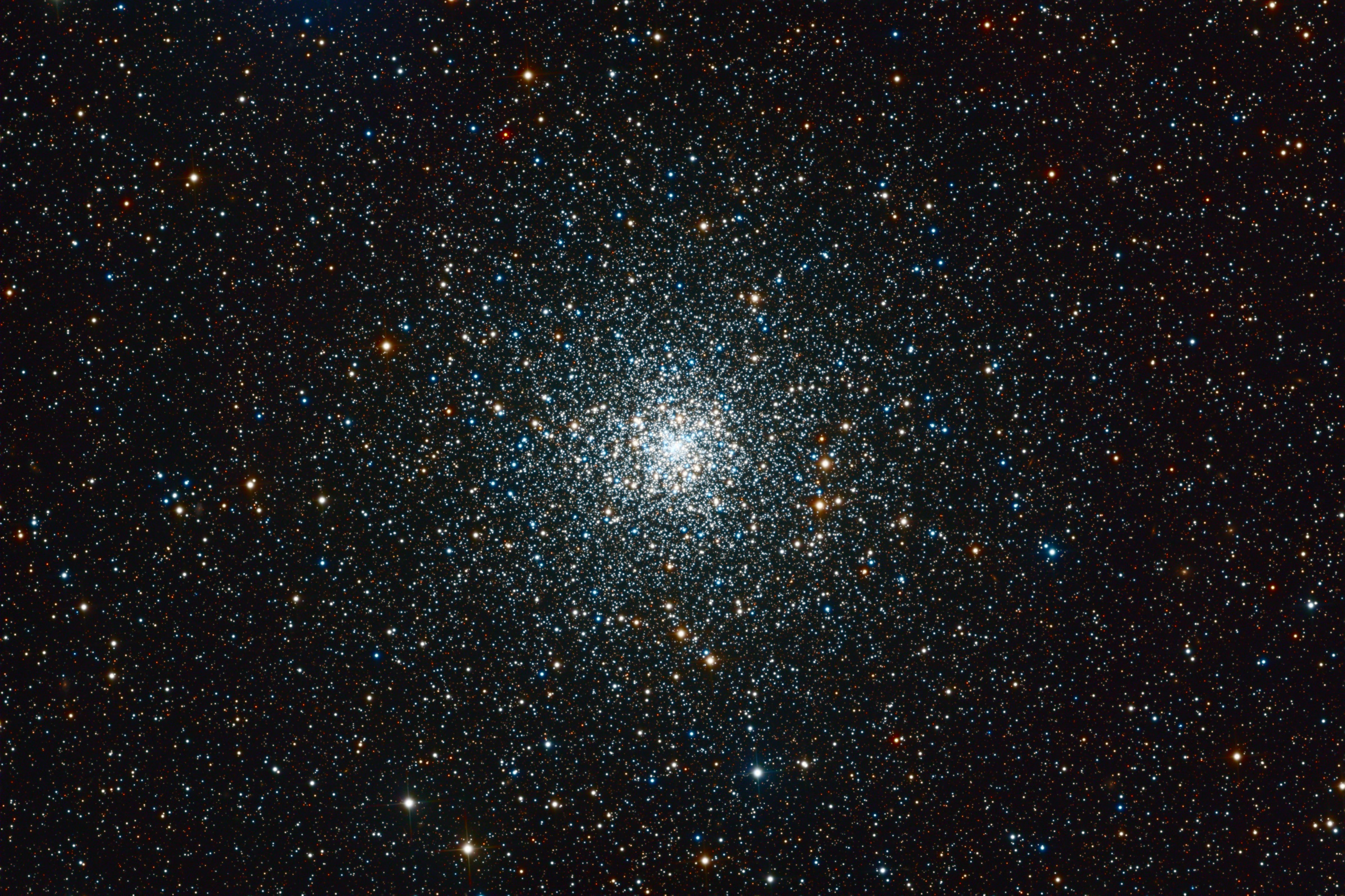
Messier 5
This globular cluster is located in the constellation Serpens (the Serpent). It was
discovered by the German astronomer Gottfried Kirch in 1702 while observing a comet.
William Herschel was the first to resolve individual stars nearly 100 years later in
1791. It contains at least two millisecond pulsars and is, in fact, receding from our
galaxy. Its estimated age is 10.62 billion years.
|
- Location: El Sauce Observatory, Chile
- Date: July 21, 2021
- Mount: Mathis MI-1000/1250
- Telescope: Planewave CDK24
- Camera: FLI ProLine PL9000 @-25
- Exposure: 80x10min LRGB Total: 13hrs 20min
|
- Location: El Sauce Observatory, Chile
- Date: March 11, 2021
- Mount: Mathis MI-1000/1250
- Telescope: Planewave CDK24
- Camera: FLI ProLine PL9000 @-25
- Exposure: 75x10min LRGB Total: 12hrs 30min
|
- Location: El Sauce Observatory, Chile
- Date: July 2024
- Mount: Mathis MI-1000/1250
- Telescope: Planewave CDK24
- Camera: QHY600m @-25 (CMOS)
- Exposure: 84x5min LRGB Total: 7hr
|
- Location: El Sauce Observatory, Chile
- Date: September 2024
- Mount: Mathis MI-1000/1250
- Telescope: Planewave CDK24
- Camera: QHY600m @-25 (CMOS)
- Exposure: 41x5min LRGB Total: 3hr 25min
|
|
NGC 2516 - The Diamond Cluster
This open cluster is located in the southern constellation of Carina. It
is sometimes referred to as the Southern Beehive. It sits about 1,300
light-years from Earth. On a good night, it is a naked-eye object. A small
telescope should be able to resolve individual stars. There is a bit of a
bluish halo surrounding the cluster, caused by stars that have been
expelled from it.
|
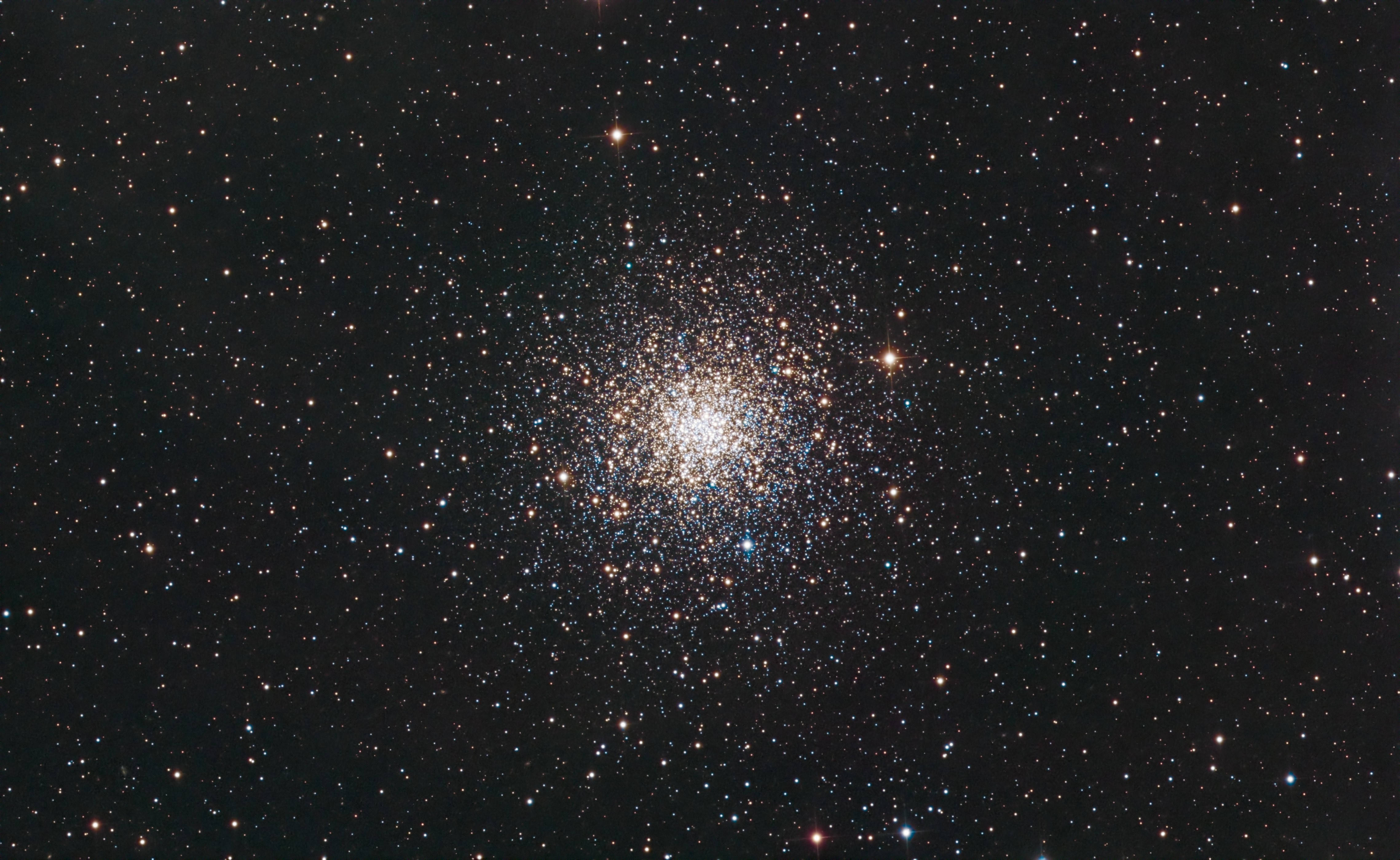
NGC 2808
This globular cluster is in the constellation Carina. It is estimated to be
about 12.5 billion years old and is thought to have been captured by the Milky Way
from a passing dwarf galaxy. It is one of our most massive clusters, holding over
1 million stars. This is another version of the same object shown a couple of rows above.
|
Alpha Centauri
Alpha Centauri is a triple star system in the constellation Centaurus (The Centaur).
This system consists of Alpha Centauri A, B, and Proxima Centauri. It lies around 4.37
light-years away from Earth.
|
Albireo
This star pair is located in the summer constellation Cygnus (the Swan) and lies
about 385 light-years away from us. It is a classic double star system, where some stars
only appear paired along the same line of sight. Albireo is one of the most observed
double stars in the night sky due to its vivid blue and gold colors and clean separation.
|
- Location: Heaven's Mirror Obs, Australia
- Date: October 2024
- Mount: Paramount MX
- Telescope: Takahashi FSQ-106E (AUS-2)
- Camera: QHY600m @-25c
- Exposure: 48x300sec each for LRGB Total 4hrs
|
- Location: El Sauce Observatory, Chile
- Date: September 2024
- Mount: Mathis MI-1000/1250
- Telescope: Planewave CDK24
- Camera: FLI ProLine PL9000 @-25c (CCD)
- Exposure: 60x3min LRGB Total: 3hr
|
- Location: Heaven's Mirror Obs, Australia
- Date: September 2023
- Mount: Paramount MX
- Telescope: Takahashi FSQ-106E (AUS-2)
- Camera: QHY600m @-25c
- Exposure: 135x60sec each LRGB Total: 2hrs 15min
|
- Location: IC Astronomy, Oria, Almería, Spain
- Date: April 17, 2022
- Mount: Officina Stellare EQ Mount
- Telescope: Officina Stellare Pro RC 700 (SPA-2)
- Camera: FLI PL16803 @-25c (CCD)
- Exposure: 6x10sec each LRGB Total: 20min
|
|
Messier 46 and 47
This is a great image of two of Charles Messier's "comets." They are both open
clusters in the southern constellation of Puppis. M46 was discovered by Messier
in 1771, while M47 was first discovered by Giovanni Battista Hodierna sometime before
1654. I find this difference in discovery dates interesting since the two clusters
are located right next to each other and are equally bright.
|
Messier 2
This globular cluster was first observed by Jean-Dominique Maraldi in 1746 and was
subsequently rediscovered by Jacques Cassini and Charles Messier in 1760. William
Herschel was the first to actually resolve individual stars in 1783. It sits about
55,000 light-years from Earth and is 175 light-years across. It's one of the largest
globular clusters known. Under very dark skies, this cluster is just barely visible
with the naked eye. It holds about 150,000 stars and is about 12.5 billion years old.
Astronomers were surprised to find through Gaia data that this cluster actually has
a stellar stream about 300 ly wide that extends several degrees in length.
|
Messier 14
Messier 14 is a globular cluster located in the constellation Ophiuchus. Even though
it sits about 30,000 light-years away from us, it can be easily seen with binoculars. It
was discovered by Charles Messier in 1764. Its total luminosity is around 400,000
times that of the Sun. It contains several hundred thousand stars and is about 100
light-years across.
|
Messier 68
Discovered by Charles Messier in 1780 in the constellation Hydra (the Water Snake),
this globular cluster is about 33,000 light-years away from us and boasts a diameter
of about 100 light-years. Scientists have identified at least 50 variable stars
in this cluster. It orbits around our galaxy's central bulge and is one of the
poorest clusters in metals. It is estimated to be about 11.2 billion years old,
and astronomers believe that it is also undergoing core collapse.
|
- Location: Heaven's Mirror Obs, Australia
- Date: March 2024
- Mount: Paramount MX
- Telescope: Takahashi FSQ-106E (AUS-2)
- Camera: QHY600m @-25c
- Exposure: 59x5 min each LRGB Total: 4hrs 55min
|
- Location: El Sauce Observatory, Chile
- Date: May 2023
- Mount: Mathis MI-1000/1250
- Telescope: Planewave CDK24
- Camera: QHY600m @-25 (CMOS)
- Exposure: 65x5min LRGB Total: 5hr 55min
|
- Location: El Sauce Observatory, Chile
- Date: May 2025
- Mount: Mathis MI-1000/1250
- Telescope: Planewave CDK24
- Camera: FLI ProLine PL9000 @-25c (CCD)
- Exposure: 69x5min each LRGB Total: 7hr 25min
|
- Location: El Sauce Observatory, Chile
- Date: February 2022
- Mount: Mathis MI-1000/1250
- Telescope: Planewave CDK24
- Camera: FLI ProLine PL9000 @-25c (CCD)
- Exposure: 32x10min each LRGB Total: 5hr 20min
|
|
Messier 107 - The Crucifix Cluster
This is a loose globular cluster in the constellation Ophiuchus. It was discovered
by Pierre Méchain in 1792 and then again independently by William Herschel in 1793.
It lies very close to the galactic plane and is about 20,000 light-years away from
Earth with a diameter of about 60 light-years.
|
Messier 68
Orbiting our galaxy's central bulge is Messier 68. It is roughly 33,600 light-years
away from us, which puts it about 30,000 light-years from the center of the Milky
Way. It was discovered by Charles Messier in 1780 in the constellation Hydra.
Astronomers believe that it is slowly rotating and may be undergoing a core collapse.
It contains at least 50 variable stars.
|
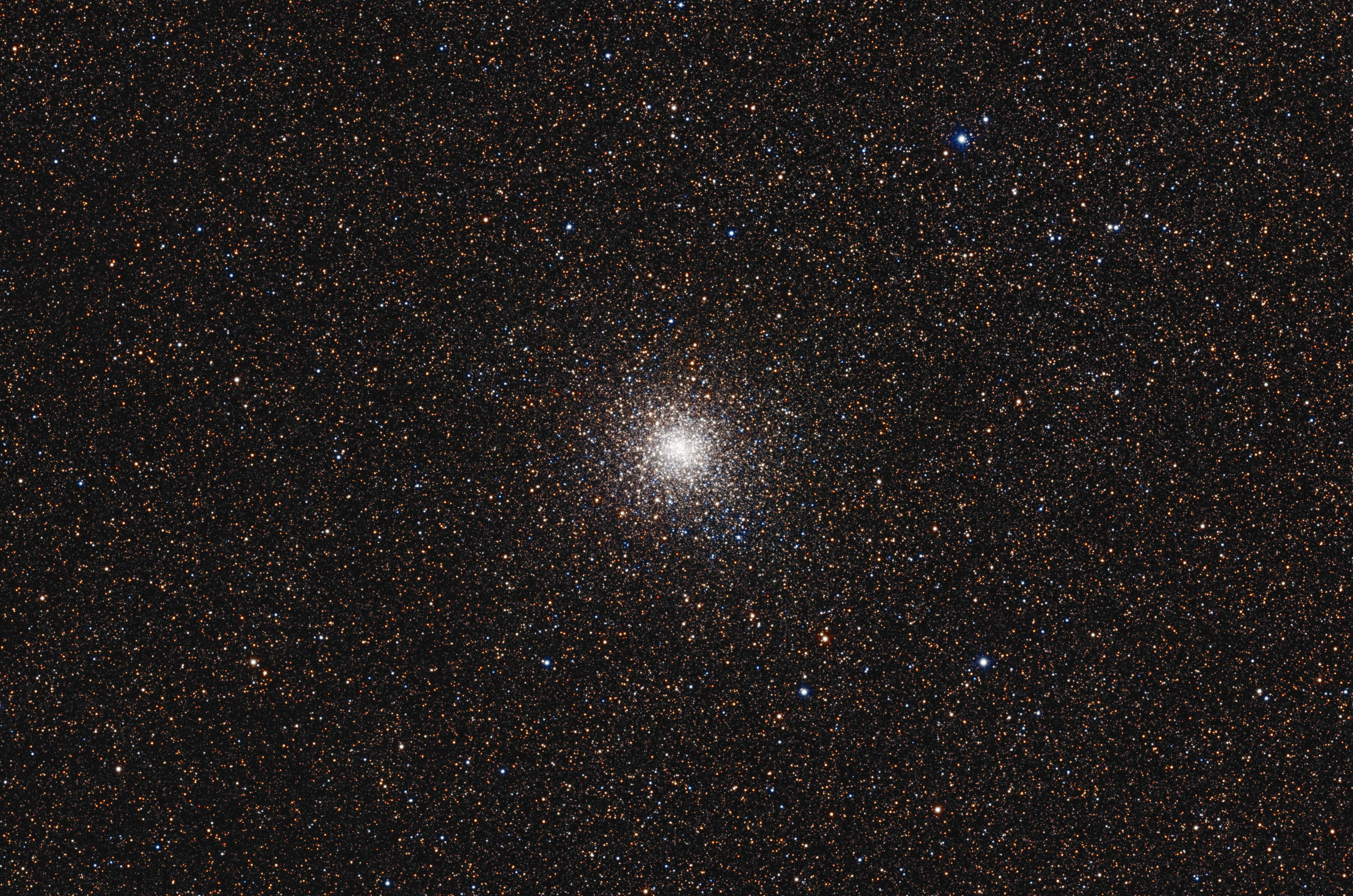
Messier 28
Discovered by Charles Messier in 1764, this globular cluster sits in the constellation
Sagittarius. It's about 18,300 light-years away from Earth and is about 12 billion
years old. Its diameter is about 30 light-years. This globular cluster is the
home of the first pulsar discovered inside a globular cluster. Since then, there
have been 11 further pulsar discoveries in the cluster.
|
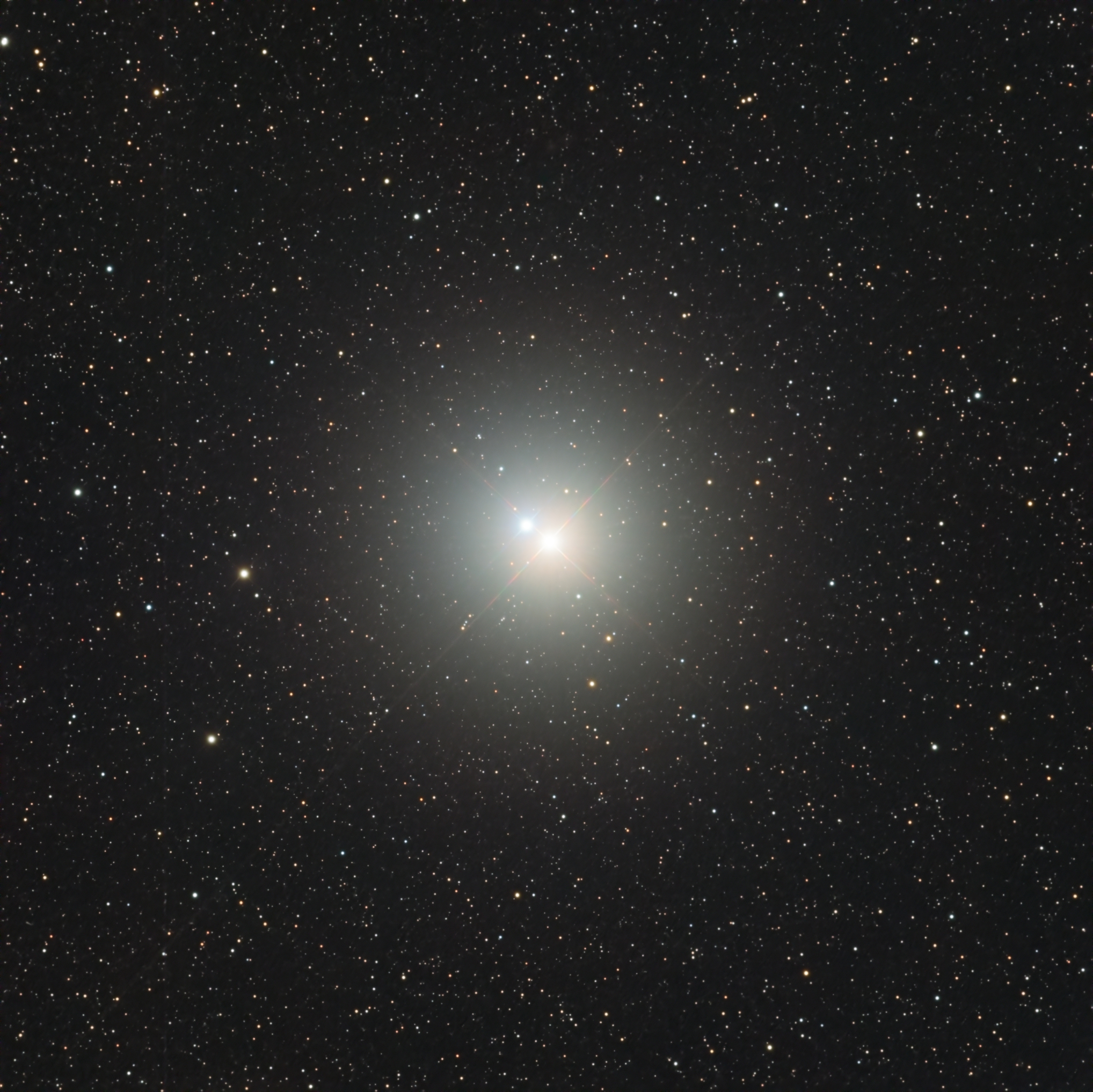
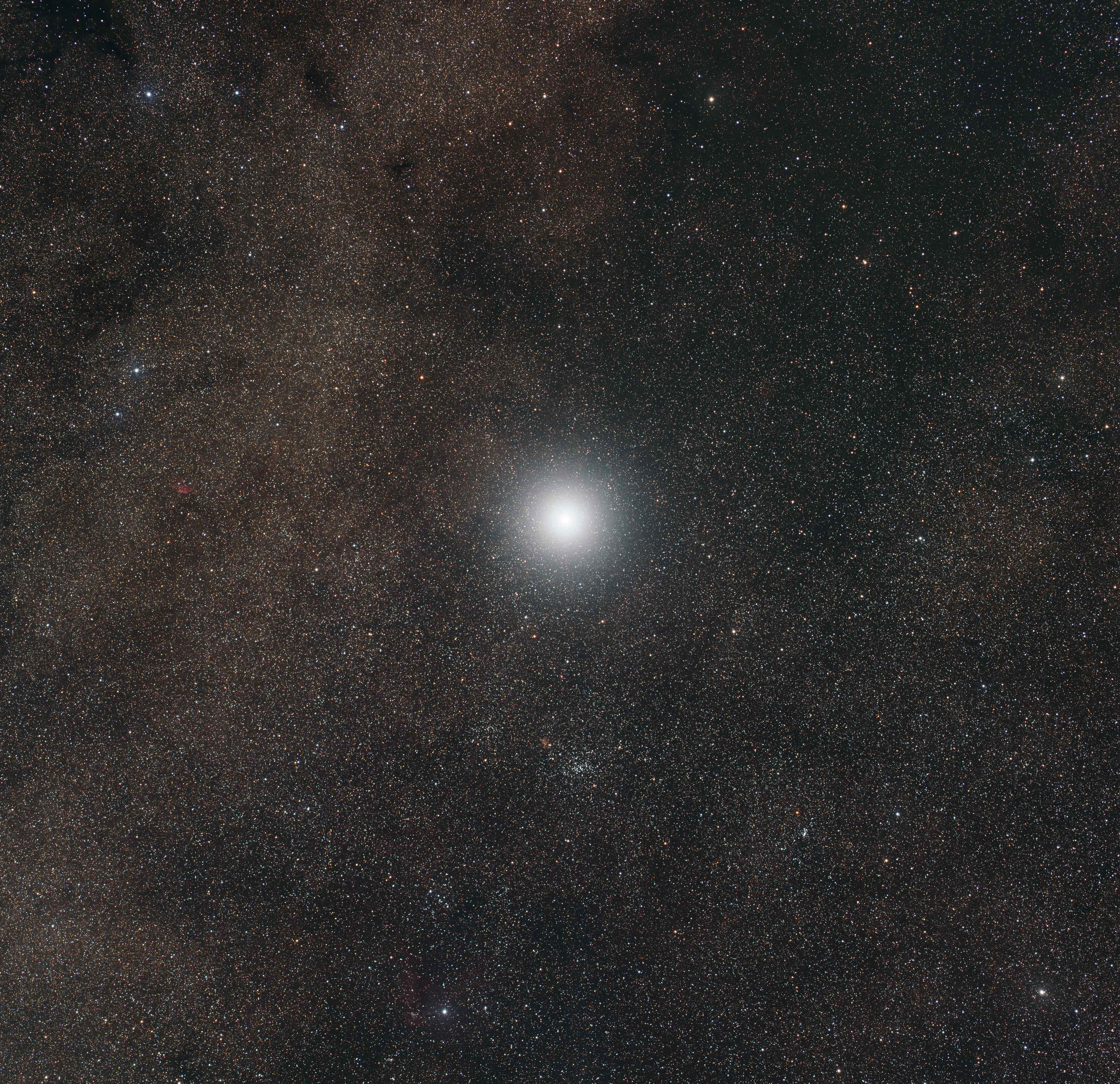
Alpha Centauri
Alpha Centauri's claim to fame is that it is our closest stellar neighbor. It is
actually part of a triple system where Alpha Centauri A and B orbit each other and
Proxima Centauri (a red dwarf) orbits the pair. The system is just under 4.5
light-years away. Because it is our closest neighbor, it has been extensively and
intensively studied looking for exoplanets—several of which have been found.
|
- Location: El Sauce Observatory, Chile
- Date: April 2025
- Mount: Mathis MI-1000/1250
- Telescope: Planewave CDK24
- Camera: QHY600m @-25 (CMOS)
- Exposure: 148x10min each LRGB Total: 12hr 20min
|
- Location: El Sauce Observatory, Chile
- Date: January 2025
- Mount: Mathis MI-1000/1250
- Telescope: Planewave CDK24
- Camera: QHY600m @-25 (CMOS)
- Exposure: 72x5min each LRGB Total: 6hrs
|
- Location: El Sauce Observatory, Chile
- Date: May 2025
- Mount: Mathis MI-1000/1250
- Telescope: Planewave CDK24
- Camera: QHY600m @-25 (CMOS)
- Exposure: 68x3min each LRGB Total: 3hr 40min
|
- Location: Heaven's Mirror Obs, Australia
- Date: June - July 2021
- Mount: Paramount MX
- Telescope: Takahashi FSQ-106E (AUS-2)
- Camera: FLI PL16083 @ -25c
- Exposure: 56x1min each LRGB Total: 56min
|
|
R Aquarii
R Aquarii is a variable star in the constellation Aquarius. It is a symbiotic
star believed to contain a white dwarf and a Mira-type variable in a binary
system. The main Mira-type star is a red giant that varies in temperature and
brightness by a factor of 750, ranging from a naked-eye object to an object
beyond the capabilities of large binoculars about every 390 days.
Occasionally, the dwarf star ejects material which forms and adds to the nebula
around the star system. The central area had a major mass ejection about 190 years ago.
The background sky should normally not be so dark; however, because the sub-frames were very short
in exposure and extremely noisy, darkening it was the only way to manage the background.
|
R Aquarii - Cropped
This view is the same image as the preceding one—just cropped to zoom in a bit.
|
Messier 7 - Ptolemy's Cluster
This is my third version of this cluster. The other two are shown above.
|
Messier 12
This globular cluster can be found in the constellation Ophiuchus. Although it
is fairly faint, at a relatively dark site it can be viewed with binoculars. It
is about 16,400 light-years away from Earth with a diameter of about 75 light-years.
As globular clusters go, this one is very loosely packed.
|
- Location: El Sauce Observatory, Chile
- Date: May - December 2024
- Mount: Mathis MI-1000/1250
- Telescope: Planewave CDK24
- Camera: QHY600m @-25 (CMOS)
- Exposure: 208x3 min each OHS Total: 3hr 35min
|
- Location: El Sauce Observatory, Chile
- Date: May - December 2024
- Mount: Mathis MI-1000/1250
- Telescope: Planewave CDK24
- Camera: QHY600m @-25 (CMOS)
- Exposure: 208x3 min each OHS Total: 3hr 35min
|
- Location: El Sauce Observatory, Chile
- Date: May - June 2025
- Mount: Mathis MI-1000/1250
- Telescope: Planewave CDK24
- Camera: QHY600m @-25 (CMOS)
- Exposure: 123x3min LRGB Total: 1hr 3min
|
- Location: IC Astronomy, Oria, Almería, Spain
- Date: June - August 2021
- Mount: Officina Stellare EQ Mount
- Telescope: Officina Stellare Pro RC 700 (SPA-2)
- Camera: FLI PL16803 @-25c (CCD)
- Exposure: 61x10min each LRGB Total: 5hrs 5min
|