|
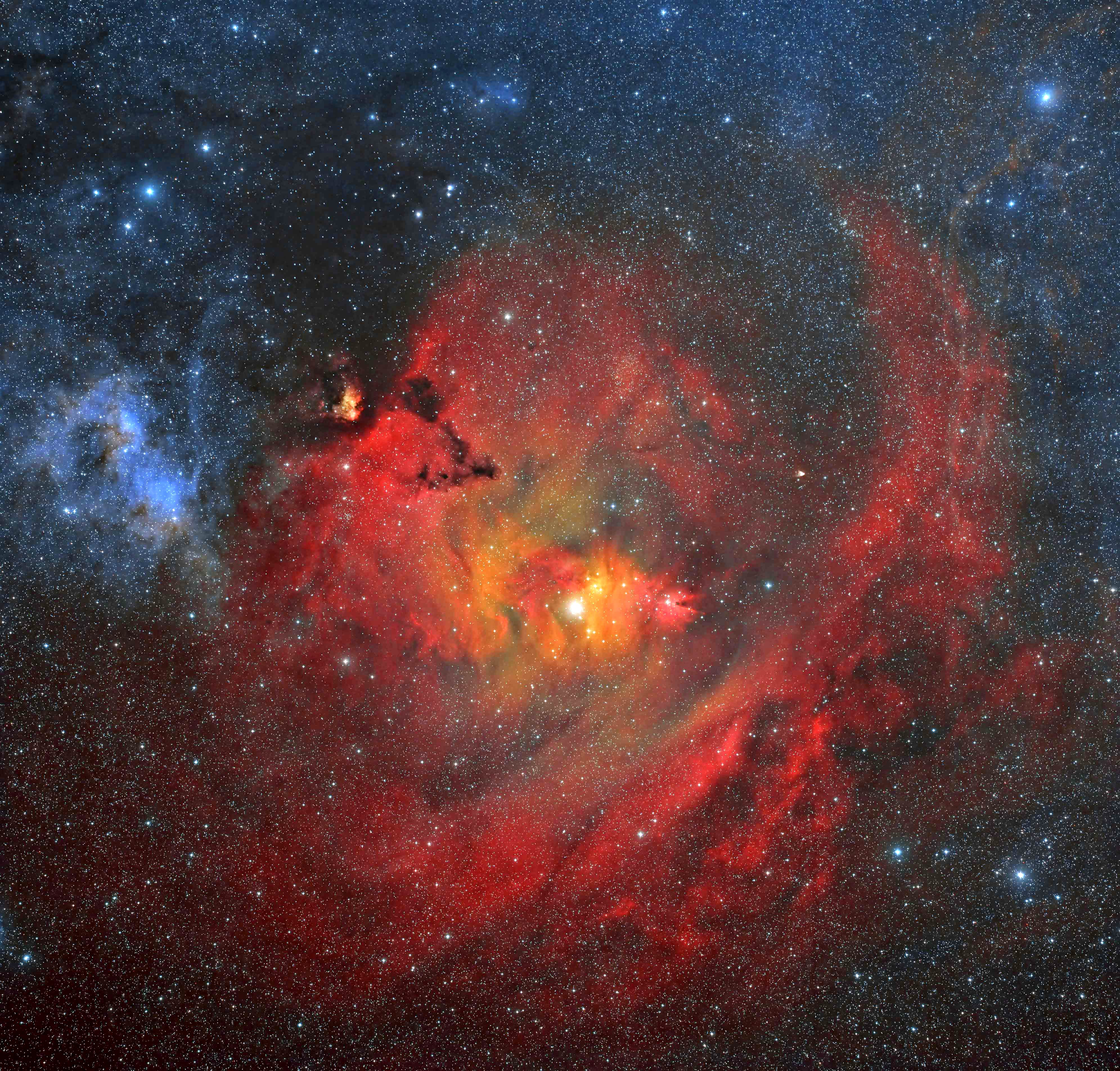
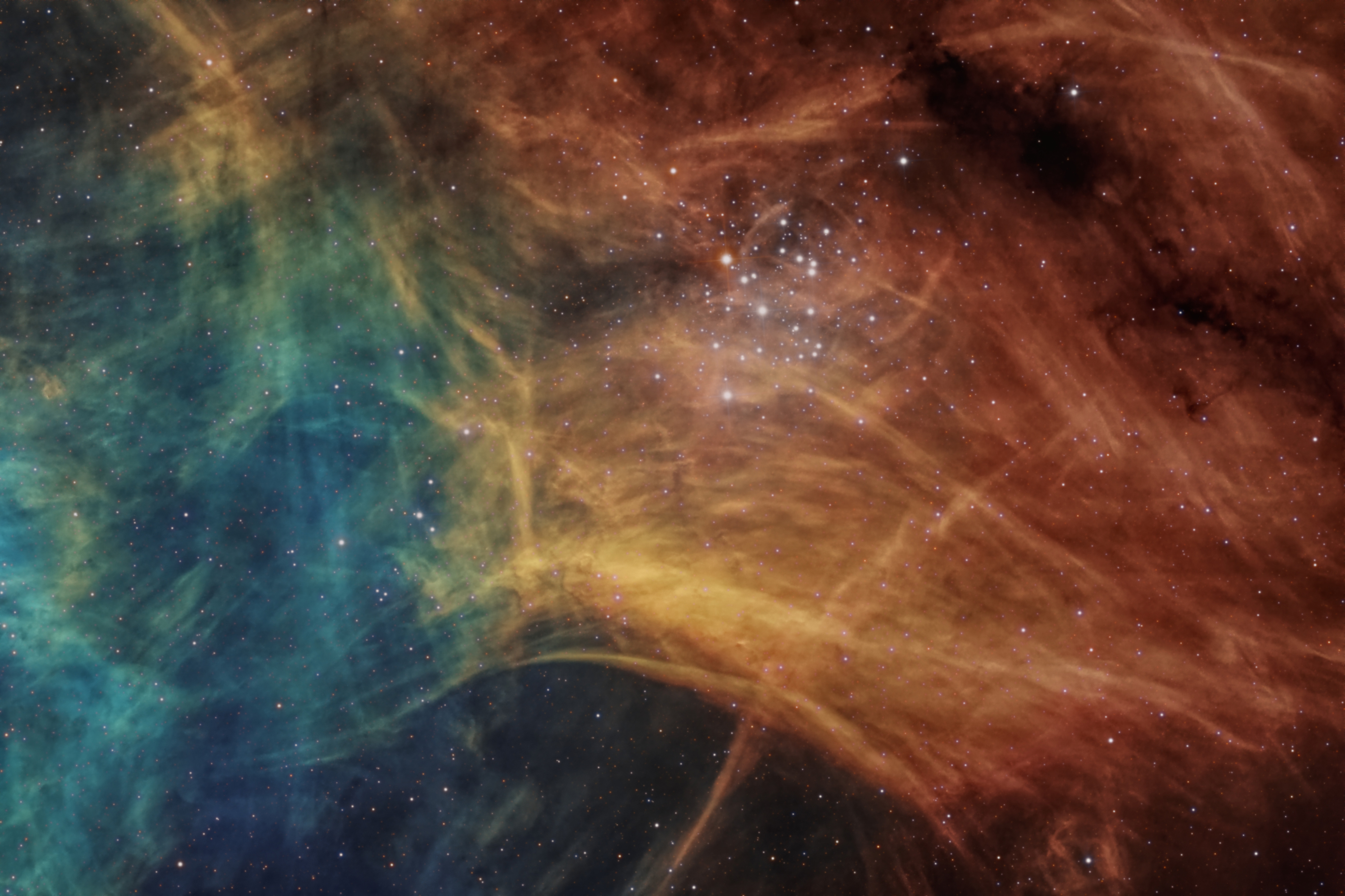
NGC 2264
NGC 2264 is a diffuse emission nebula and cluster in the constellation Monoceros. It's
unusual in that the NGC designation also includes the Cone Nebula, the
Snowflake Nebula and the Christmas Tree Nebula. All of these objects lie
around 2300 light-years from Earth. In the center of the nebula are a
number of hot, new stars that are hot enough to excite the nearby gases
enough that they begin to glow in visible light
|
Sh2-129, OU4 - The Flying Bat and Squid Nebulae
In the constellation Cepheus is the large nebula - The Flying Bat, and
right in the middle is the very faint Squid Nebula. This one was really
difficult to process. Just couldn't figure out how to bring out the
colors the way I would like. This one would be worth re-doing sometime when I have
a little more PixInsight under my belt. They both lie about 2300 light-years
away and the Squid nebula is about 50 light-years across
|
NGC 1499 - The California Nebula
The California Nebula is an emission nebula in the constellation Perseus.
Although in this image it looks fairly bright, it actually has a very low
surface brightness which makes it difficult to observe visually. It lies
about 1000 light-years from the Earth
|
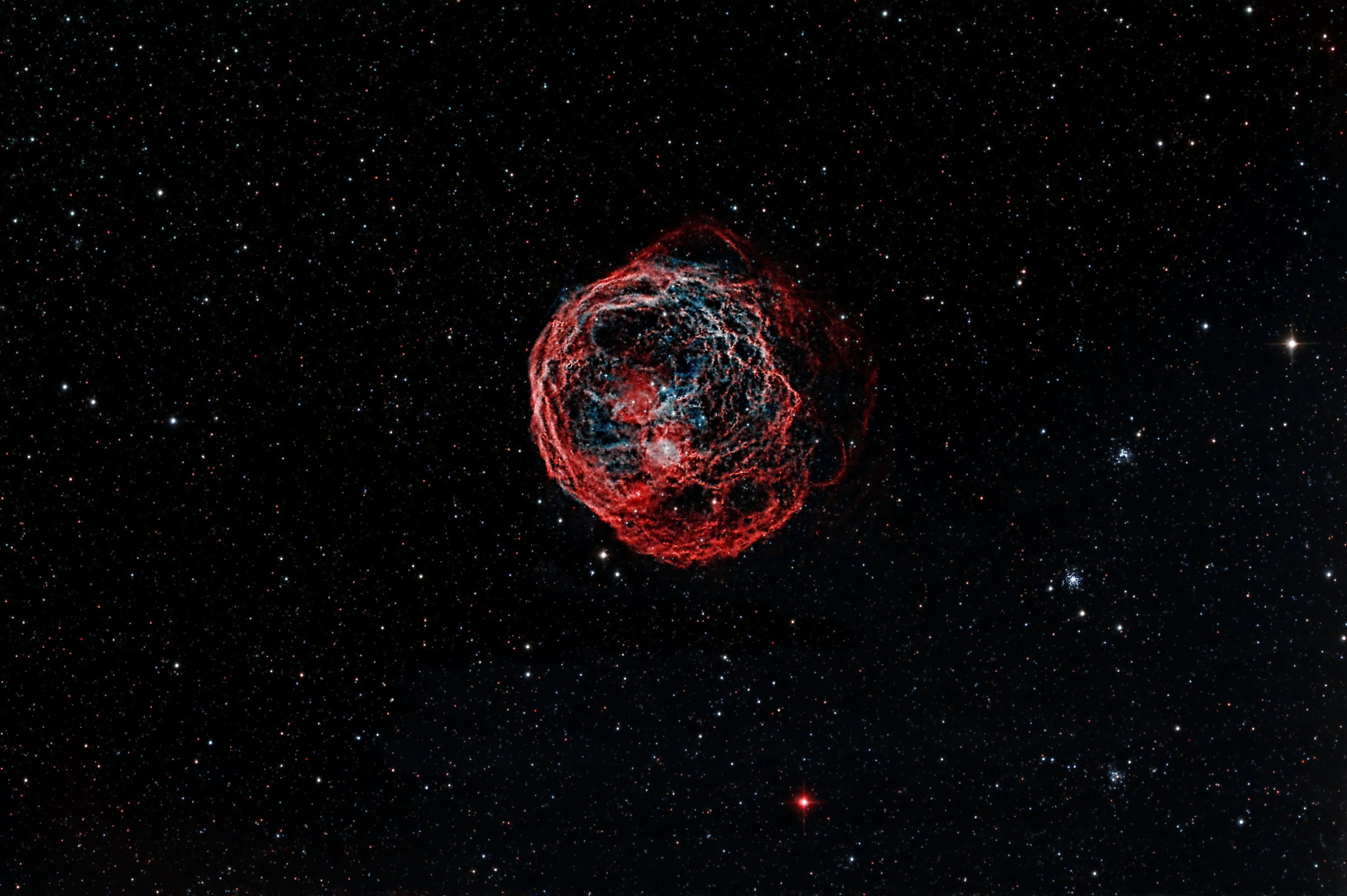
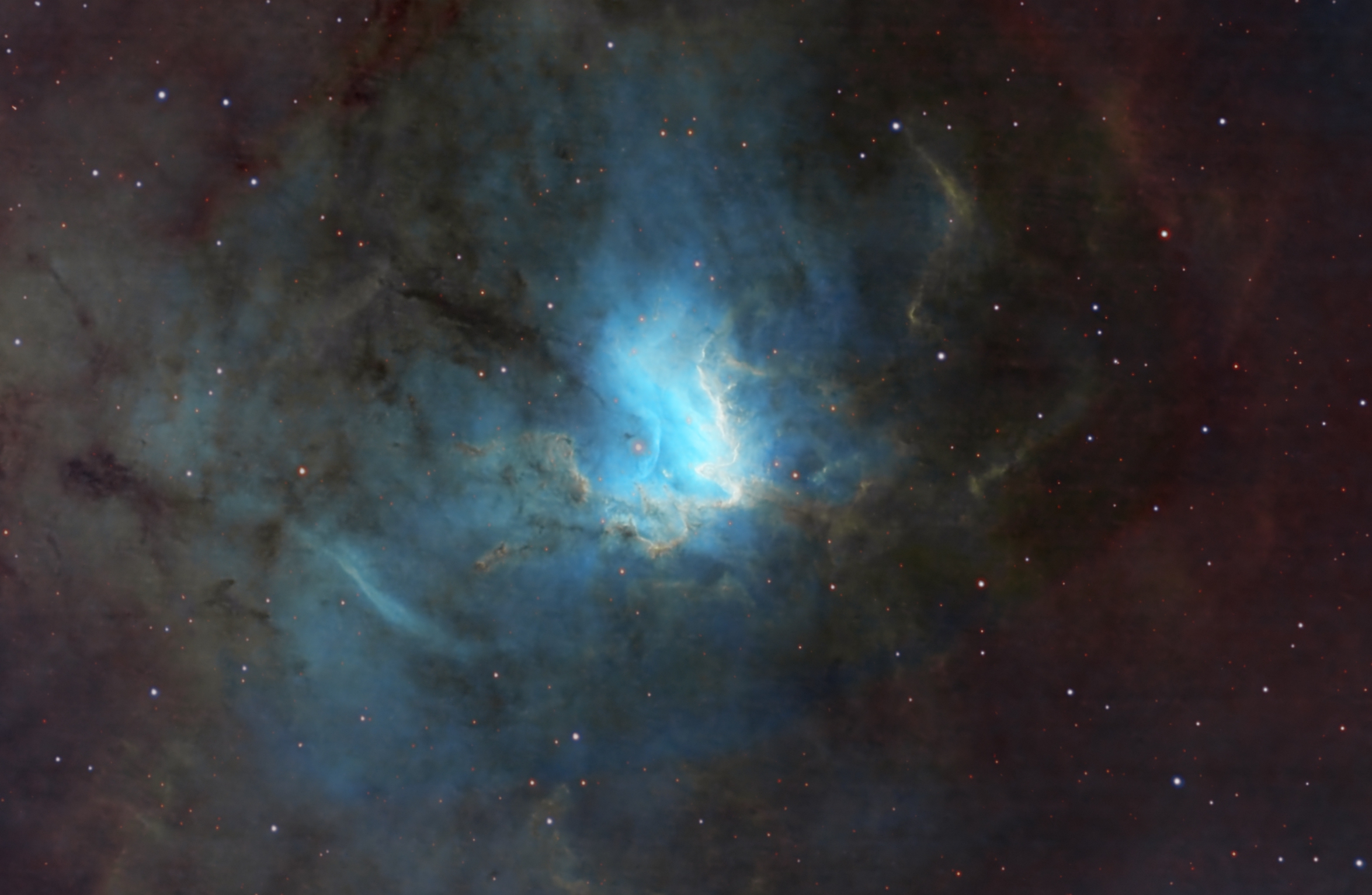
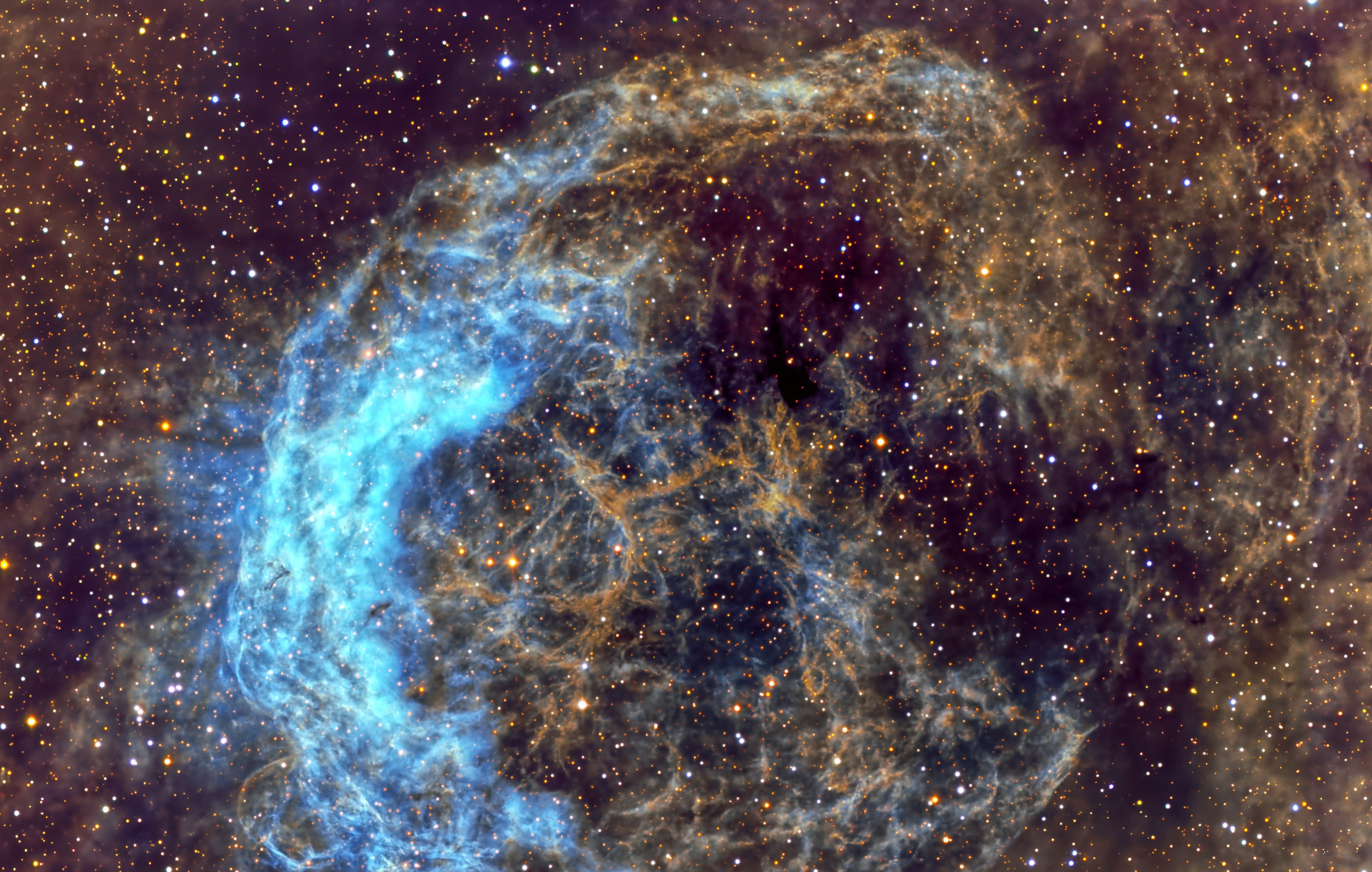
Henize 70
Henize 70 was first observed in 1950. Originally it was thought to be a
Supernova remnant. Then in 1956 it was added to catalogs as a planetary and
emission nebula. Over the years most astronomers stuck with the supernova
theory. As it turns out, Henize 70 is a superbubble - a mass of gas that
seems to be eroding from nearby stellar winds. This image is a second version
- experimenting with some new processing techniques. The first version is
on the second Nebula page and was processed in SHO. This version was processed
in HOO
|
- Location: IC Astronomy Observatory, Spain
- Date: November 2020 - September 2022
- Mount: Paramount MX+
- Telescope: FSQ-106ED SPA-3
- Camera: FLI PL16083
- Exposure: 42x5 min HOS 10hr 30min
|
- Location: IC Astronomy Observatory, Spain
- Date: July 28, 2023
- Mount: Officina Stellare EQ Mount
- Telescope: Officina Stellare Pro RC 700
- Camera: QHY600m @-25c SPA-2
- Exposure: 24x5 min HOS 6hrs
|
- Location: IC Astronomy Observatory, Spain
- Date: August 2023
- Mount: Paramount MX+
- Telescope: Takahashi FSQ-106ED SPA-1
- Camera: FLI PL 16083
- Exposure: 18x5 min HSO 4hrs 30min
|
- Location: El Sauce Observatory, Chile
- Date: February - March 2023
- Mount: Mathis MI-1000
- Telescope: Planewave CDK24 f/6.6
- Camera: QHY600m @-25c (CHI-1)
- Exposure: 15x10 min HSO 3hrs 15min
|
|
IC 4812 - The Coalsack Nebula
The Coalsack Nebula lies about 600 light-years from Earth in the
Southern constellation of Crux (the Southern Cross). It is one
of the rare DSOs that can be seen with the naked eye. It plays an
important part in the mythologies of the Australian Aboriginal People,
and forms the head of the Emu in the Sky. For the Inca people, this
nebula was called Yutu, a partridge-like bird in South America
|
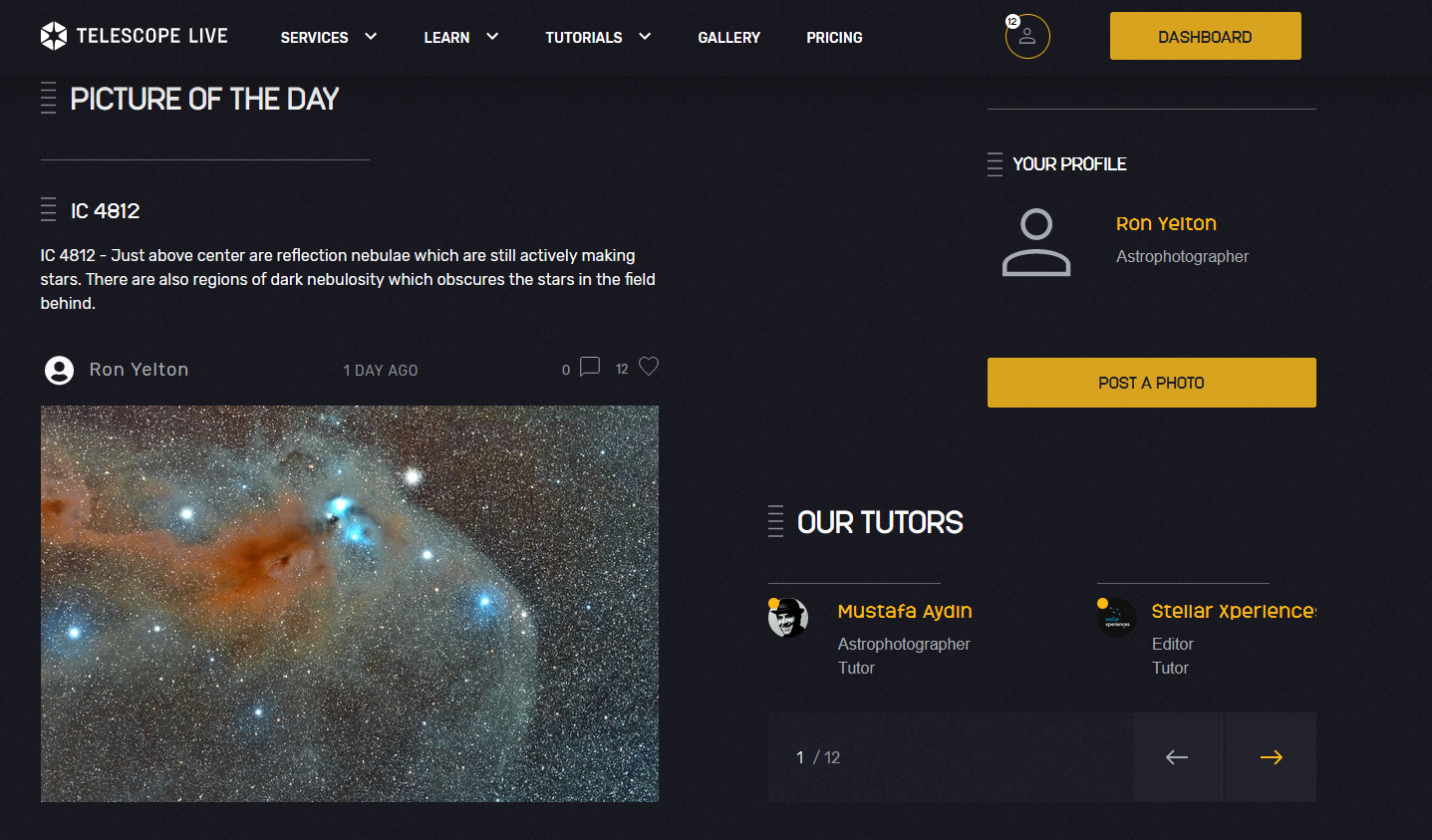
Telescope Live Picture of the Day
In September of 2023 I was lucky enough to have one of my images
selected as the Telescope Live Picture of the Day. It's really nice
to be recognized. The picture is the one directly to the left
|
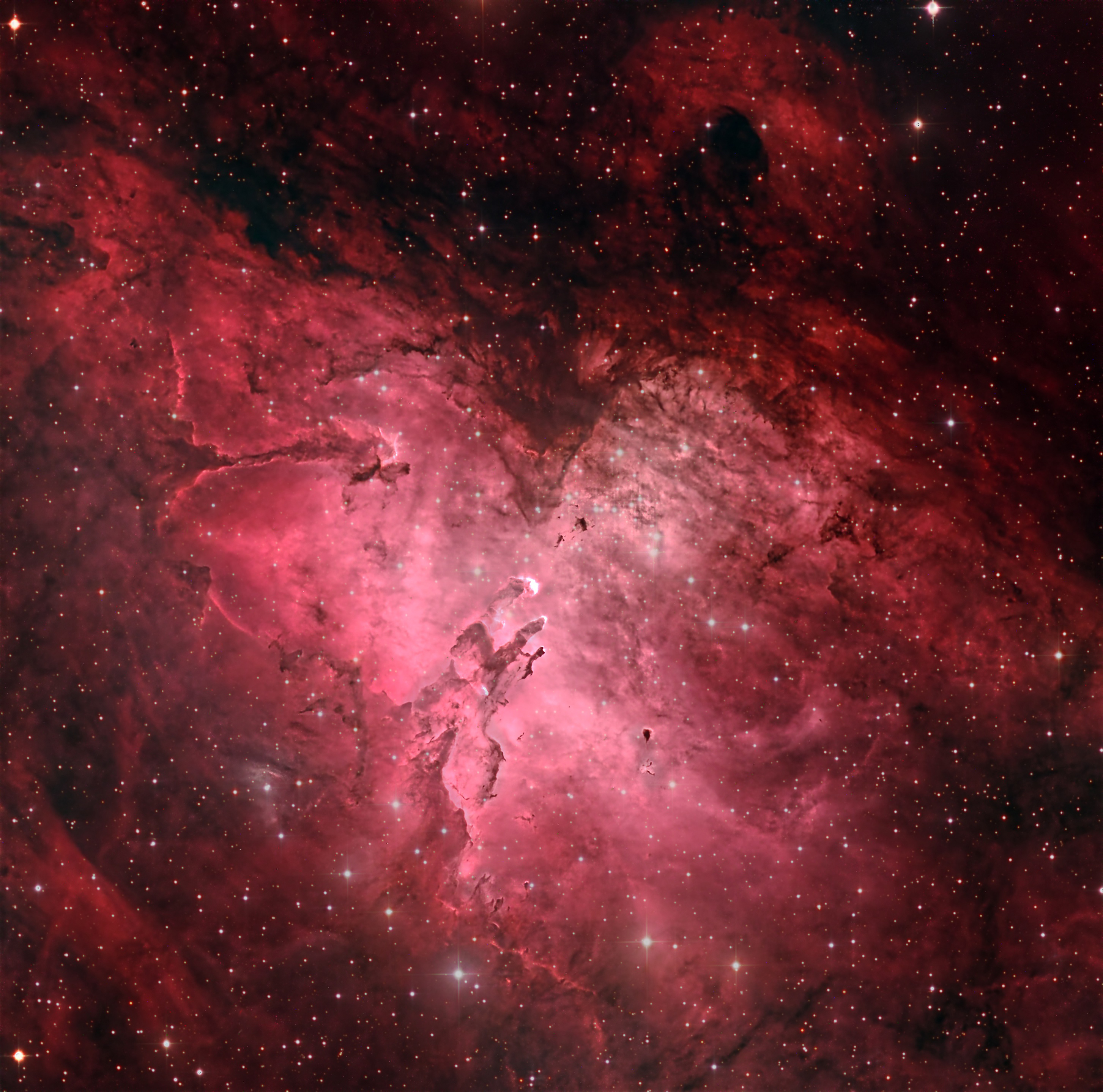
Messier 16 - The Eagle Nebula (Pillars of Creation)
In the constellation Serpens lies Messier 16, a diffuse emission nebula.
It is about 5700 light-years from Earth and contains numerous active star-forming regions and clusters,
the main cluster containing around 8100 stars. The Eagle Nebula was made famous in 1995 when a Hubble
image was released that came to be named "The Pillars of Creation." The Pillars are an excellent
example of the erosion of the molecular cloud that formed the hot, new stars. The intense radiation
from the new stars is what causes the erosion
|
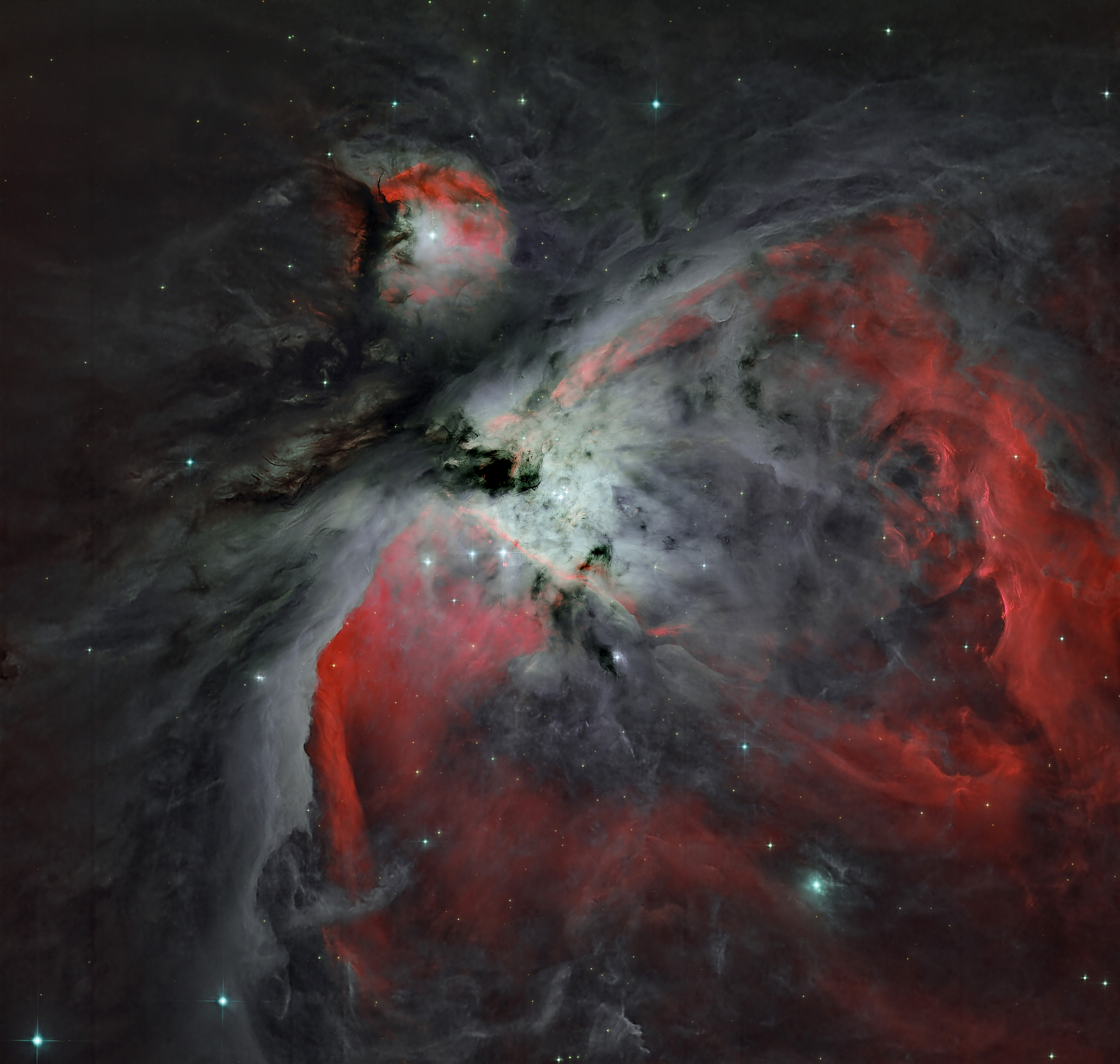
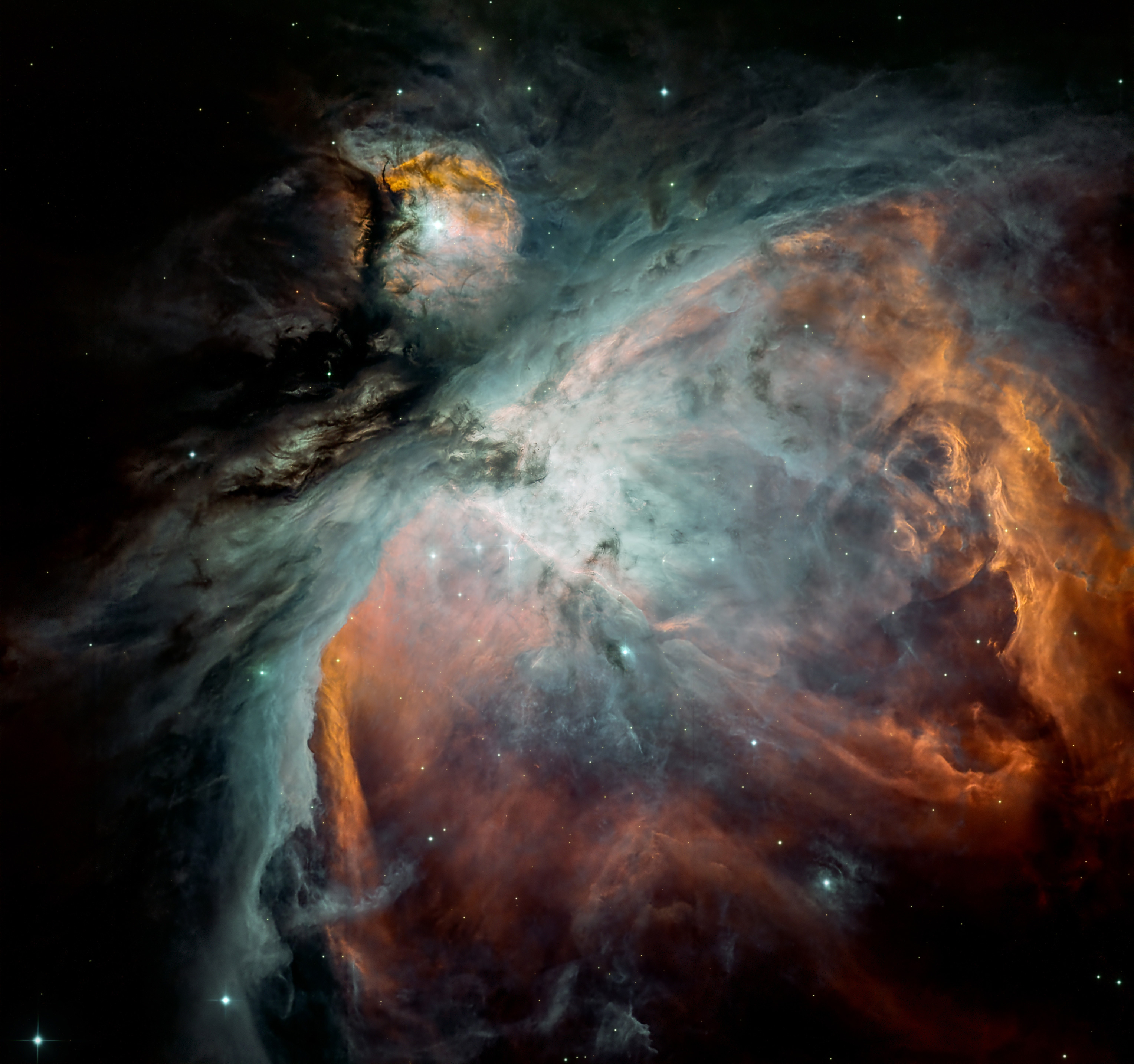
Messier 42 - The Great Orion Nebula
Measuring about 24 light-years across and 1344 light-years from Earth,
the Great Orion Nebula is a prime example of an emission nebula. It is a naked-eye object and can
be identified as the middle "star" in Orion's sword. It is the most photographed and studied nebula
and has added considerably to our knowledge of star and planetary systems formation. This is one
of several M42s that I've done with various different telescopes and cameras. It's fun to re-do
an image as I learn new techniques in processing
|
- Location: Heaven's Mirror Observatory, Australia
- Date: August 2023
- Mount: Paramount MX+
- Telescope: FSQ-106ED AUS-2
- Camera: FLI PL16083 @-25c
- Exposure: 12x5 min LRGB 4hrs
|
|
- Location: El Sauce Observatory, Chile
- Date: February - April 27, 2020
- Mount: Mathis MI-1000
- Telescope: Planewave CDK24 f/6.6
- Camera: QHY600m @-25c (CHI-1)
- Exposure: 17x10 min LRGB 2hrs 50min
|
- Location: El Sauce Observatory, Chile
- Date: December 2020 - February 2021
- Mount: Mathis MI-1000
- Telescope: Planewave CDK24 f/6.6
- Camera: QHY600m @-25c CHI-1
- Exposure: 30x30 sec LRGB 1hr
|
|
Messier 42 - The Great Orion Nebula
This is another version of the Orion Nebula using the same data set as the
image to the left. This time I used some of the processes in
Affinity Photo 2. I actually came across this look by accident. It was
a version that popped up when I was using Tone Mapping Persona. This would
be an awesome image if I could figure out how to lighten the left side
without lightening the rest of the image. There's still a lot of nebulosity
hidden in there
|
NGC 3293
In the constellation Carina lies NGC 3293, an open cluster, which boasts over
100 stars. It was discovered by Nicholas-Louis de Lacaille in 1751. Two of the
brand new stars are blue super-giants. It is about 12 million years old. The
most massive of the stars have congregated toward the center of the cluster
|
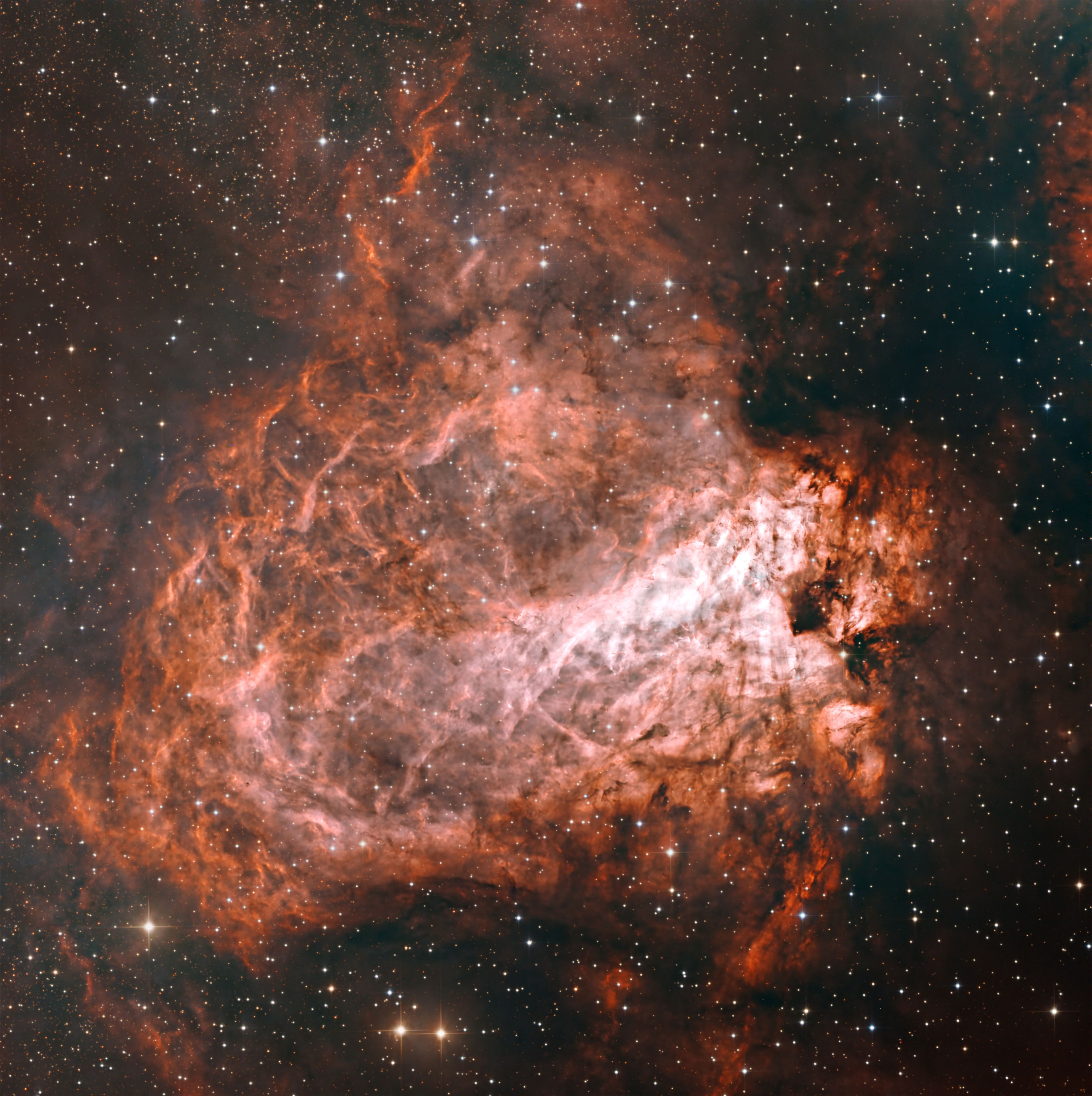
Messier 17 - The Omega Nebula or Swan Nebula
Lying about 5500 light-years from Earth, the nebula spans around 15 light-years
in diameter. The larger cloud of gas and dust from which the nebula formed is
about 40 light-years in diameter. It is one of the most massive and brightest
star-forming regions in our own Milky Way. It was discovered by Phillipe Loys
de Cheseaux in 1745 and finally cataloged by Charles Messier in 1765
|
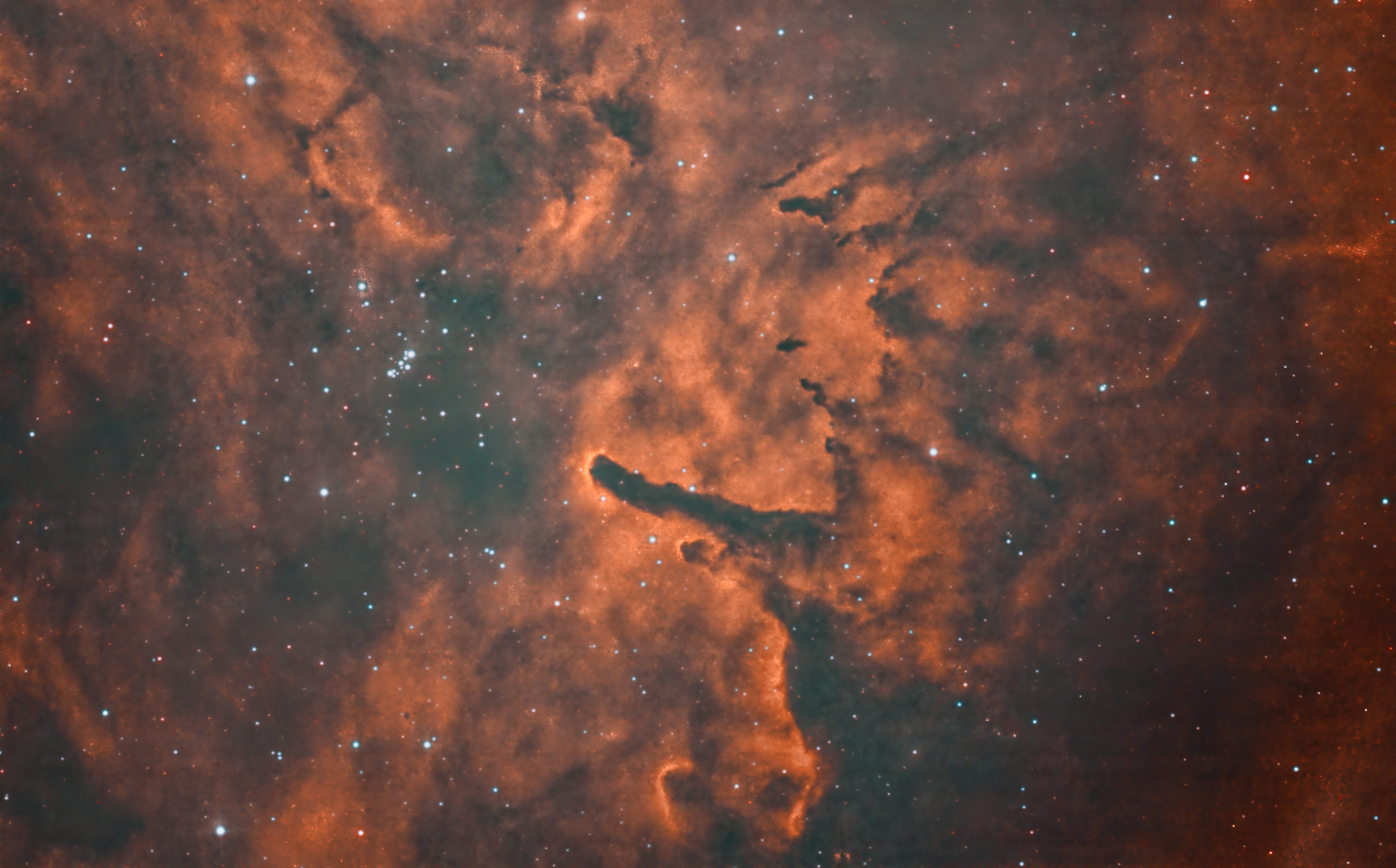
Sharpless-86 (Sh2-86)
This nebula is an emission and dark nebula located in the constellation Vulpecula.
There are numerous pillars of dust and gas that are eroding because of the stellar
radiation (solar wind) from the star cluster that is center-left (NGC 6823).
There are also numerous Bok globules throughout the nebula. The globules are areas
around protostars where planets will form around that particular star
|
- Location: El Sauce Observatory, Chile
- Date: February - April 27, 2020
- Mount: Mathis MI-1000
- Telescope: Planewave CDK24 f/6.6
- Camera: FLI PL9000 @-25c CHI-1 CCD
- Exposure: 30x30 sec LRGB 5min
|
- Location: El Sauce Observatory, Chile
- Date: June 5 - July 3, 2023
- Mount: Mathis MI-1000
- Telescope: Planewave CDK24 f/6.6
- Camera: QHY600m @-25c CHI-1
- Exposure: 32x5 min HSO 16hrs
|
- Location: El Sauce Observatory, Chile
- Date: April 4, 2020
- Mount: Mathis MI-1000
- Telescope: Planewave CDK24 f/6.6
- Camera: QHY600m @-25c CHI-1
- Exposure: 12x10 min for LRGB 2hrs 40min
|
- Location: El Sauce Observatory, Chile
- Date: September 2023
- Mount: Mathis MI-1000
- Telescope: Planewave CDK24 f/6.6
- Camera: QHY600m @-25c CHI-1
- Exposure: 7x5 min HOO 35min
|
|
Small Magellanic Cloud (SMC) NGC 292
The Small Magellanic cloud is a companion galaxy to our own Milky Way and
sits about 200,000 light-years from us. It is an irregular dwarf galaxy
and has a mass of about 7 billion solar masses with several hundred million
stars. It is one of the most distant objects that can be seen with the naked
eye. It is visible throughout the entire southern hemisphere and up to about
15 degrees north of the Equator
|
Large Magellanic Cloud (LMC) LRGB
The LMC is a satellite galaxy to the Milky Way. It lies about 163,000 light-years
away. The LMC is classified as a Magellanic spiral, in that it contains a stellar
bar that is geometrically off center, suggesting that it was a barred dwarf
spiral galaxy before its spiral arms were disrupted, likely by tidal
interactions from the Small Magellanic Cloud (SMC) and the Milky Way's
gravity
|
Large Magellanic Cloud (LMC) HLRGB
This image is almost exactly the same as the one just to the left. The
difference is that this one has Hydrogen Alpha (Ha) added. Hydrogen, in
this case is in the red channel which accentuates the hydrogen regions in
the image. The bright white area in the lower-right is the Tarantula Nebula
|
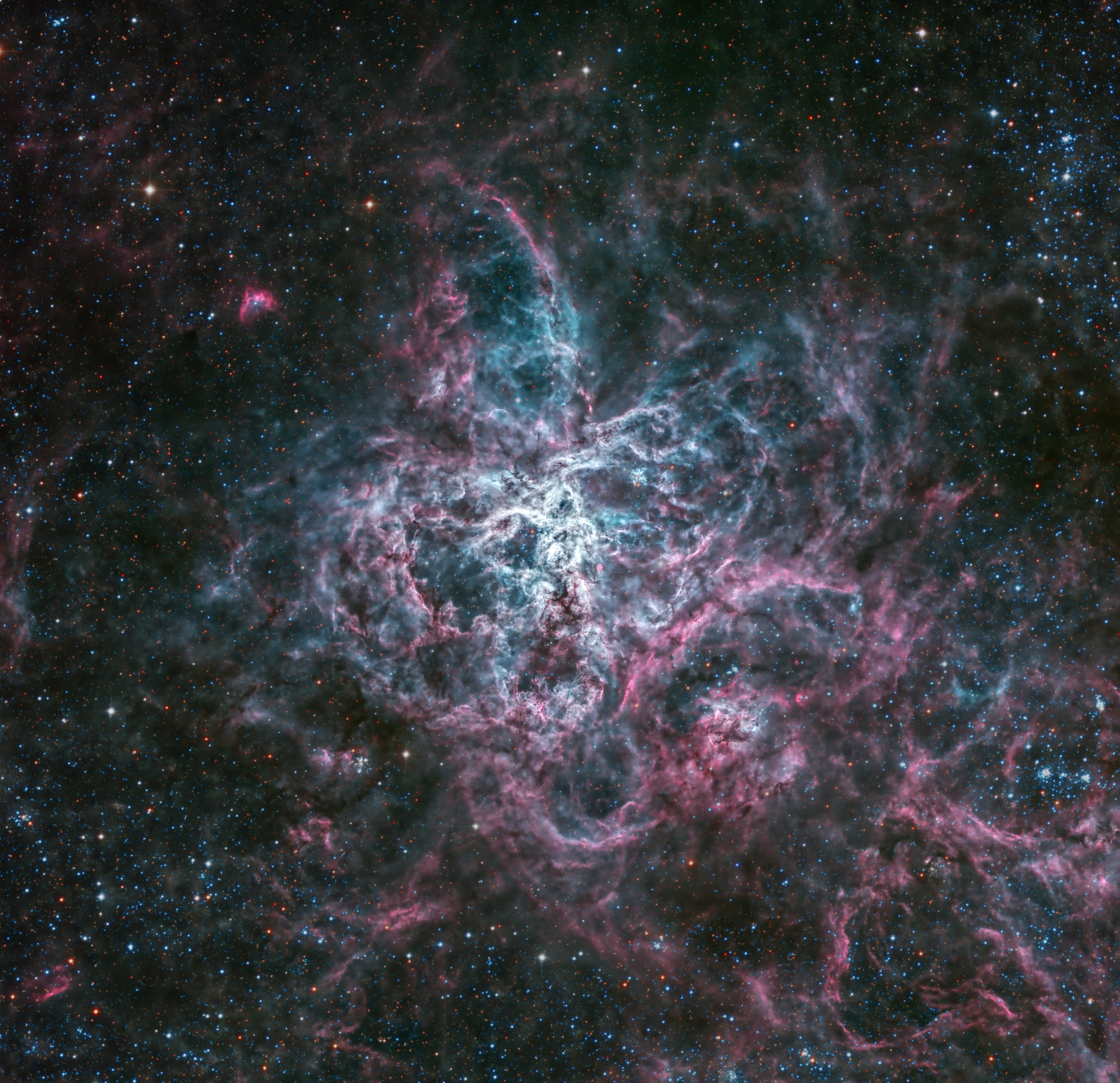
NGC 2070 - The Tarantula Nebula
The Tarantula Nebula is a large HII region in the Large Magellanic Cloud.
In the previous two images above, it is the bright area in the lower-right
of the LMC. It lies about 160,000 light-years from Earth. It is also one of
the most luminous non-stellar objects in the sky. If it were as close to us
as the Orion Nebula it would cast visible shadows. It is also the most active
starburst region in our local group of galaxies
|
- Location: Heaven's Mirror Obs, Australia
- Date: August 2023
- Mount: Paramount MX+
- Telescope: FSQ-106ED AUS-2
- Camera: QHY600m @-25c CMOS
- Exposure: 25x5 min HOO 2hrs 5min
|
- Location: Heaven's Mirror Obs, Australia
- Date: March and April 2023
- Mount: Paramount MX+
- Telescope: FSQ-106ED AUS-2
- Camera: QHY600m @-25c CMOS
- Exposure: 48x10 min LRGB 8hrs
|
- Location: Heaven's Mirror Obs, Australia
- Date: March and April 2023
- Mount: Paramount MX+
- Telescope: FSQ-106ED AUS-2
- Camera: QHY600m @-25c CMOS
- Exposure: 60x10 min LRGB+H 10hrs
|
- Location: Heaven's Mirror Obs, Australia
- Date: September 11, 2020
- Mount: Paramount MX+
- Telescope: FSQ-106ED (AUS-2)
- Camera: QHY600m @-25c CMOS
- Exposure: 155x5 min LRGB+H 13hrs
|
|
NGC 2064
NGC 2064 is a reflection nebula in the constellation Orion. The colors
of the nebula are due to the reflected light of young, very hot, bright
stars in the central blue area. It was first cataloged by John Louis Emil
Dreyer in 1888. I like this image as it has some pretty cool texture
|
NGC 6729
Located 424 light-years from us in the constellation Corona Australis lies
this emission/reflection nebula. Some areas glow due to stellar radiation
from stellar nurseries while other areas simply reflect the light from new,
very hot stars. It was discovered by Johann Friedrich Julius Schmidt in 1861
|
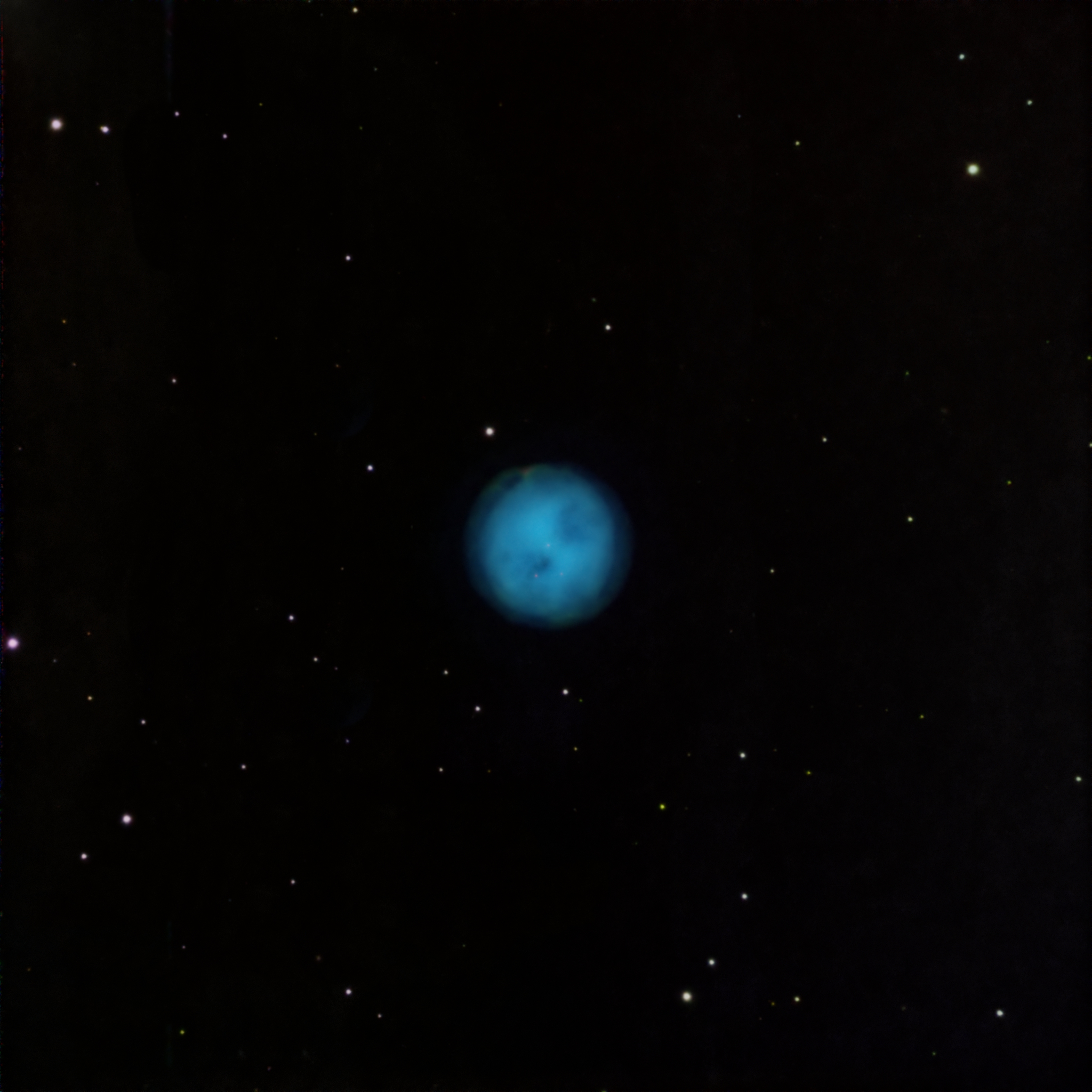
Messier 97 - The Owl Nebula
In the northern constellation of Ursa Major lies the Owl Nebula. It's a
planetary nebula that was formed about 8,000 years ago when the primary
star shed its outer atmosphere leaving behind a white dwarf. It was discovered
by Pierre Mechain (who was an observing colleague of Charles Messier) in 1781.
It was added to Messier's catalog one month after its discovery. Normally I
wouldn't have the sky background so unnaturally dark, but I couldn't figure
out how to get rid of some artifacts, so I just darkened it up to get rid of
them
|
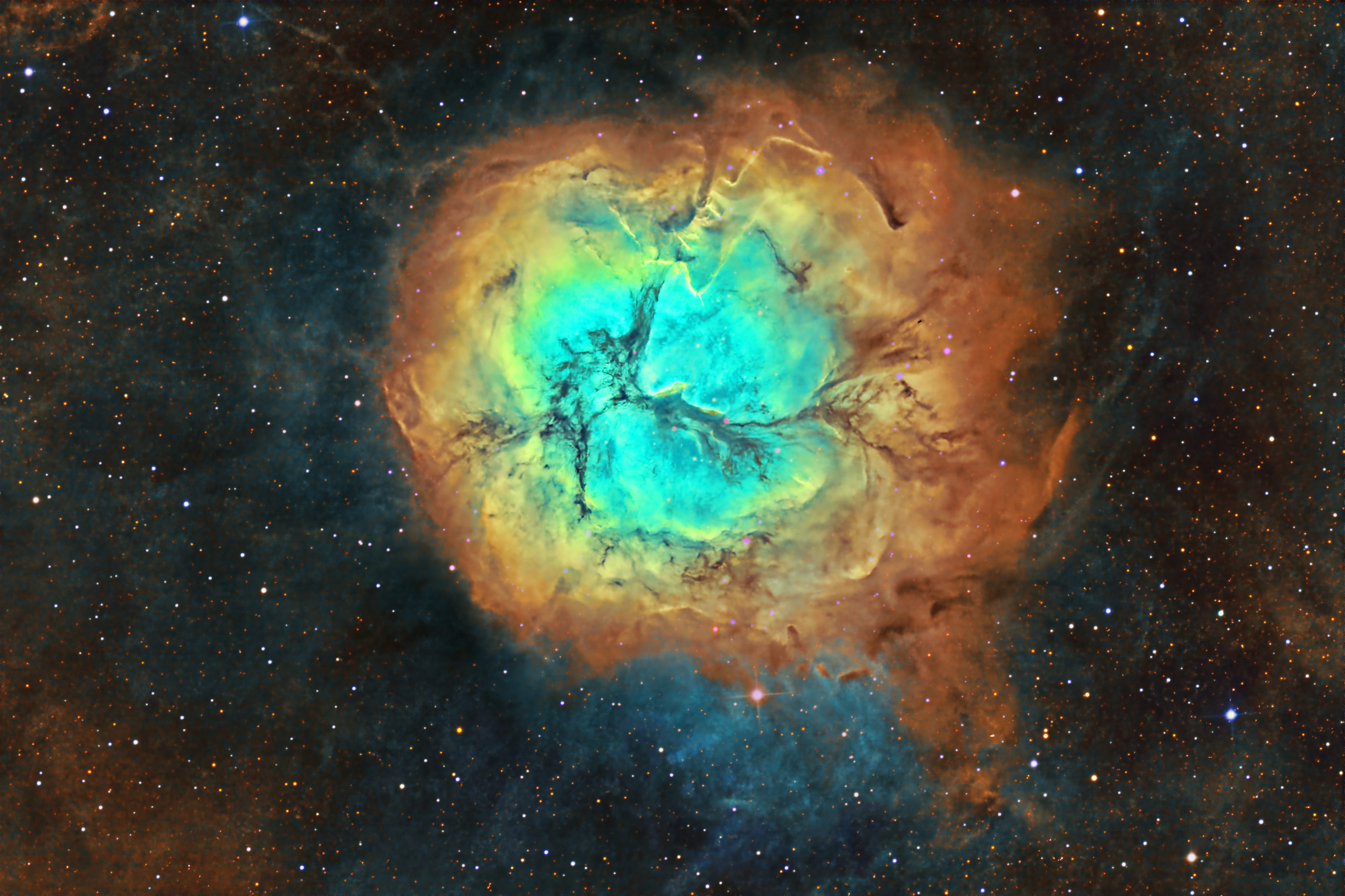
Messier 20 - The Trifid Nebula
Discovered by Charles Messier in 1764, it is a combination of open cluster
stars, emission nebula and reflection nebula. This image was done in the SHO
Hubble Palette, or false color. The central area has an open cluster that
sports about 3100 young, hot stars, the largest of which has the mass of about
20 solar masses
|
- Location: IC Astronomy Obs, Spain
- Date: December 2021 - February 2022
- Mount: OS EQ
- Telescope: Officina Stellare ProRC 700
- Camera: FLI PL16803 @ -25C SPA-2 CCD
- Exposure: 4x600 min RGB 2hrs 40min
|
- Location: El Sauce Observatory, Chile
- Date: August 2023
- Mount: Mathis MI-1000
- Telescope: Planewave CDK24 f/6.6
- Camera: QHY600m @-25c CHI-1
- Exposure: 171x5 min LRGB+H 14 hrs
|
- Location: IC Astronomy Observatory, Spain
- Date: March 2021 - April 2023
- Mount: Officina Stellare EQ Mount
- Telescope: Officina Stellare Pro RC 700
- Camera: QHY600m @-25c SPA-2
- Exposure: 42x300 min HSO 10hrs 30min
|
- Location: IC Astronomy Observatory, Spain
- Date: October 2023
- Mount: Paramount MX+
- Telescope: Takahashi FSQ-106ED (SPA-1)
- Camera: FLI PL 16083
- Exposure: 85x5 min HSO 7hrs
|
|
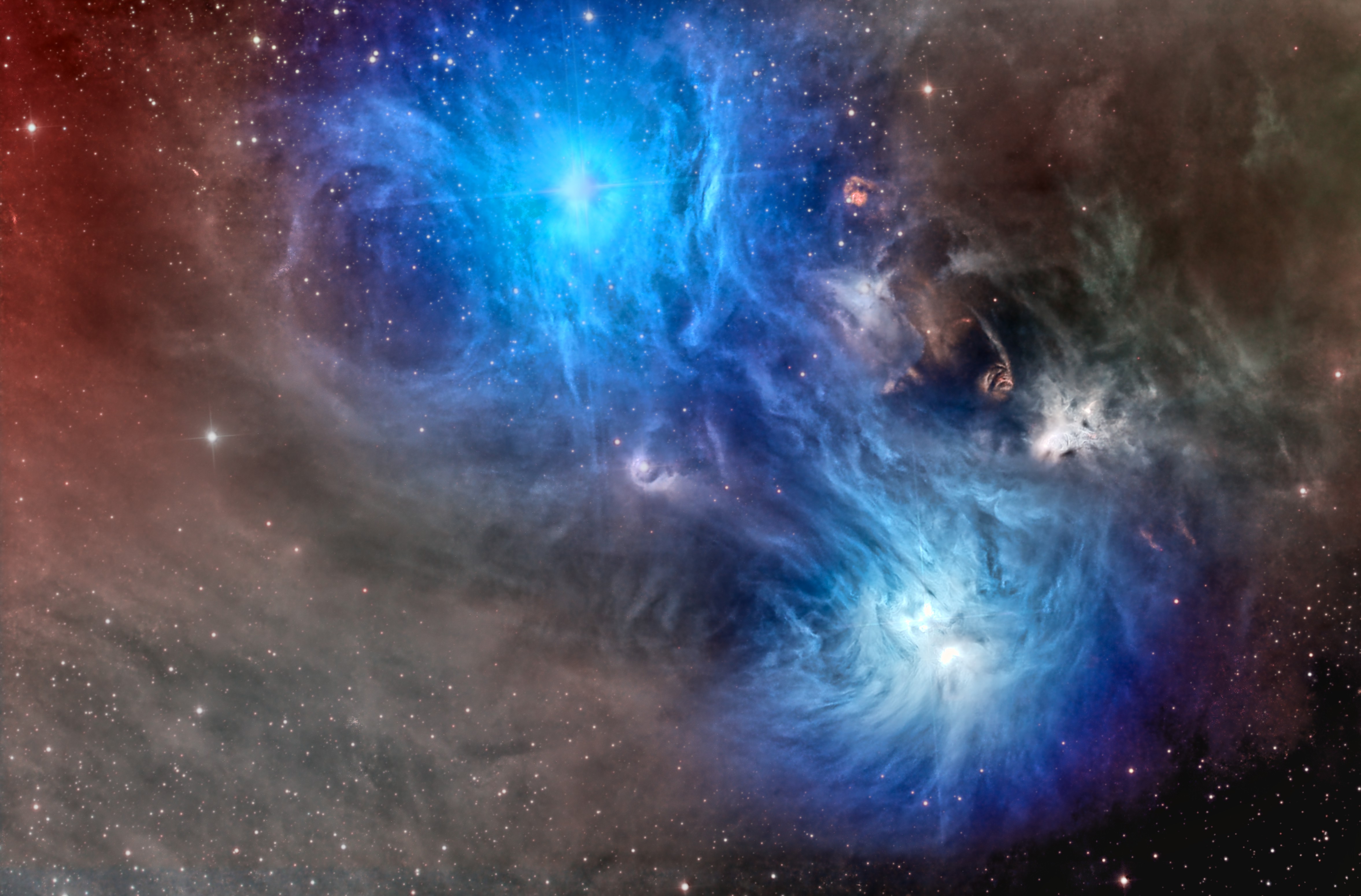
IC 4604
Right in the center of the blue section of this nebula lie three stars
that are called Rho Ophiuchi in the constellation Ophiuchus. The surrounding
gas reflects the light from these hot, young stars making this a reflection
nebula. There are also some areas of dark nebulosity on the left side. The
whole complex is called IC 4604. IC 4604 is one of the closest star-making
regions to Earth and is about 540 light-years away
|
Barnard 33 and NGC 2024 - The Horsehead and Flame Nebulae
The Horsehead Nebula was discovered by Williamina Fleming in 1888 on a
photographic plate. It is illuminated from behind by hot, young stars.
Some of their light also peeks through just to the left. The Flame Nebula
on the far left side is an emission nebula, meaning that the hot, just formed
stars in the middle are heating the surrounding gas until it glows. Both of
these objects are some of the most imaged objects by astrophotographers and
are about 1350 light-years away. I think, out of all the images that I've
processed, this is my favorite. It was processed in SHO false color
|
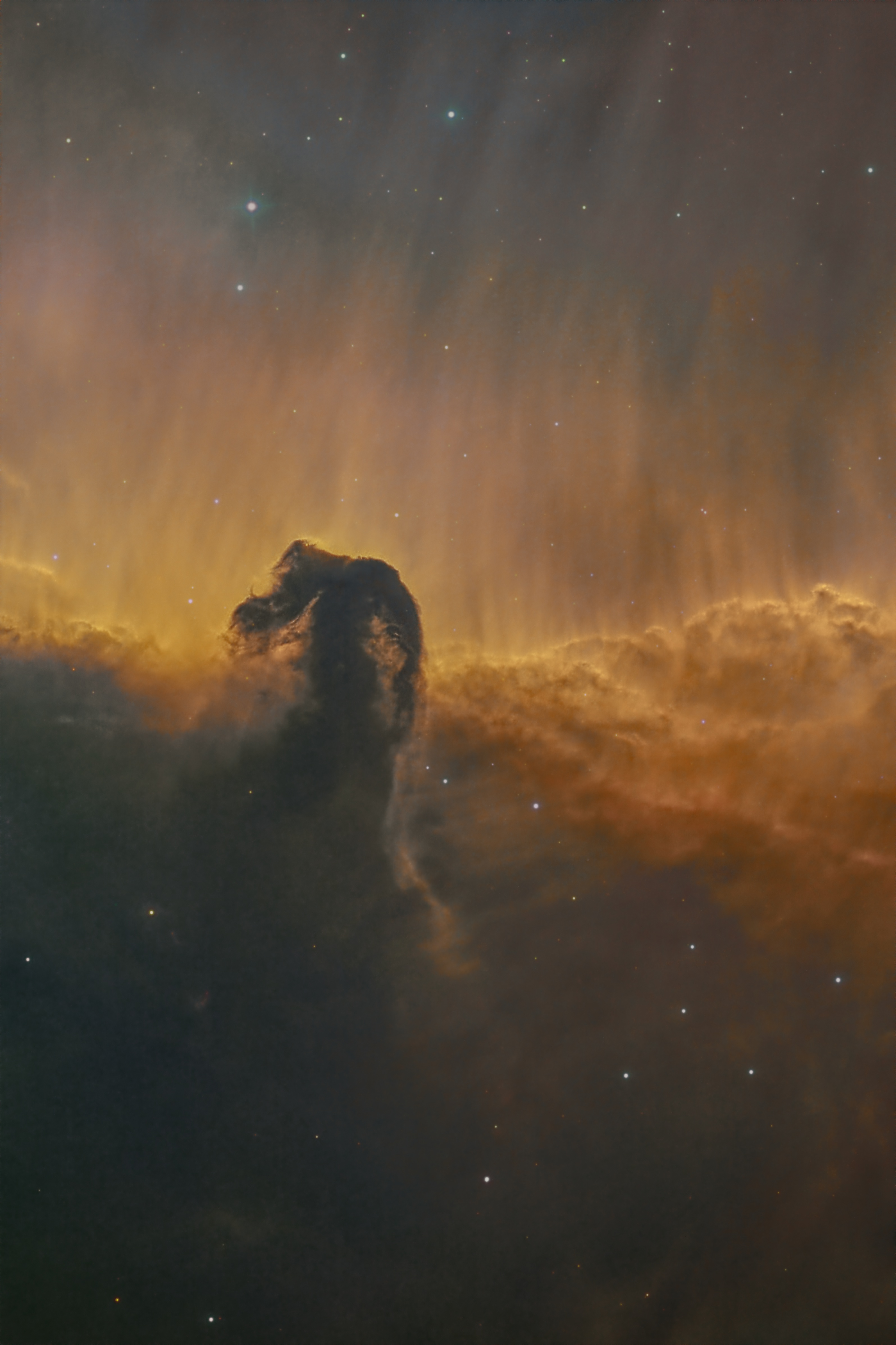
Barnard 33 - The Horsehead Nebula
This is another view of the Horsehead Nebula using a different telescope
from the image to the left. The one to the left was taken with a wide field
telescope, while this one used a telescope with a lot more magnification.
What a nice closeup! In this image you can see nebulosity streaking upward.
The stars behind the cloud of gas are emitting massive amounts of energy in
the form of solar winds which, as well as eroding the cloud, can actually
push the gas away from the direction of the star
|
NGC 6188 - The Fighting Dragons of Ara and NGC 6164 The Dragon's Egg
The Dragons of Ara is an emission nebula located in the constellation Ara.
There are a number of massive, young stars buried in the center that are
heating the surrounding gas enough that it glows. Some of the new stars are
only a few million years old. It is located about 4000 light-years away. The
Dragon's Egg, toward the bottom, is a planetary nebula that was created by
a star about 40 times the mass of our Sun as it underwent some late-life
convulsions. The outer halo is probably from an earlier active period of the star.
|
- Location: Heaven's Mirror Obs, Australia
- Date: October 2023
- Mount: Paramount MX+
- Telescope: FSQ-106ED AUS-2
- Camera: QHY600m @-25c CMOS
- Exposure: 16x5 min LRGB 5hrs 40min
|
- Location: Heaven's Mirror Obs, Australia
- Date: October 2023
- Mount: Paramount MX+
- Telescope: FSQ-106ED AUS-2
- Camera: QHY600m @-25c CMOS
- Exposure: 95x5 min SHO 17hrs
|
- Location: El Sauce Observatory, Chile
- Date: October 20, 2023
- Mount: Mathis MI-1000
- Telescope: Planewave CDK24 f/6.6
- Camera: QHY600m @-25c CHI-1
- Exposure: 172x5 min SHO 34hrs 30min
|
- Location: Heaven's Mirror Obs, Australia
- Date: October 2023
- Mount: Paramount MX+
- Telescope: FSQ-106ED AUS-2
- Camera: QHY600m @-25c CMOS
- Exposure: 108x5 min HSO 21hrs 30min
|
|
IC 4685
This nebula has both reflection and emission components. It lies around
4000 light-years away and is found in the constellation Sagittarius.
It doesn't get imaged often as both M8 and M20 are right nearby. It is
composed of mostly HII gas that is usually depicted in red. Using variations
of the Hubble Palette (in this case, SHO) it's fun to make something different
|
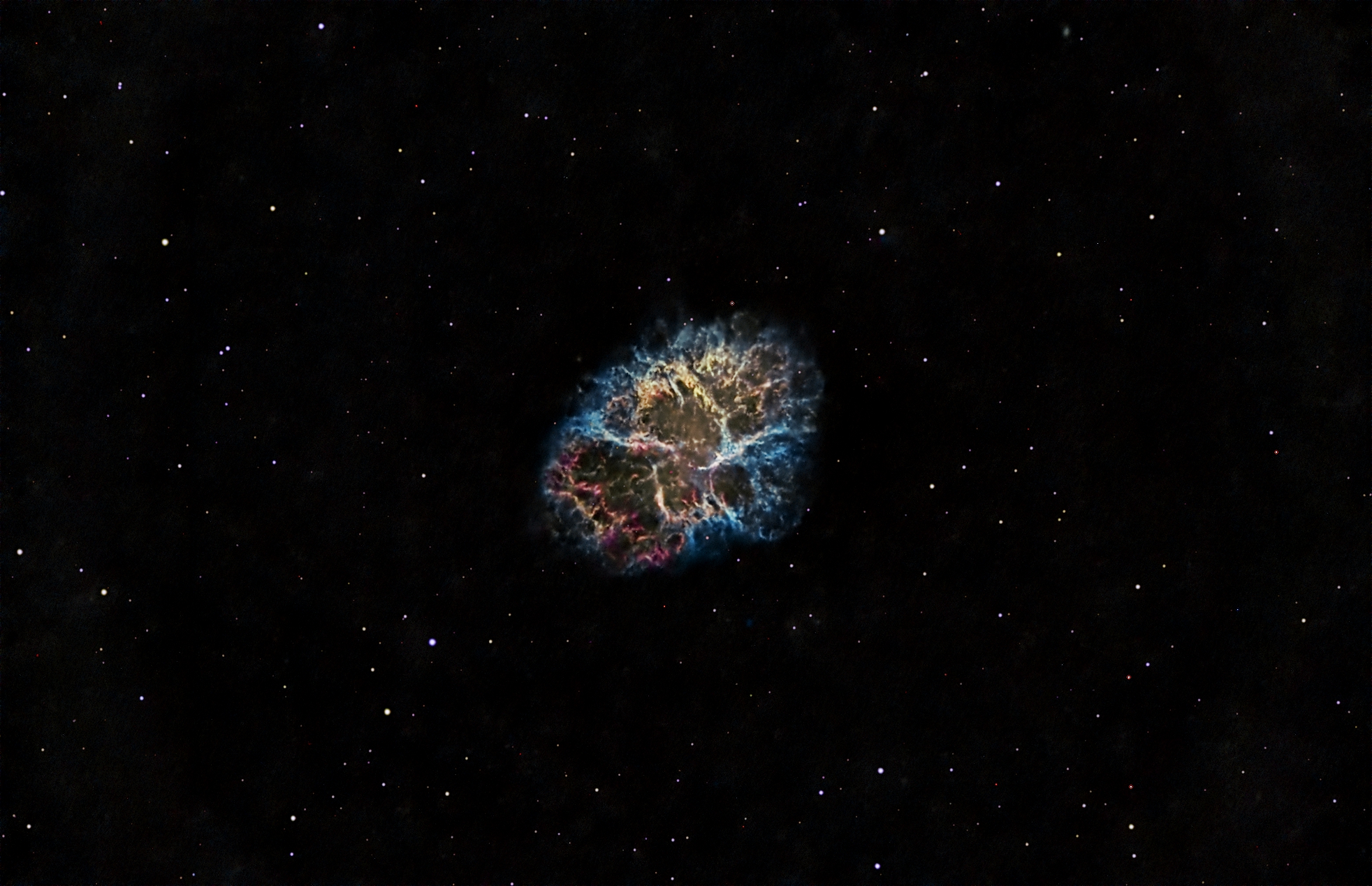
Messier 1 - The Crab Nebula
Originally observed by John Bevis in 1731, it was again observed
independently by Charles Messier in 1758 and added to his list. It
is a supernova remnant in the constellation Taurus. It is also the
first astronomical object that corresponds to a historical event. The
supernova was observed as a "Guest Star" in 1054 by the Chinese. At the
center of the nebula is the original star (the Crab Pulsar) that is now
a neutron star that measures about 18 miles across and spins at a rate
of 30.2 times per second. This supernova remnant lies about 6500 light-years
from us. The sky background is unusually black in this image. I had a lot of
trouble getting rid of some processing artifacts so I ended up just making
the background a bit blacker. It didn't solve the problem, only hid it
|
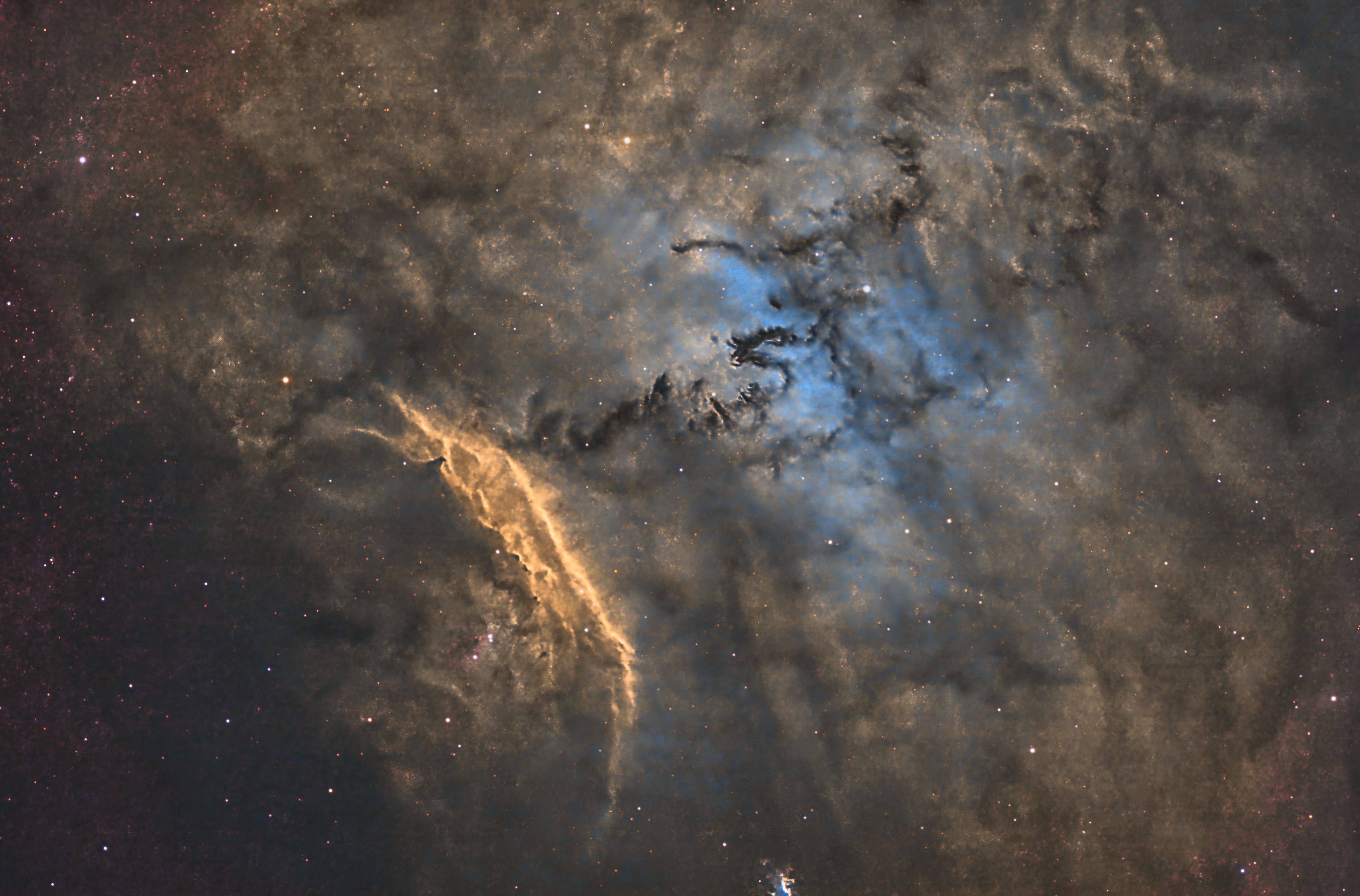
Sh2-86, NGC 6820 and NGC 6823
There is a lot going on here in this picture. The overall area is a faint
emission nebula called Sh2-86 in Vulpecula. Within this nebula lies another
reflection nebula called NGC 6820. That is the brighter blue area in the
center. In front of the blue reflection area is an area of dark nebula. The
large dark column points to an open star cluster known as NGC 6823. The fun
part about processing an image in false color (in this case SHO), is that you
can discover a lot more detail than if you were working with regular RGB. In
this and many of the previous images you can see that these objects are often
part of a much larger complex of dust and gas
|
NGC 1491
In the northern constellation of Perseus we have a relatively bright, but
small emission nebula, NGC 1491. This image was processed in false color (SHO).
Normally emission nebulae are very heavy in HII which is usually
presented as red. Processing an image in different color schemes allows us
to see different details at different frequencies
|
- Location: El Sauce Observatory, Chile
- Date: October 2023
- Mount: Mathis MI-1000
- Telescope: Planewave CDK24 f/6.6
- Camera: QHY600m @-25c CHI-1
- Exposure: 9x5 min SHO 45min
|
- Location: IC Astronomy Obs, Spain
- Date: October 2023
- Mount: Officina Stellare Eq Fork
- Telescope: Officina Stellare ProRC 700
- Camera: FLI PL16803 @-25C SPA-2 CCD
- Exposure: 94x2 min SHO 3hrs 8min
|
- Location: El Sauce Observatory, Chile
- Date: October 20, 2023
- Mount: Mathis MI-1000
- Telescope: Planewave CDK24 f/6.6
- Camera: QHY600m @-25c CHI-1
- Exposure: 53x5 min SHO 10hrs 30min
|
- Location: IC Astronomy Observatory, Spain
- Date: October 2023
- Mount: Officina Stellare EQ Mount
- Telescope: Officina Stellare ProRC 700
- Camera: QHY600m @-25c SPA-2 CMOS
- Exposure: 94x2min SHO 3hrs 8min
|
|
NGC 3199
This is an emission nebula in the constellation Carina. It was discovered
by the Scottish astronomer James Dunlop in 1826. Originally this nebula
was thought to have formed as the result of "Bow Shock" from the nearby
Wolf-Rayet star WR-18. As it turns out, this is just a cloud of gas and dust
formed in normal space. It is also known as the Banana Nebula
|
LDN 858
A dark nebula in the constellation Cygnus (The Swan). There really
isn't a lot of information on this object other than it being a dark
nebula. Even though it is classified as dark, with the wonders of
software I was able to brighten it up a bit. This image was done in
the HOO palette
|
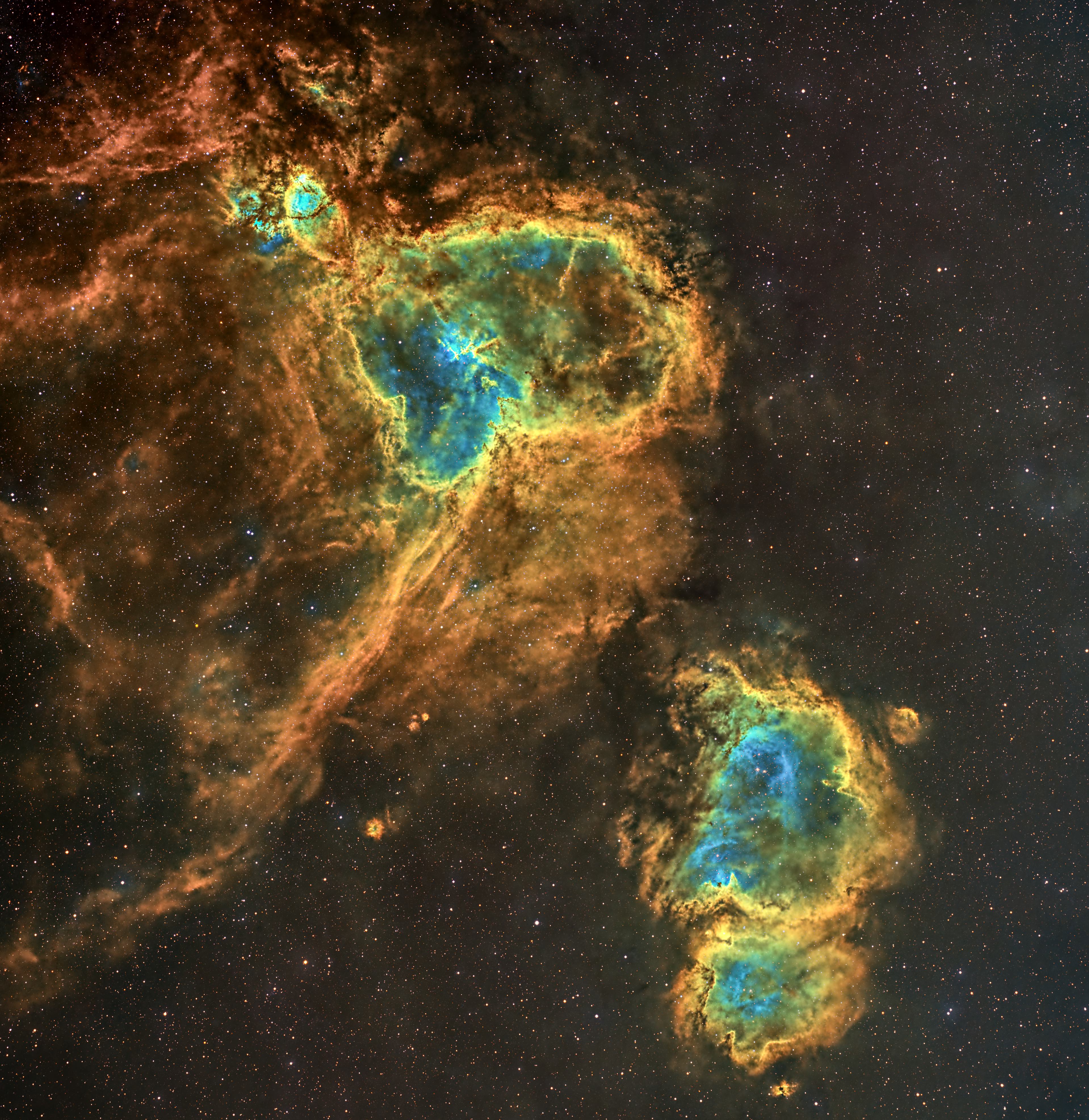
Sh2-190 and Sh2-199 - The Heart and Soul Nebulae
Sh2-190 – The Heart Nebula is an emission nebula located in the
constellation Cassiopeia. It lies about 7500 light-years from Earth.
It is composed primarily of Hydrogen gas as well as smaller amounts
of ionized Oxygen and Sulfur gasses. Its shape is due to solar winds
from a small open cluster near the center. This open cluster can claim
a number of stars that are more than 50x the mass of the Sun. The Heart
Nebula is the one in the lower right. Sh2-199 = The Soul Nebula is also
in Cassiopeia and is 7500 light-years away. It contains numerous small
open clusters and other small emission nebulae. There are a couple of
small galaxies nearby. These two nebulae are usually referred to together
as the Heart and Soul Nebulae
|
RCW 16, Sh2-311 (NGC 2467) - Skull and Crossbones Nebula
This nebula is located in the constellation Puppis. Puppis being the
poop deck of the ship Argo, sailed by Jason and the Argonauts of Greek
mythology. Some say that if you look at the image just right it looks
like the face of a mandrill. This nebula is a region of gases that form
a large star-making factory. Recent studies have detected at least 45
proto-stars (in the process of being formed). The region is dominated
by the massive young star on the left side
|
- Location: El Sauce Observatory, Chile
- Date: October 2023
- Mount: Mathis MI-1000
- Telescope: Planewave CDK24 f/6.6
- Camera: QHY600m @-25c CHI-1
- Exposure: 68x10 min SHO 11hrs 20min
|
- Location: IC Astronomy Observatory, Spain
- Date: September 2023
- Mount: Paramount MX+
- Telescope: Takahashi FSQ-106ED SPA-1
- Camera: FLI PL 16083
- Exposure: 90x5 min HOO 7hrs 30min
|
- Location: IC Astronomy Observatory, Spain
- Date: November 2020 - September 2022
- Mount: Paramount MX+
- Telescope: FSQ-106ED SPA-3
- Camera: FLI PL16083
- Exposure: 90x10 min SHO 7hrs
|
- Location: El Sauce Observatory, Chile
- Date: November 2023
- Mount: Mathis MI-1000
- Telescope: Planewave CDK24 f/6.6
- Camera: QHY600m @-25c CHI-1
- Exposure: 68x5 min SHO 5hrs 40min
|
|
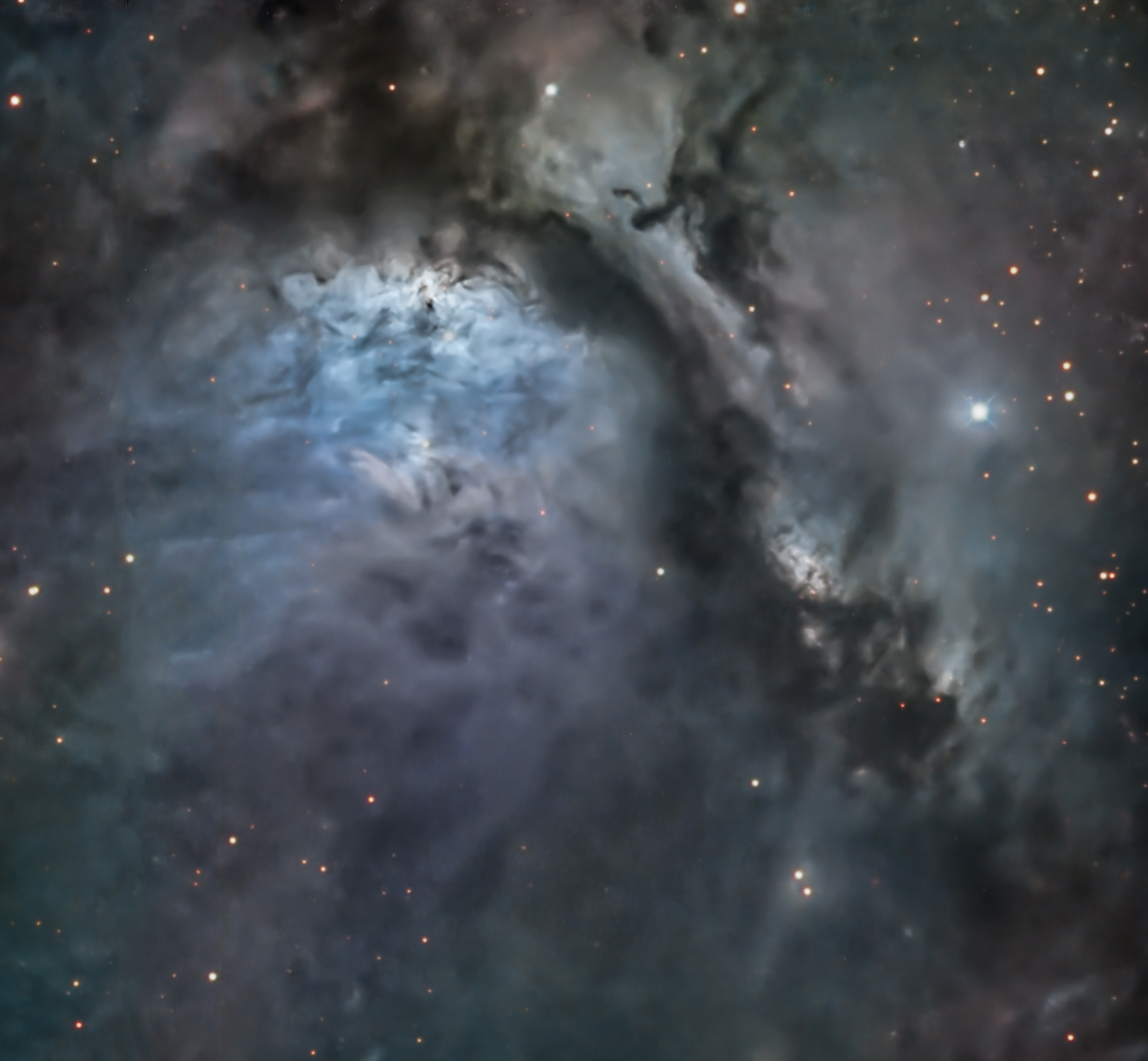
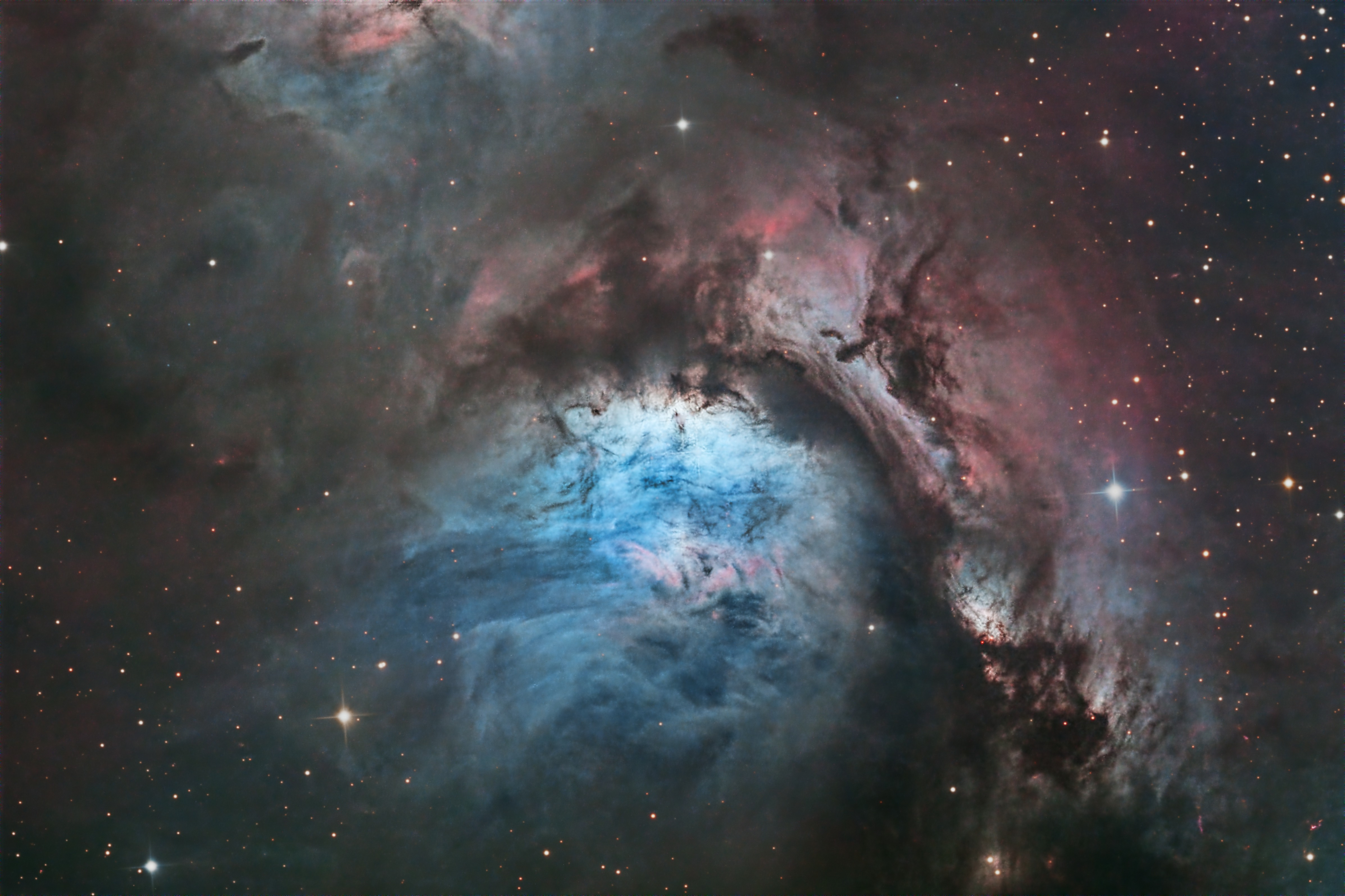
Messier 78
Messier 78 is a reflection nebula in the constellation Orion. It lies
about 1350 light-years away from us. It is the brightest nebula in its
local area that includes other nebulae such as NGC 2064, 2076 and 2071.
There are two new stars behind the gas in the center that provide the light
that reflects off the gas. The two stars can be seen only with infrared
imaging
|
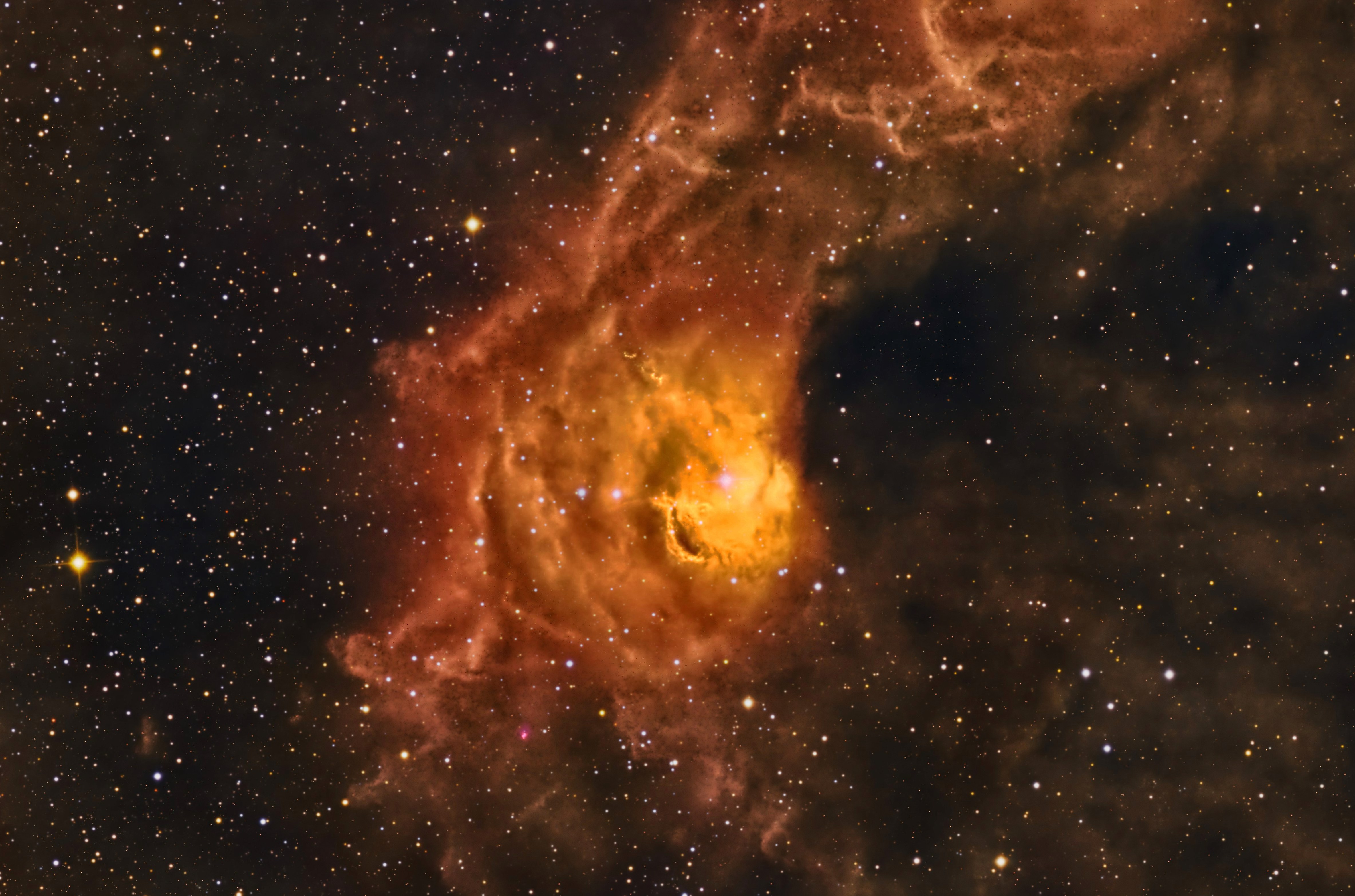
Sh2-297
This object is an emission nebula that sits in the constellation of Canis
Major. It is actually the bright area in the center, and is part of the
larger nebula Sh2-296 (The Seagull Nebula). It is about 4000 light-years
away from us
|
Messier 16 - The Eagle Nebula (Pillars of Creation)
In the constellation Serpens lies Messier 16, a diffuse emission nebula.
It is about 5700 light-years from Earth and contains numerous active star
making regions and clusters, the main cluster containing around 8100 stars.
The Eagle Nebula was made famous in 1995 when a Hubble image was released
that came to be named "The Pillars of Creation." The Pillars are an excellent
example of the erosion of the molecular cloud that formed the hot, new stars.
The intense radiation from the new stars is what causes the erosion. This is a
slightly different version than the one above
|
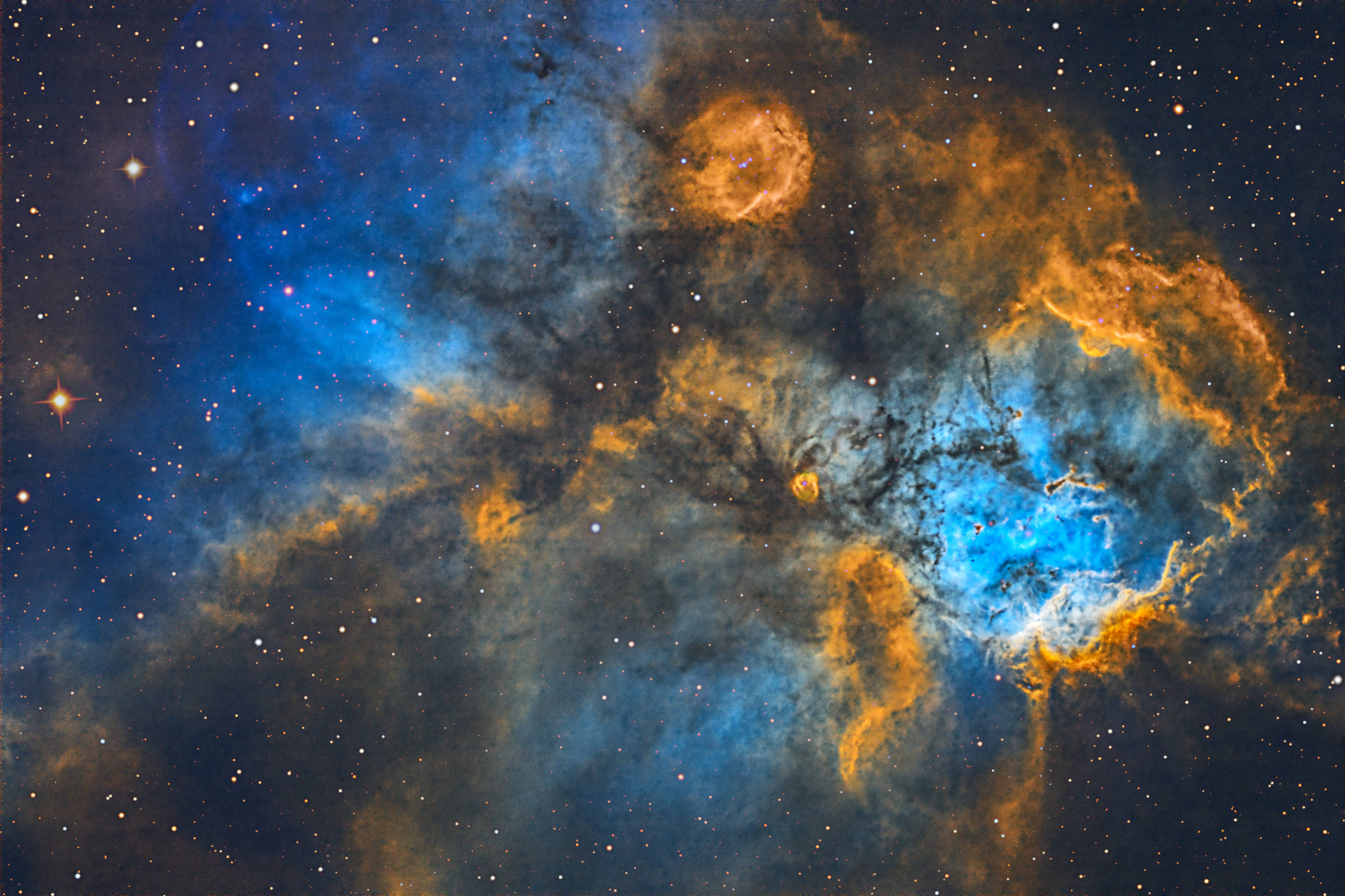
NGC 2174 - The Monkey Head Nebula
The Monkey Head is located in the constellation Orion and is about 6400
light-years away. The monkey's head is the large, round structure in the
upper-right. There is an open cluster of very hot, young new stars just to
the upper-right of center. These stars emit huge amounts of radiation in
the form of stellar winds that erode and blow away gas which leaves behind
unusually shaped structures like those in the lower half of the image. The
color palette is SHO
|
- Location: El Sauce Observatory, Chile
- Date: November 2023
- Mount: Mathis MI-1000
- Telescope: Planewave CDK24 f/6.6
- Camera: QHY600m @-25c CHI-1
- Exposure: 111x5 min SHO 10hrs 20min
|
- Location: El Sauce Observatory, Chile
- Date: December 2023
- Mount: Mathis MI-1000
- Telescope: Planewave CDK24 f/6.6
- Camera: QHY600m @-25c CHI-1
- Exposure: 95x5 min SHO 7hrs 25min
|
- Location: El Sauce Observatory, Chile
- Date: February - April 27, 2020
- Mount: Mathis MI-1000
- Telescope: Planewave CDK24 f/6.6
- Camera: QHY600m @-25c CHI-1
- Exposure: 24x10 min LRGB 2hrs
|
- Location: El Sauce Observatory, Chile
- Date: December 2023
- Mount: Mathis MI-1000
- Telescope: Planewave CDK24 f/6.6
- Camera: QHY600m @-25c CHI-1
- Exposure: 44x5 min SHO 3hrs 40min
|
|
RCW 19
This emission nebula is just a small part of a greater molecular cloud in
Puppis that weighs in at about 200,000 solar masses. The color palette
is OHS
|
IC 405 - The Flaming Star or Auriga Nebula
There's a lot of action packed into this object. First of all, it is both
an emission and reflection nebula that lies about 1500 light-years away
from us. The bright reddish area to the left is IC 405, The Flaming Star
Nebula. At the top center is IC 410. This reflection nebula also contains
an embedded open cluster - NGC 1893. Just outside of the image there are
a couple more clusters
|
Sh2-129 - The Flying Bat Nebula
In the constellation Cepheus is the large nebula - The Flying Bat, and
right in the middle is the very faint Squid Nebula. This one was really
difficult to process. I just couldn't figure out how to bring out the colors
of the Squid the way I would have liked. This one would be worth re-doing
sometime when I have a little more PixInsight under my belt. They both lie
about 2300 light-years away, and the Squid Nebula is about 50 light-years across
|
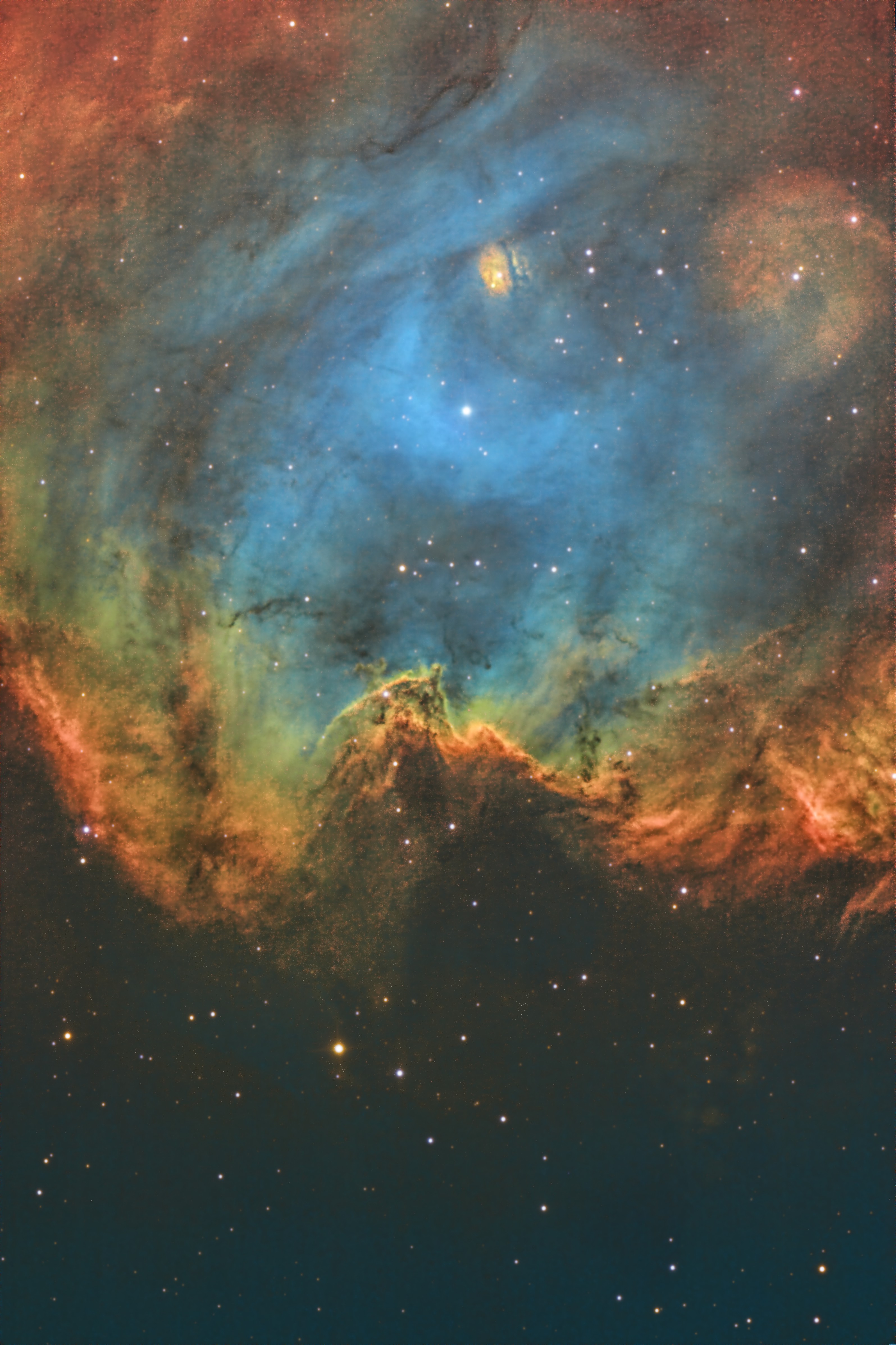
NGC 2264
This nebula is in the constellation Monoceros. It lies about 2700 light-years
away from us. NGC 2264 actually refers to two objects: The Cone Nebula and the
Christmas Tree Nebula. Also within this huge reflection nebula are the Fox Fur
and Snowflake Nebulae
|
- Location: Heaven's Mirror Obs, Australia
- Date: December 2023
- Mount: Paramount MX+
- Telescope: FSQ-106ED AUS-2
- Camera: QHY600m @-25c CMOS
- Exposure: 52x5 min OHS 4hrs 20min
|
- Location: IC Astronomy Observatory, Spain
- Date: December 2023
- Mount: Paramount MX+
- Telescope: Takahashi FSQ-106ED SPA-1
- Camera: FLI PL16083
- Exposure: 33x5 min SHO 5hrs 15min
|
- Location: IC Astronomy Observatory, Spain
- Date: September - December 2023
- Mount: Paramount MX+
- Telescope: Takahashi FSQ-106ED SPA-1
- Camera: FLI PL16083
- Exposure: 189x5 min HSO 15hrs 45min
|
- Location: IC Astronomy Observatory, Spain
- Date: September - December 2023
- Mount: Paramount MX+
- Telescope: Takahashi FSQ-106ED SPA-1
- Camera: FLI PL16083
- Exposure: 63x5 min OHS 5hrs 15min
|