|
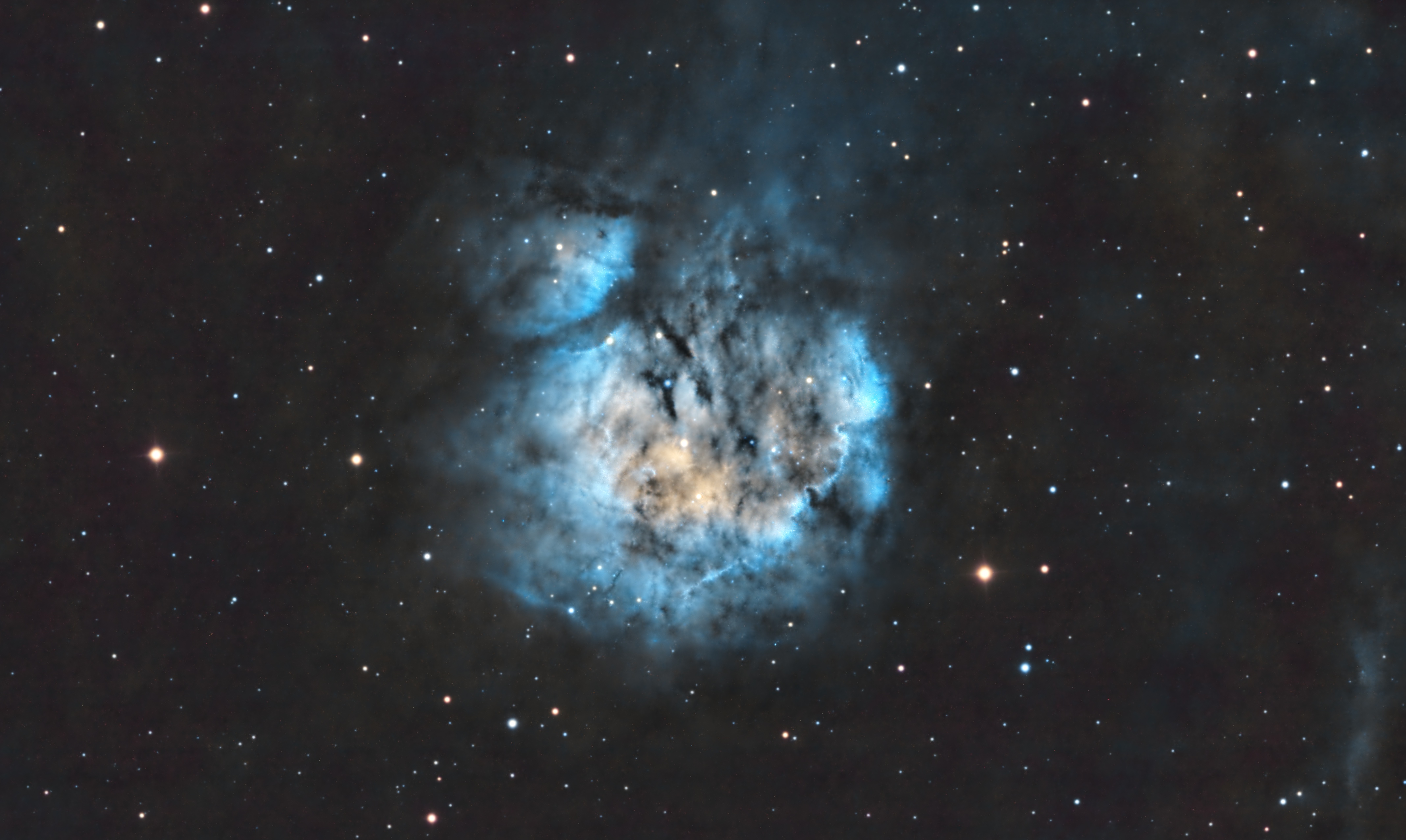
IC 443 - The Jellyfish Nebula
This nebula is most probably what is left of a supernova that
occurred about 30,000 to 50,000 years ago. At its center is a
neutron star that was formed when the stellar core collapsed.
The Jellyfish Nebula is in the constellation Gemini (The Twins),
and is about 5,000 light-years from Earth
|
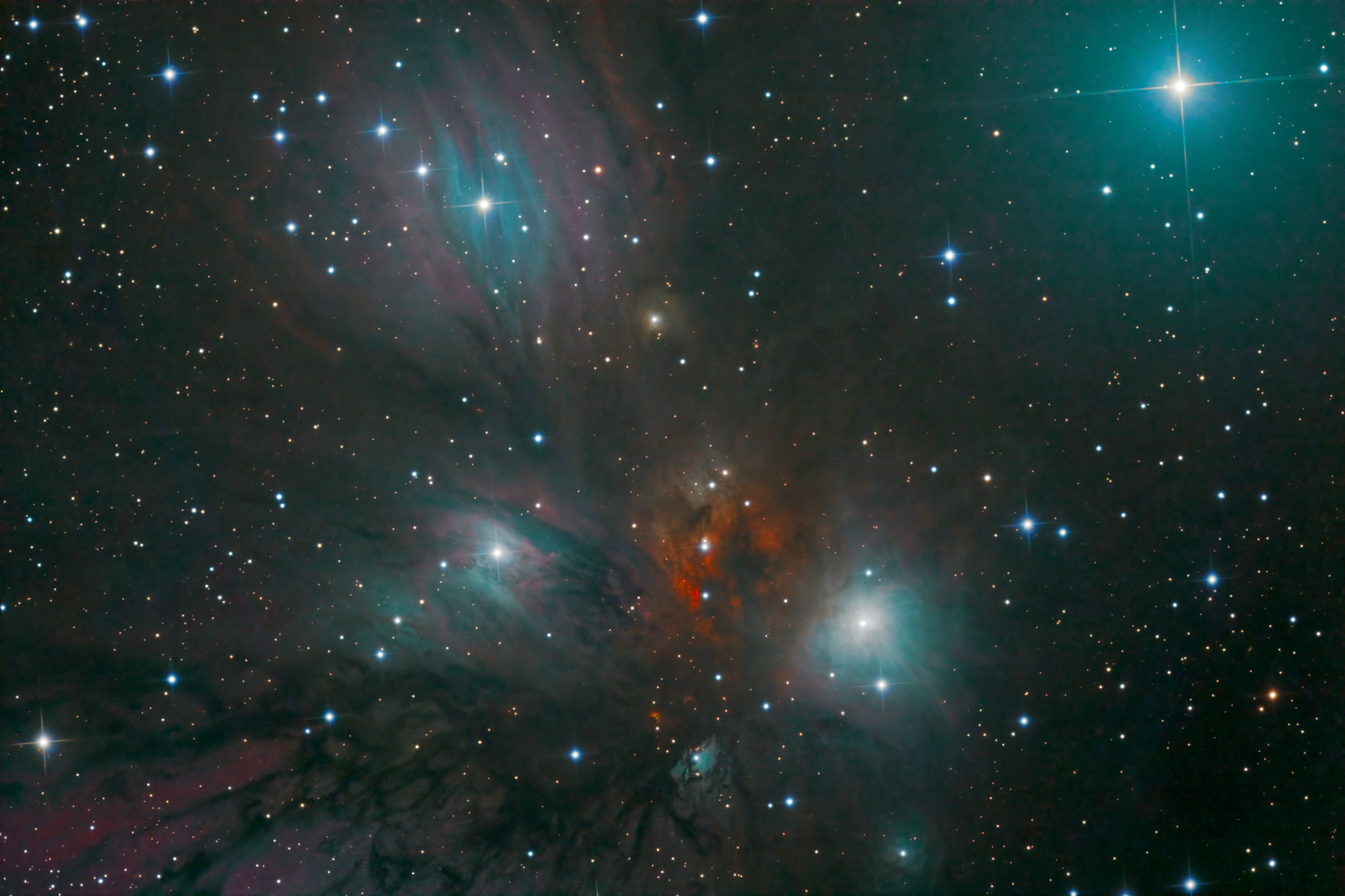
The Horsehead and Flame Nebulae (Barnard 33 and NGC 2024)
This wide-field view contains both the Horsehead and Flame
Nebulae. It shows a very small portion of the great Orion
Molecular Cloud complex, which stretches from above Orion's
head (Betelgeuse) to below his feet (Rigel). It was imaged
in the HSO palette. They both lie about 1375 light-years away.
The Horsehead is a dark nebula while the Flame nebula is an
emission nebula
|
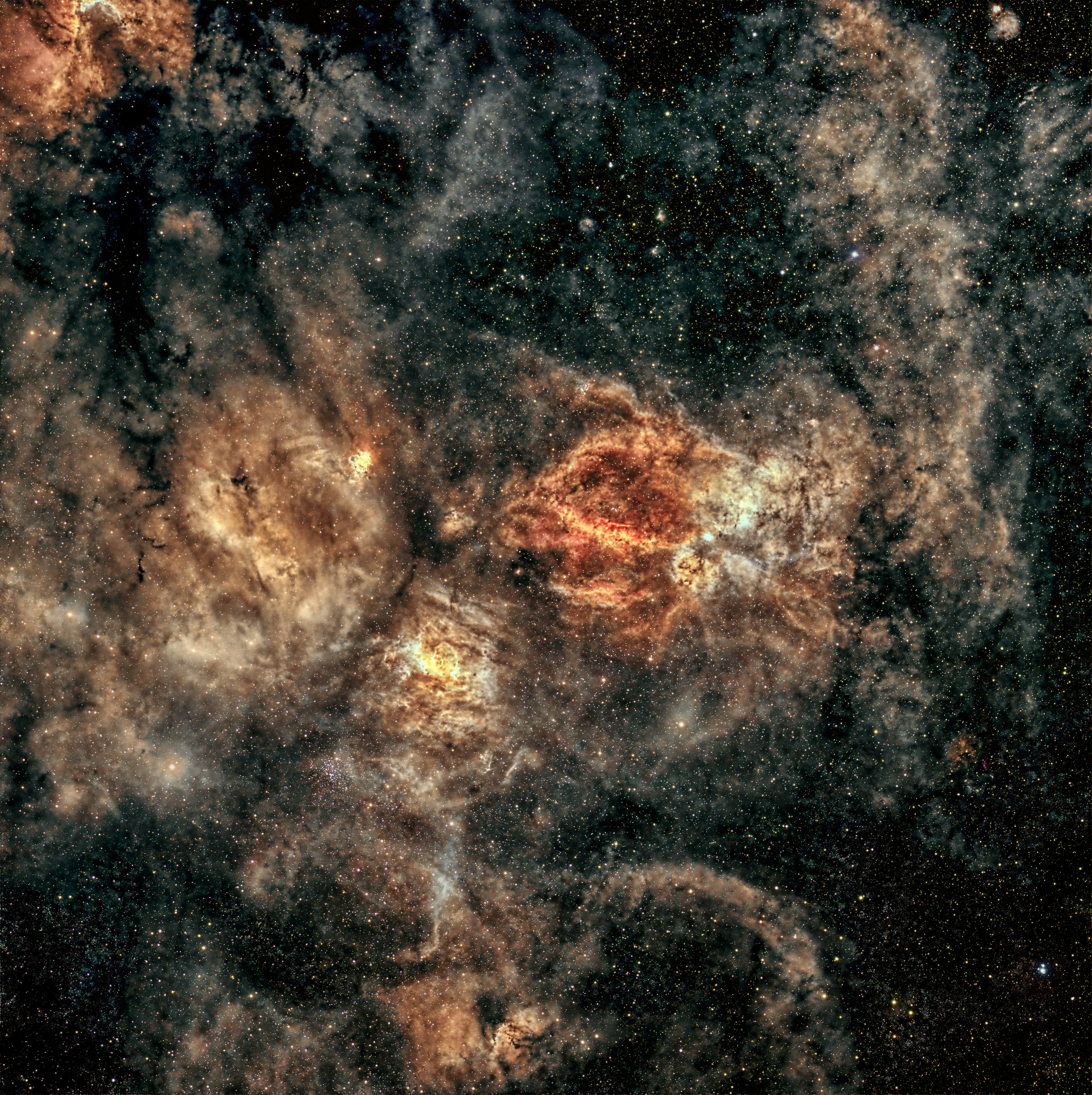
Wide-field view of the region around Deneb
Deneb is a very bright star in the constellation Cygnus -
The Swan, and represents its tail. Another notable star in
Cygnus is Alberio, a colorful double star system that is the
head of the swan. Cygnus is also sometimes referred to as the
Northern Cross. It is also part of an asterism known as the
Summer Triangle, which is made up of Deneb, Altair and Vega.
Its mass is about 20-25 solar masses which means that it will
end up as a supernova. It is about 2600 light-years away
|
LDN 1235 - The Shark Nebula
The Shark Nebula resides in the constellation of Cepheus. Cepheus
was the king of Aethiopia. He was married to Cassiopeia and was
the father of Andromeda. This nebula is classified as both a
dark nebula as well as a reflection nebula. There are two
reflection nebulae - one just behind its head and the other at
the base of its neck. Dark nebulae are very, very faint and can
only be seen in long exposure images
|
- Location: IC Astronomy Observatory, Spain
- Date: December 2023
- Mount: Paramount MX+
- Telescope: Takahashi FSQ-106ED SPA-1
- Camera: FLI PL16083
- Exposure: SHO 49x5 min 4hrs 5min
|
- Location: IC Astronomy Observatory, Spain
- Date: January 2024
- Mount: Paramount MX+
- Telescope: Takahashi FSQ-106ED SPA-1
- Camera: FLI PL16083
- Exposure: 189x5 min SHO 13hrs 15min
|
- Location: IC Astronomy Observatory, Spain
- Date: January 2024
- Mount: Paramount MX+
- Telescope: Takahashi FSQ-106ED SPA-1
- Camera: FLI PL16083
- Exposure: 63x5 min SHO 5hrs 15min
|
- Location: IC Astronomy Observatory, Spain
- Date: December 2023
- Mount: Paramount MX+
- Telescope: Takahashi FSQ-106ED SPA-1
- Camera: FLI PL16083
- Exposure: 27x5 min RGB 2hrs 15min
|
|
IC 2177 - The Seagull Nebula
This nebula lies right on the border of the constellation Canis
Major (the Big Dog) and Monoceros (the Unicorn). It is an emission
nebula. I processed this image in the HSO palette (Hydrogen alpha
assigned to the red channel, sulphur to the green channel and
oxygen to the blue channel. See the image to the right for
another version of the same object
|
IC 2177 - The Seagull Nebula
Here is another version of the Seagull Nebula. This one was
processed in the OHS palette (Oxygen assigned to the red channel,
Hydrogen alpha to the green channel and sulphur to the blue channel).
There are 24 different possible combinations to choose from. Most of
which come out in some really bizarre colors. The fun part for me
is that different details emerge with every color combination
|
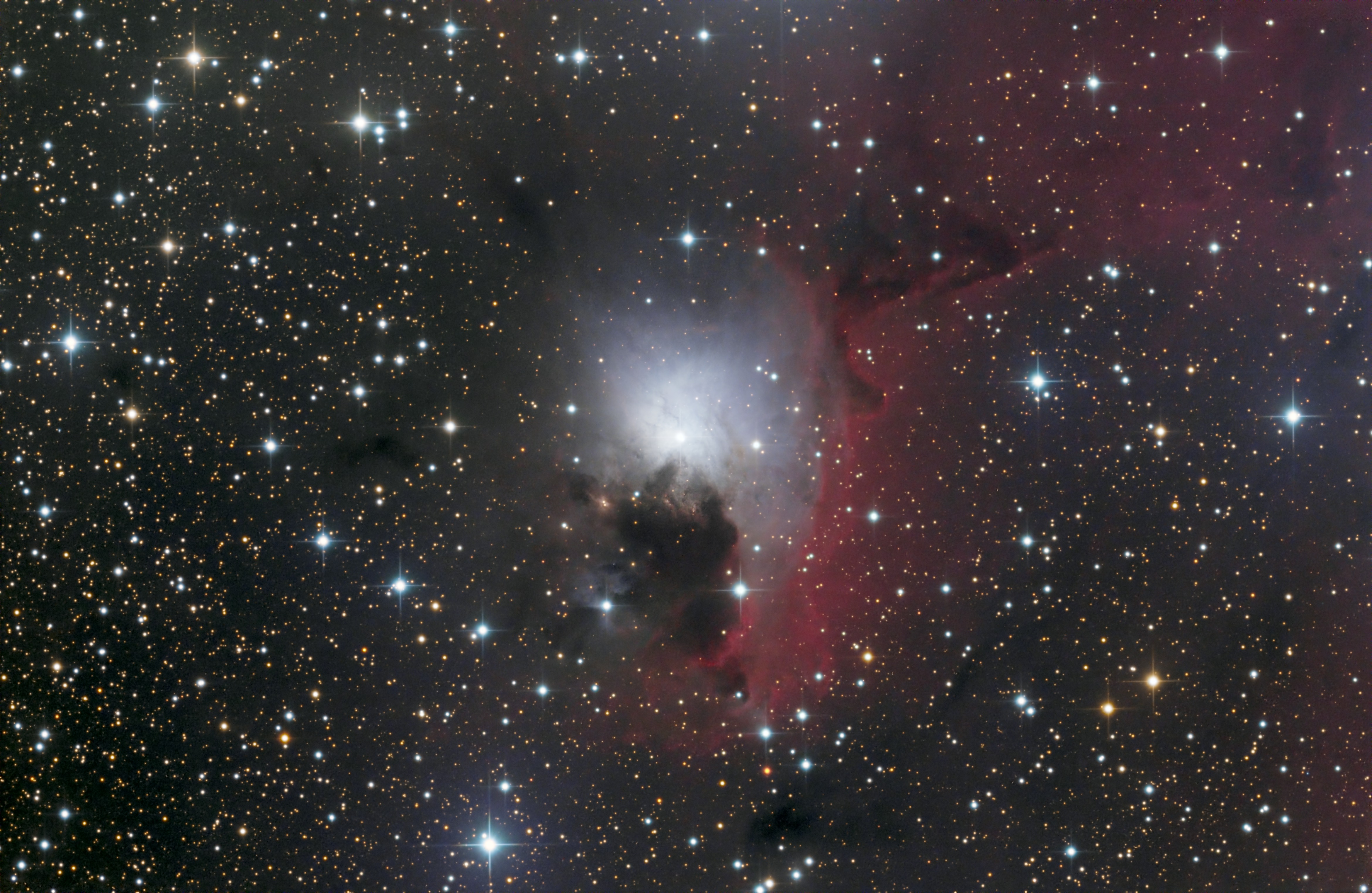
NGC 2626
NGC 2626 is in the constellation Vela. Vela refers to the sail
of Jason's ship, the Argo Navis, that Jason and the Argonauts
sailed in to retrieve the Golden Fleece. There is certainly a
lot going on in this nebula, which is a reflection, emission
and absorption nebula. It has a pulsar in its midst that is
the brightest celestial source of gamma rays. It lies about 3300
light-years away
|
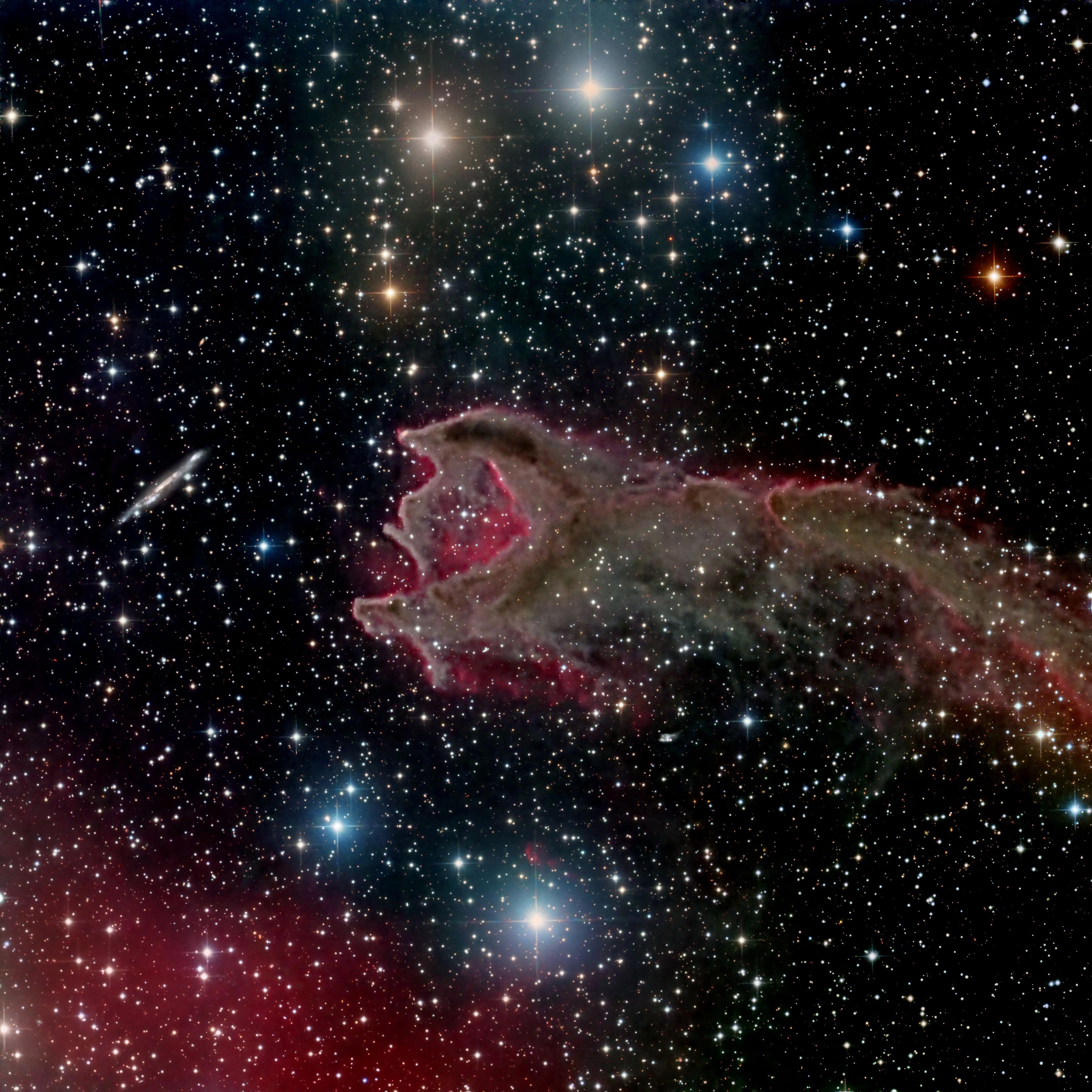
CG4 - God's Hand
Known as God's Hand, this nebula is located about 1300 light-years
from Earth in the constellation Puppis
|
- Location: IC Astronomy Observatory, Spain
- Date: December 2023
- Mount: Paramount MX+
- Telescope: Takahashi FSQ-106ED SPA-1
- Camera: FLI PL16083
- Exposure: 76x5 min HSO 6hrs 20min
|
- Location: IC Astronomy Observatory, Spain
- Date: December 2023
- Mount: Paramount MX+
- Telescope: Takahashi FSQ-106ED SPA-1
- Camera: FLI PL16083
- Exposure: 76x5 min HSO 6hrs 20min
|
- Location: El Sauce Observatory, Chile
- Date: March 2023
- Mount: Mathis MI-1000
- Telescope: Planewave CDK24 f/6.6
- Camera: QHY600m @-25c CHI-1
- Exposure: 67x5 min LRGB 5hrs 35min
|
- Location: El Sauce Observatory, Chile
- Date: November - December 2022
- Mount: Mathis MI-1000
- Telescope: Planewave CDK24 f/6.6
- Camera: FLI PL9000 @-25c CHI-1 CCD
- Exposure: 80x10 min RGB+H 13hrs
|
|
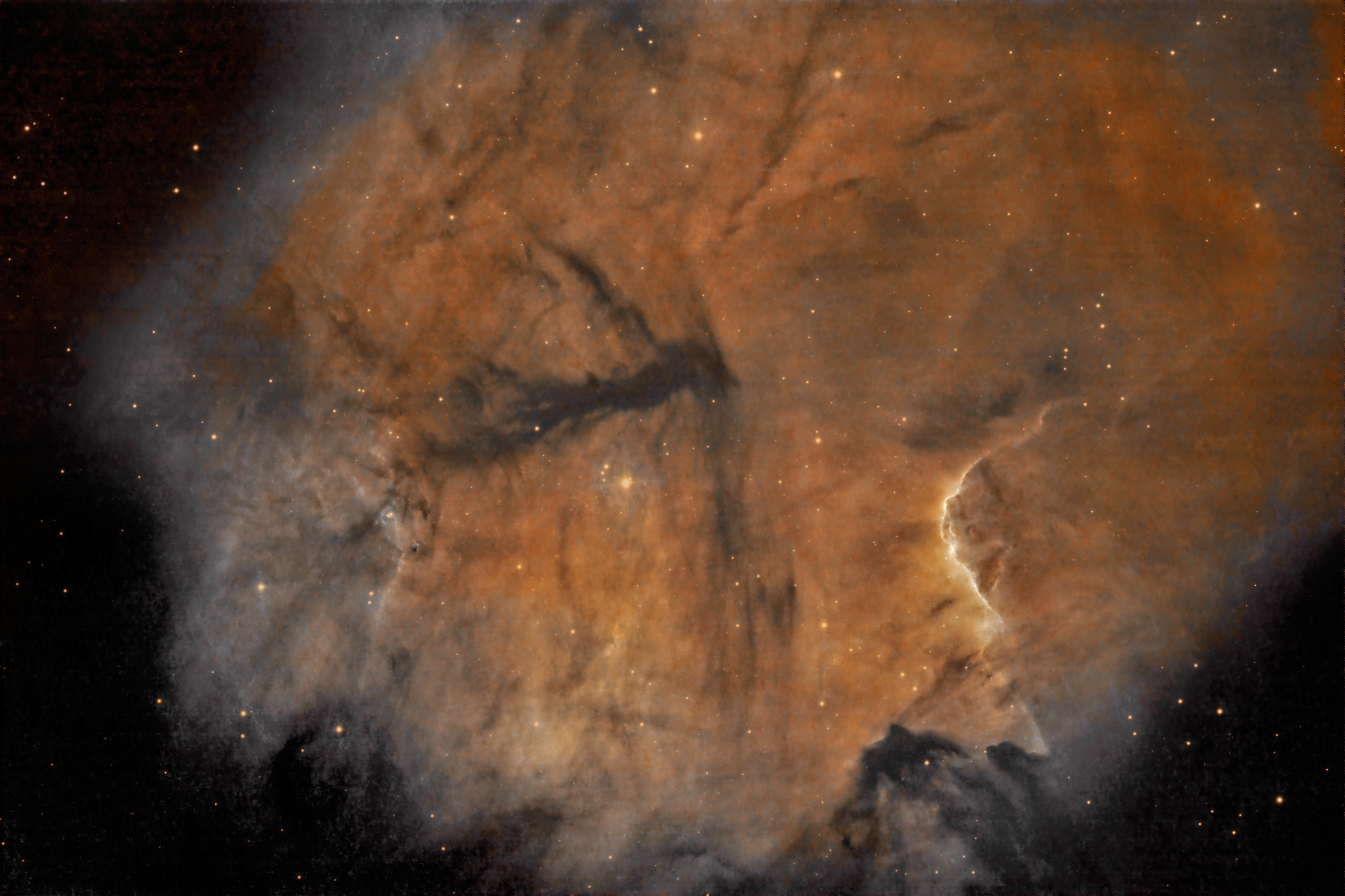
RCW 32
Just about 3000 light-years from us, in the constellation Vela is
this interesting nebula. It is an emission nebula that is part
of a larger HII region
|
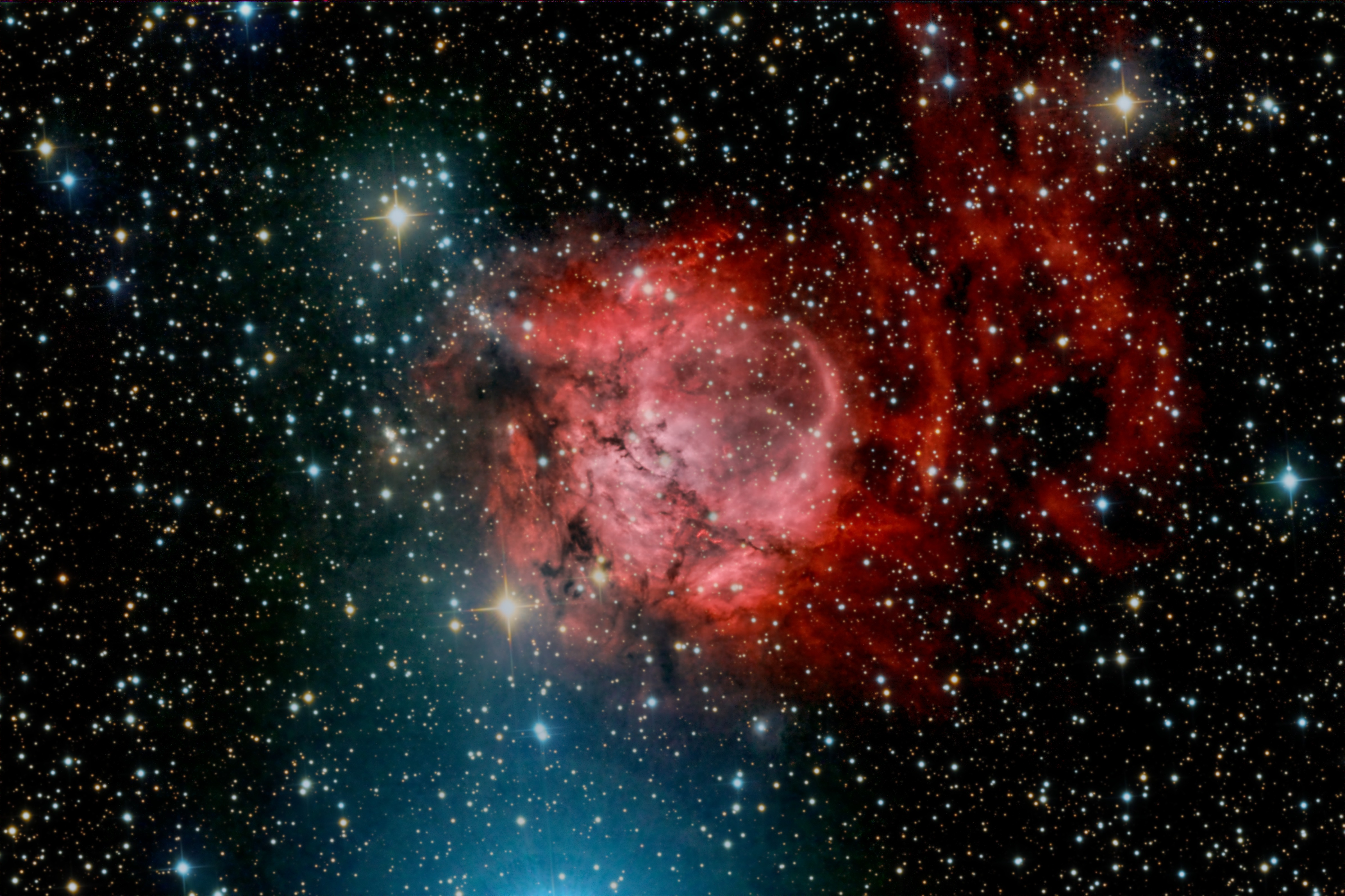
RCW 6 (Sh2-301)
Out in Canis Major (the Big Dog - one of two that were Orion's
hunting dogs), is RCW 6. It is a Hydrogen II region that is
about 19,000 light-years away from us
|
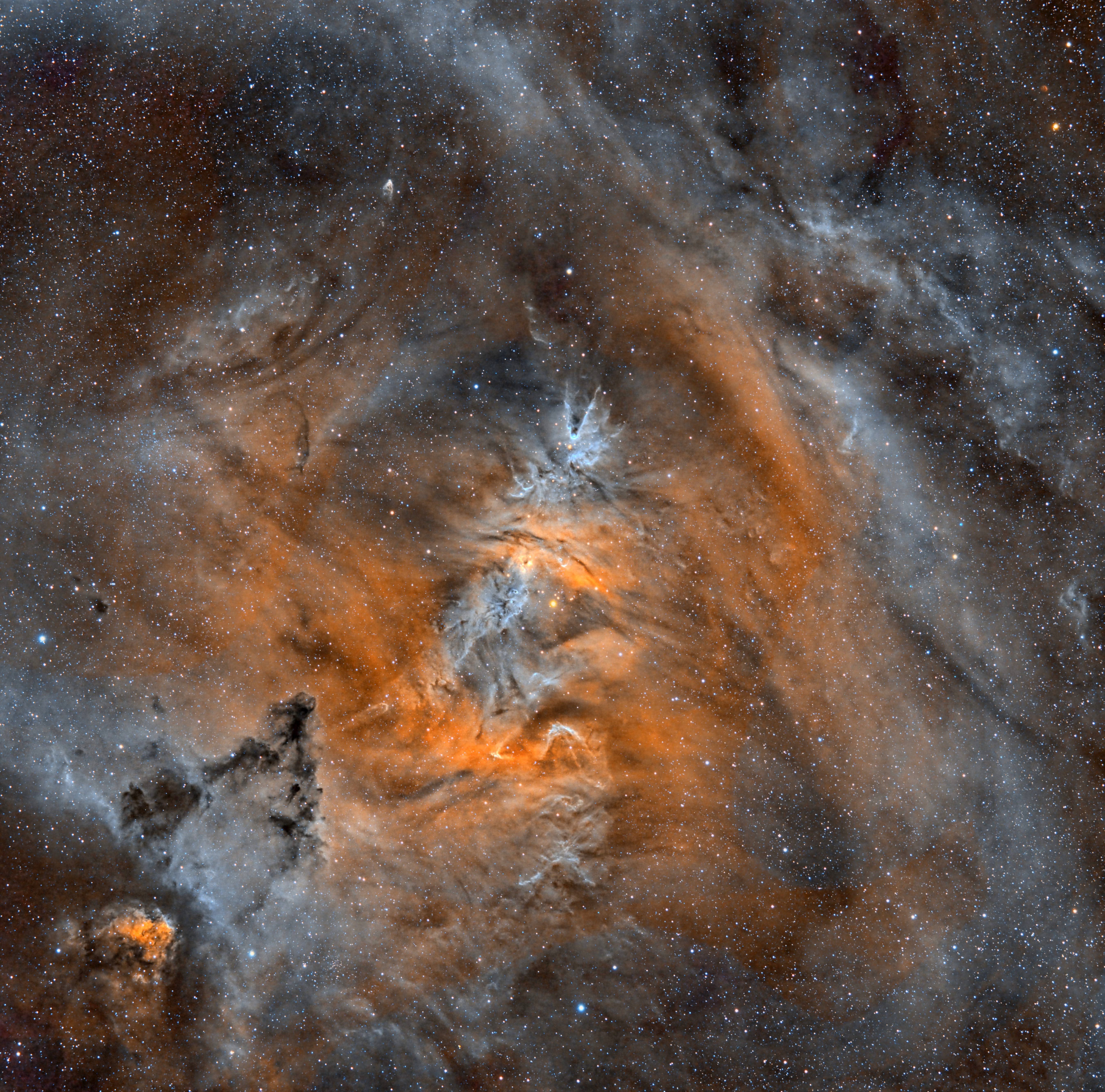
NGC 2264
This nebula is in the constellation Monoceros. It lies about
2700 light-years away from us. NGC 2264 actually refers to two
objects: The Cone Nebula and the Christmas Tree Nebula. Also
within this huge reflection nebula are the Fox Fur and Snowflake
Nebulae. This is a re-do of the same image on the Nebulae 3 page. I
did a real-time processing of this object as a presentation for our
local astronomy club in April 2024. I processed it at least once
a day for a month in order to recreate the first version. Never
could duplicate that first effort, but this one turned out just
as nice
|
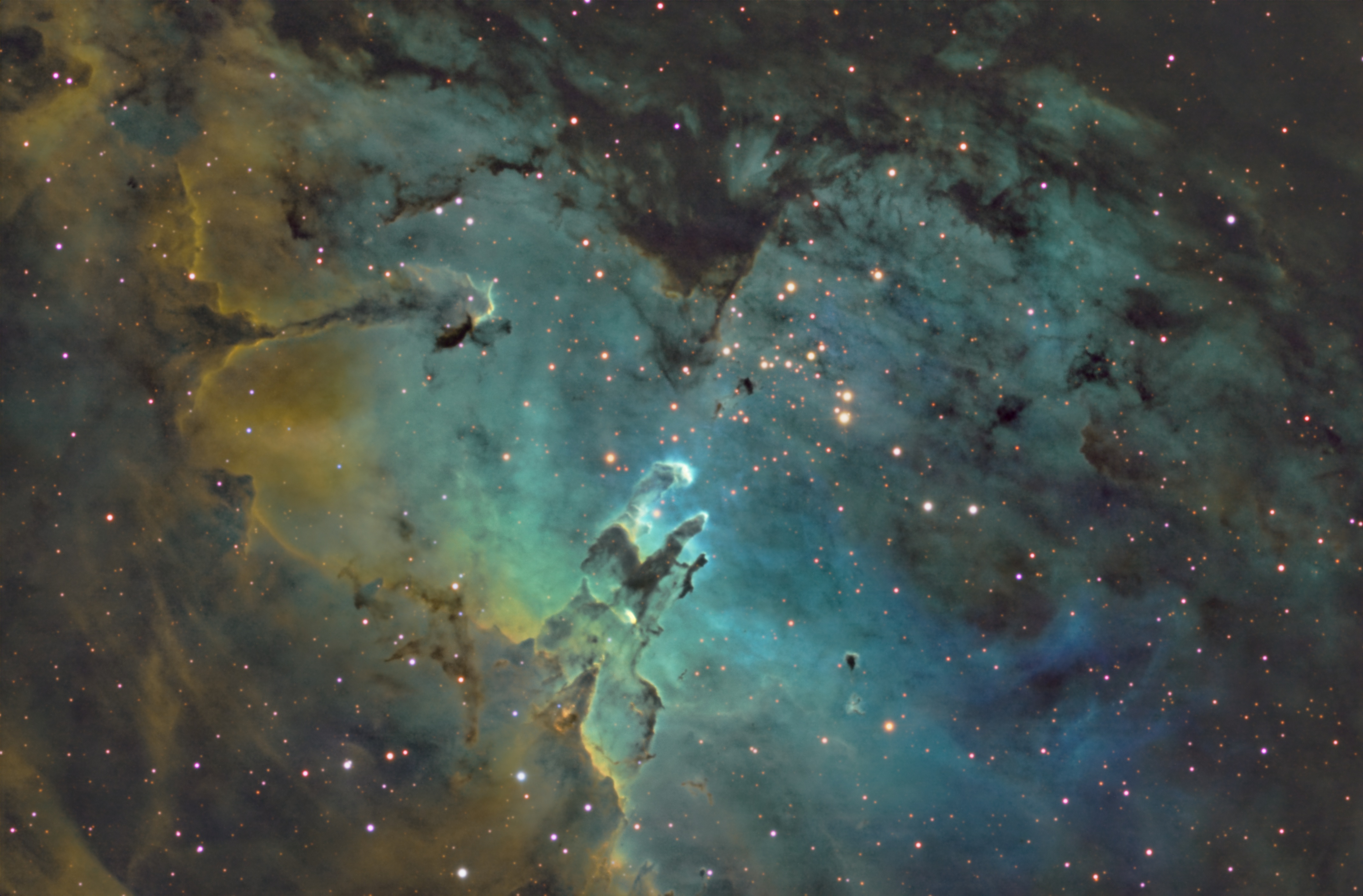
Messier 16 - The Eagle Nebula (Pillars of Creation)
The Eagle Nebula is part of a huge diffuse emission nebula
located in the constellation Serpens (The Snake). It was made
famous with an image by the Hubble Space Telescope which dubbed
it the Pillars of Creation. It contains several regions of
star-forming gas and dust. This version is done in the Hubble
Palette (SHO). Thus the strange colors
|
- Location: El Sauce Observatory, Chile
- Date: November - December 2022
- Mount: Mathis MI-1000
- Telescope: Planewave CDK24 f/6.6
- Camera: QHY600m @-25c CHI-1
- Exposure: 67x5 min RGB+H 5hrs 35min
|
- Location: El Sauce Observatory, Chile
- Date: December 2023
- Mount: Mathis MI-1000
- Telescope: Planewave CDK24 f/6.6
- Camera: QHY600m @-25c CHI-1
- Exposure: 100x5 min LRGB 7hrs 50min
|
- Location: El Sauce Observatory, Chile
- Date: December 2023
- Mount: Mathis MI-1000
- Telescope: Planewave CDK24 f/6.6
- Camera: QHY600m @-25c CHI-1
- Exposure: 63x5 min LRGB 5hrs 15min
|
- Location: El Sauce Observatory, Chile
- Date: Jun 10, 2023
- Mount: Mathis MI-1000
- Telescope: Planewave CDK24 f/6.6
- Camera: QHY600m @-25c CHI-1
- Exposure: 63x5 min LRGB 5hrs 15min
|
|
RCW 61 - (Head of the Running Chicken Nebula)
Down in the southern constellation of Centaurus (The Centaur),
lies an absolutely huge nebula called the Running Chicken Nebula,
officially named the Lambda Centauri Nebula. It is roughly 7,300
light-years away from us. This portion of the nebula is the head
of the Running Chicken
|
RCW 52
This nebula is in the Carina Nebula. Carina is the Latin word
for keel of a ship. RCW 52 lies about 5200 light-years away and
is about 70 light-years in diameter
|
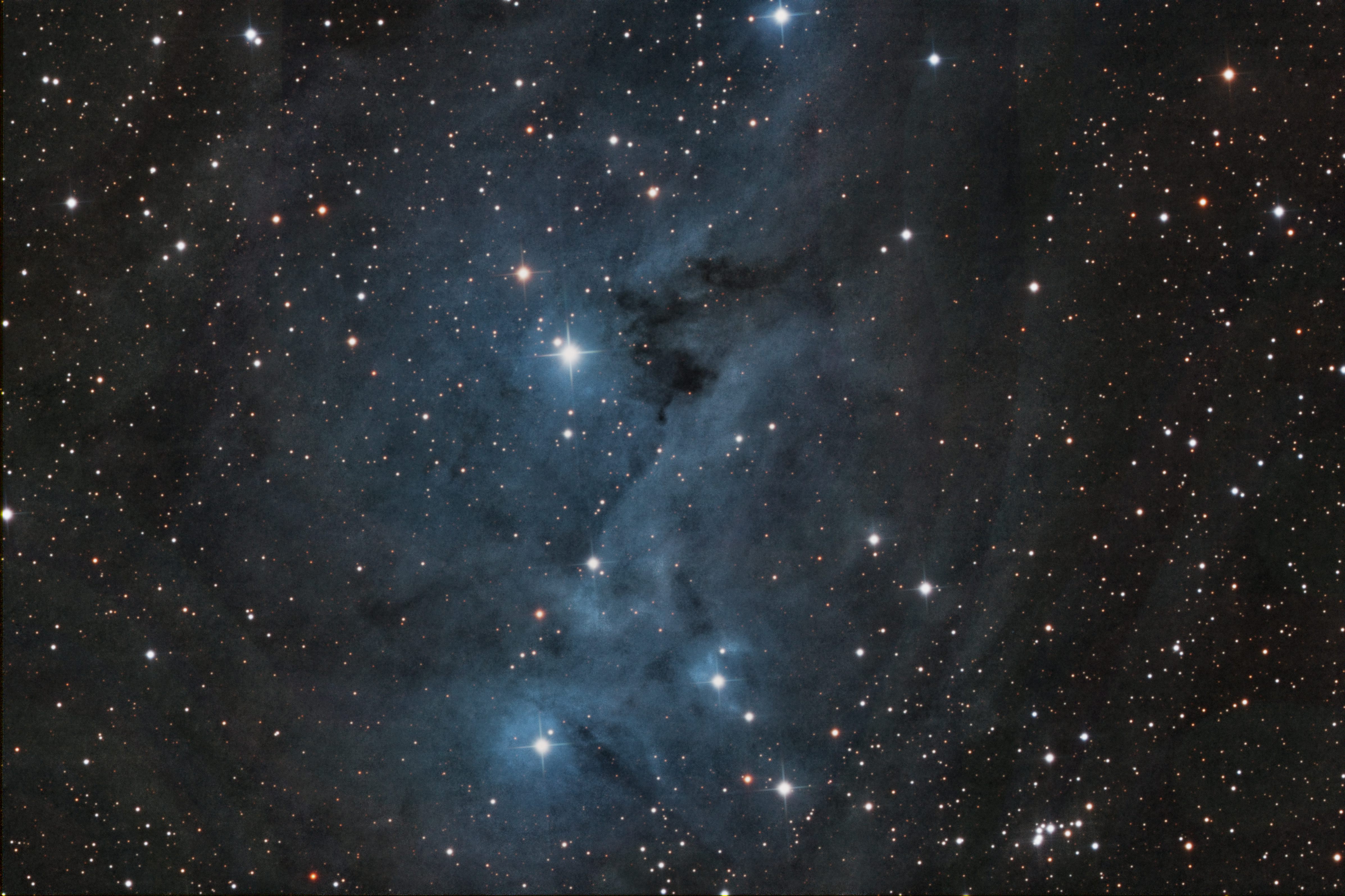
IC 2169
This is a reflection nebula in Monoceros, the Unicorn
|
Messier 8 - The Rosette Nebula
The Rosette Nebula is a HII region in Monoceros (the Unicorn)
and lies about 5200 light-years away. It is 65 light-years in
diameter which is about half the diameter of our own Milky Way
galaxy. The stars in the center are an open cluster (NGC 2237)
which is made up of 36 new stars. If you zoom deep into this
image and scroll through it you'll find at least an additional
45 galaxies. This image was processed in the Hubble Palette OHS
|
- Location: El Sauce Observatory, Chile
- Date: March-April 2024
- Mount: Mathis MI-1000
- Telescope: Planewave CDK24 f/6.6
- Camera: QHY600m @-25c CHI-1
- Exposure: 63x10 min OSH 10hrs 30min
|
- Location: El Sauce Observatory, Chile
- Date: March 2024
- Mount: Mathis MI-1000
- Telescope: Planewave CDK24 f/6.6
- Camera: QHY600m @-25c CHI-1
- Exposure: 137x5 min OSH 10hrs 55min
|
- Location: El Sauce Observatory, Chile
- Date: April 5, 2024
- Mount: Mathis MI-1000
- Telescope: Planewave CDK24 f/6.6
- Camera: QHY600m @-25c CHI-1
- Exposure: 48x5 min LRGB 4hrs
|
- Location: Heaven's Mirror Observatory, Australia
- Date: March 2024
- Mount: Paramount MX+
- Telescope: FSQ-106ED AUS-2
- Camera: QHY600m @ -25c CMOS
- Exposure: 97x5 min OHS 4hrs 35min
|
|
Caldwell 49 - The Rosette Nebula
This is another version of the Rosette Nebula that was processed
using the Hubble Palette SHO
|
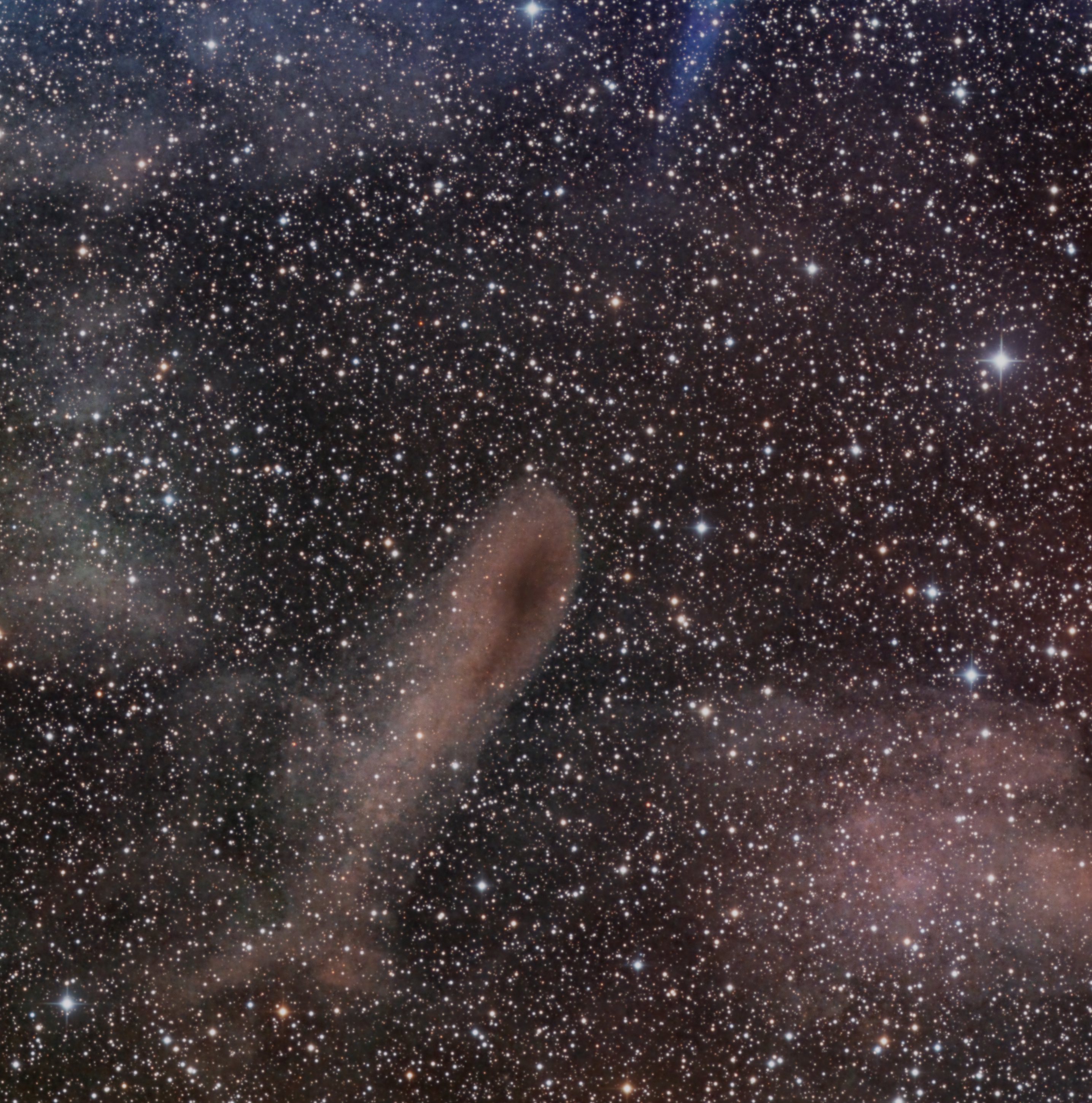
The Dark Doodad Nebula
This one used a larger telescope which gives us a more zoomed-in
view. This dark nebula is commonly known as the Doodad Nebula.
It's a long, cold molecular cloud in the constellation Musca
(The Fly). This one almost looks like a shark standing on its
tail
|
Messier 24
Messier 24 is also known as the Small Sagittarius Star Cloud.
It is officially a star field, but there are several other
objects that surround the central star field. The object is
about 600 light-years wide. There are two distinct dark
nebulae
|
RCW 40
There isn't much information about this object other than it is
an emission nebula in the constellation Vela
|
- Location: Heaven's Mirror Observatory, Australia
- Date: March 2024
- Mount: Paramount MX+
- Telescope: FSQ-106ED AUS-2
- Camera: QHY600m @-25c CMOS
- Exposure: 97x5 min SHO 4hrs 35min
|
- Location: El Sauce Observatory, Chile
- Date: March 16, 2021
- Mount: Mathis MI-1000
- Telescope: Planewave CDK24 f/6.6
- Camera: FLI PL9000 @-25c CHI-1 CCD
- Exposure: 63x10 min LRGB 10hrs 30min
|
- Location: IC Astronomy Observatory, Spain
- Date: June 2024
- Mount: Officina Stellare EQ Mount
- Telescope: Officina Stellare Pro RC 700
- Camera: QHY600m @-25c SPA-2
- Exposure: 38x5 min HSO 6hrs 10min
|
- Location: El Sauce Observatory, Chile
- Date: June 2024
- Mount: Mathis MI-1000
- Telescope: Planewave CDK24 f/6.6
- Camera: QHY600m @-25c CHI-1
- Exposure: 38x5 min OHS 3hrs 10min
|
|
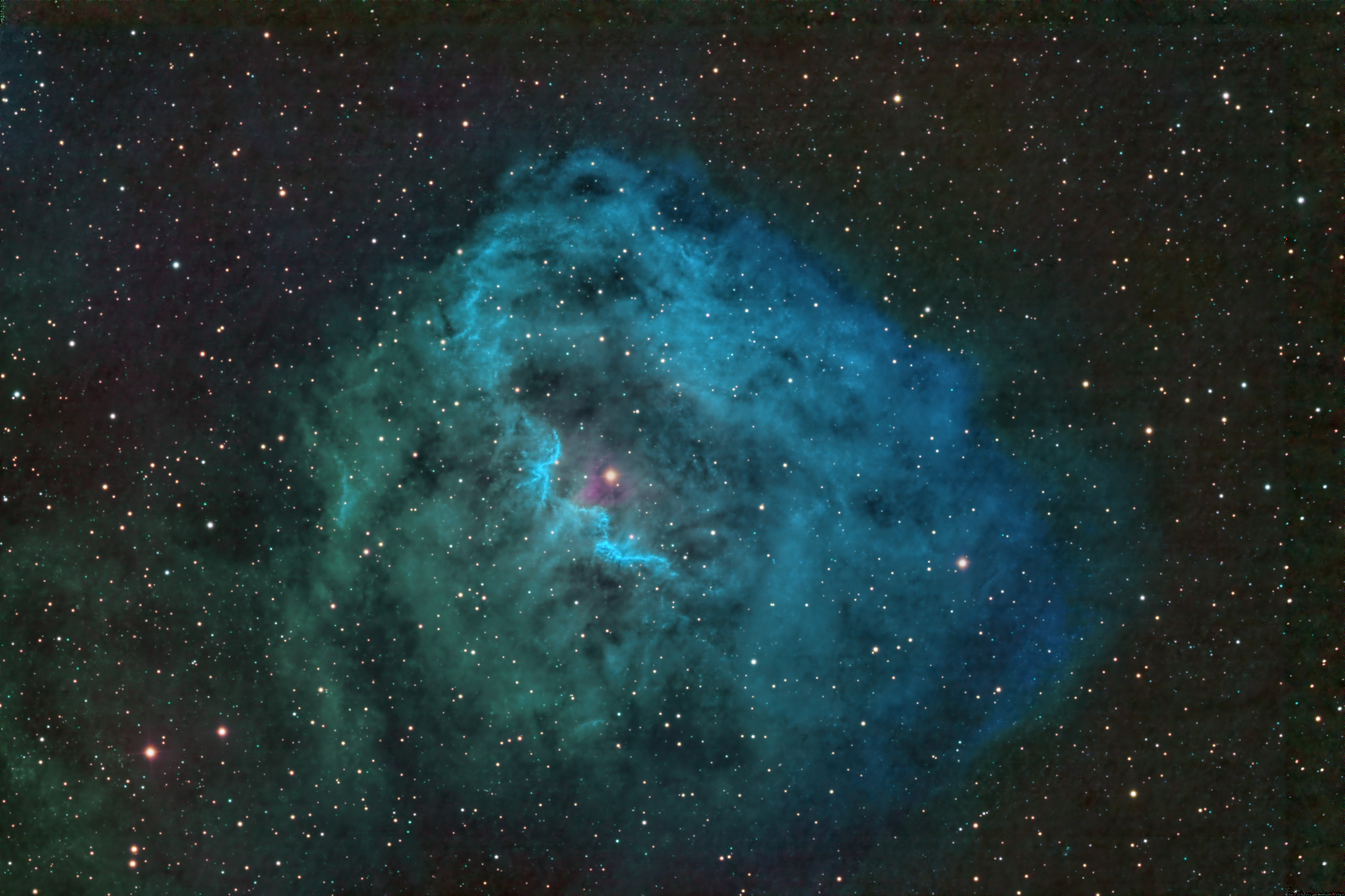
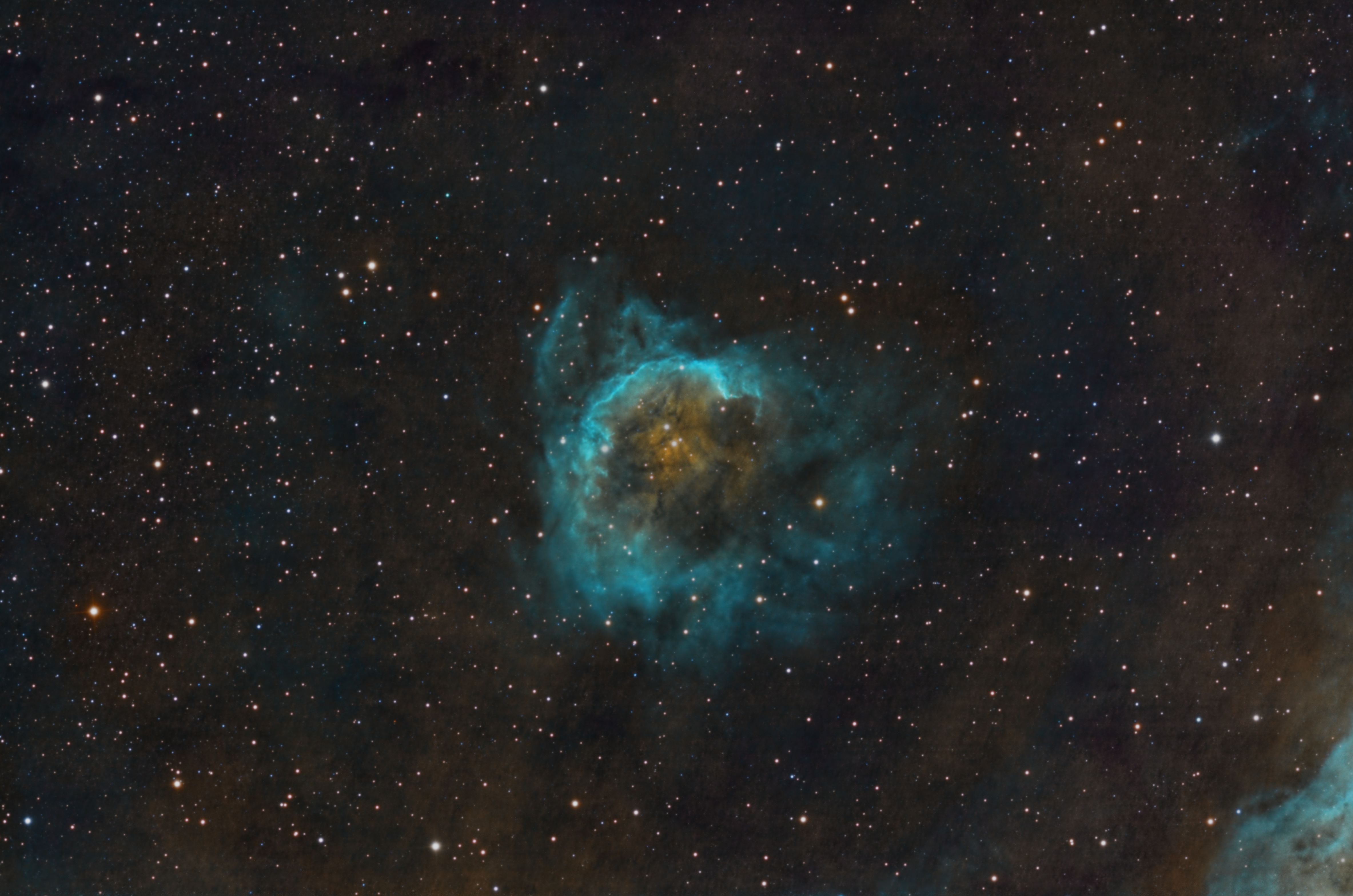
Sh2-157 - The Lobster Claw Nebula
This is an emission nebula in the constellation Cassiopeia. It lies
about 11,000 light-years away from us. The orange-ish area in the
center is predominantly Ha. The rest of the nebula contains various
areas of OIII and a little SII
|
Vela XYZ
Vela XYZ is a supernova remnant located in the southern
constellation of Vela. It's the expanding sphere of gas left
over from the death throes of a star. It is believed to have
exploded around 11,000 years ago, and at 900 light-years away,
it is the closest SNR known to us. This image was processed
with the HSO palette
|
RCW 40
Here is another version of Vela. This one processed with the
OHS palette. I think I like this one better than the preceding
one. I did two versions to show that by assigning the different
filters to the color channels in various combinations, different
structural details can be seen. I couldn't find the info again,
but last time I checked, I remember that the HST carries at least
52 different filters
|
NGC 2170
William Herschel discovered this reflection nebula in 1784 in
the constellation Monoceros
|
- Location: IC Astronomy Observatory, Spain
- Date: June 30, 2020
- Mount: Paramount MX+
- Telescope: FSQ-106EDX4 SPA-3
- Camera: FLI PL16083
- Exposure: 90x450 sec OHS 1hrs 25min
|
- Location: Heaven's Mirror Observatory, Australia
- Date: February - March 2024
- Mount: Paramount MX+
- Telescope: FSQ-106ED AUS-2
- Camera: QHY600m @-25c CMOS
- Exposure: 91x5 min HSO 7hrs 35min
|
- Location: Heaven's Mirror Observatory, Australia
- Date: February - March 2024
- Mount: Paramount MX+
- Telescope: FSQ-106ED AUS-2
- Camera: QHY600m @-25c CMOS
- Exposure: 91x5 min OHS 7hrs 35min
|
- Location: El Sauce Observatory, Chile
- Date: March 2024
- Mount: Mathis MI-1000
- Telescope: Planewave CDK24 f/6.6
- Camera: QHY600m @-25c CHI-1
- Exposure: 111x5 min LRGB 8hrs 45min
|
|
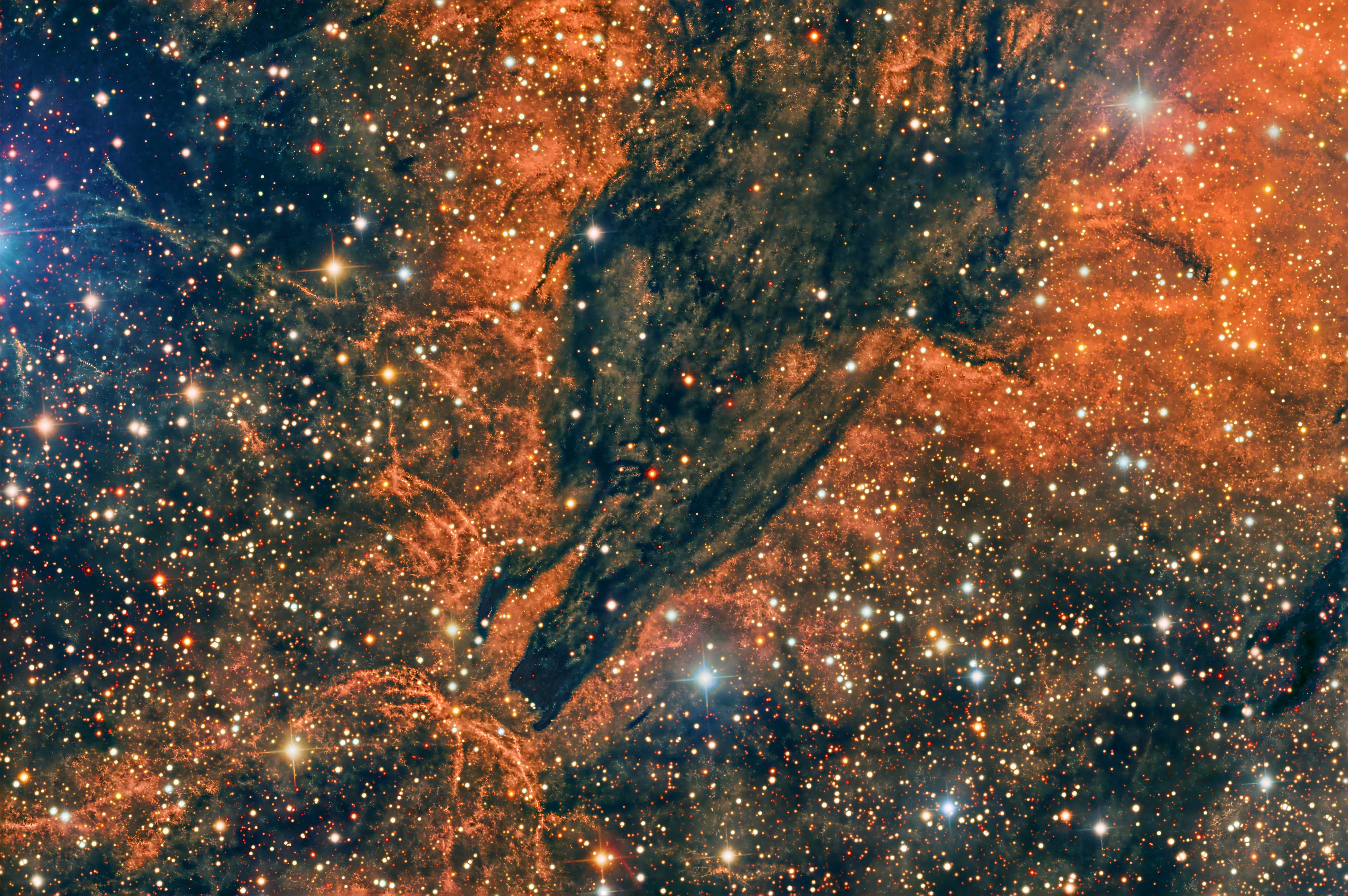
Dark Wolf or Fenrir Nebula
This dark nebula is located in the constellation Scorpius, and
is superimposed on the emission nebula RCW 113. This is an LRGB
version
|
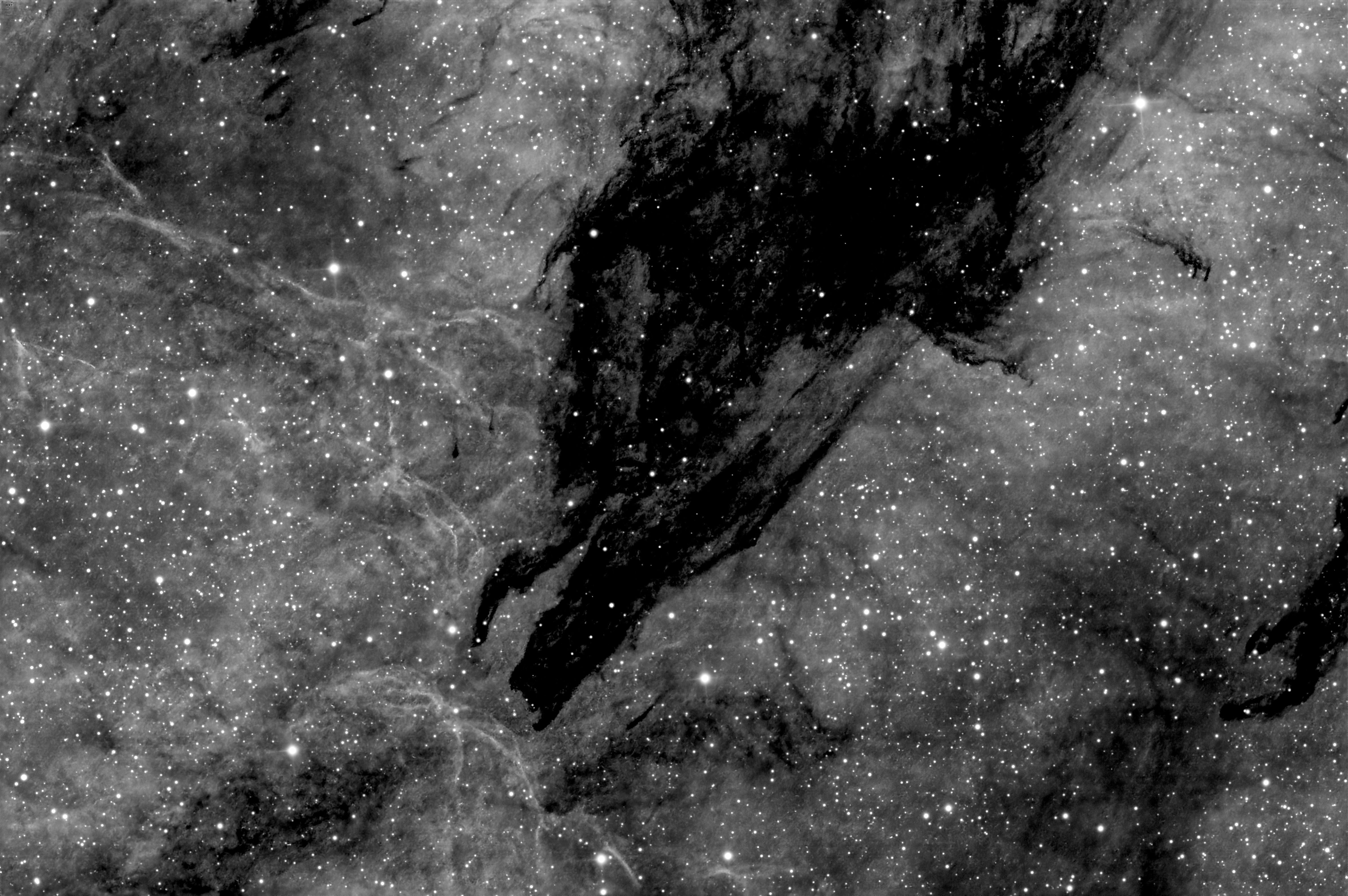
Dark Wolf or Fenrir Nebula
Here is another version of the Dark Wolf Nebula (to the left).
This version was taken with just a Hydrogen Alpha filter (Ha)
|
placeholder
|
placeholder
|
- Location: El Sauce Observatory, Chile
- Date: July 2024
- Mount: Mathis MI-1000
- Telescope: Planewave CDK24 f/6.6
- Camera: QHY600m @-25c CHI-1
- Exposure: 265 x 5 min LRGB 18hrs 25min
|
- Location: El Sauce Observatory, Chile
- Date: July 2024
- Mount: Mathis MI-1000
- Telescope: Planewave CDK24 f/6.6
- Camera: QHY600m @-25c CHI-1
- Exposure: 78x5 min Ha 6hrs 30min
|
|
|