|
NGC 3293 - The Gem Cluster
This is an open cluster (the bright white spot in the very
center) in the constellation Carina. It consists of at least
100 stars. After spending quite a while looking for information
on the surrounding nebulae, I had to give up and admit defeat.
Couldn't find any info. These first three images are of the
same object - just processed with different palettes. This
first one was processed in the OSH palette
|
NGC 3293 - The Gem Cluster
This second effort was done in the OSH palette
|
NGC 3293 - The Gem Cluster
This third effort was processed with the SHO palette
|
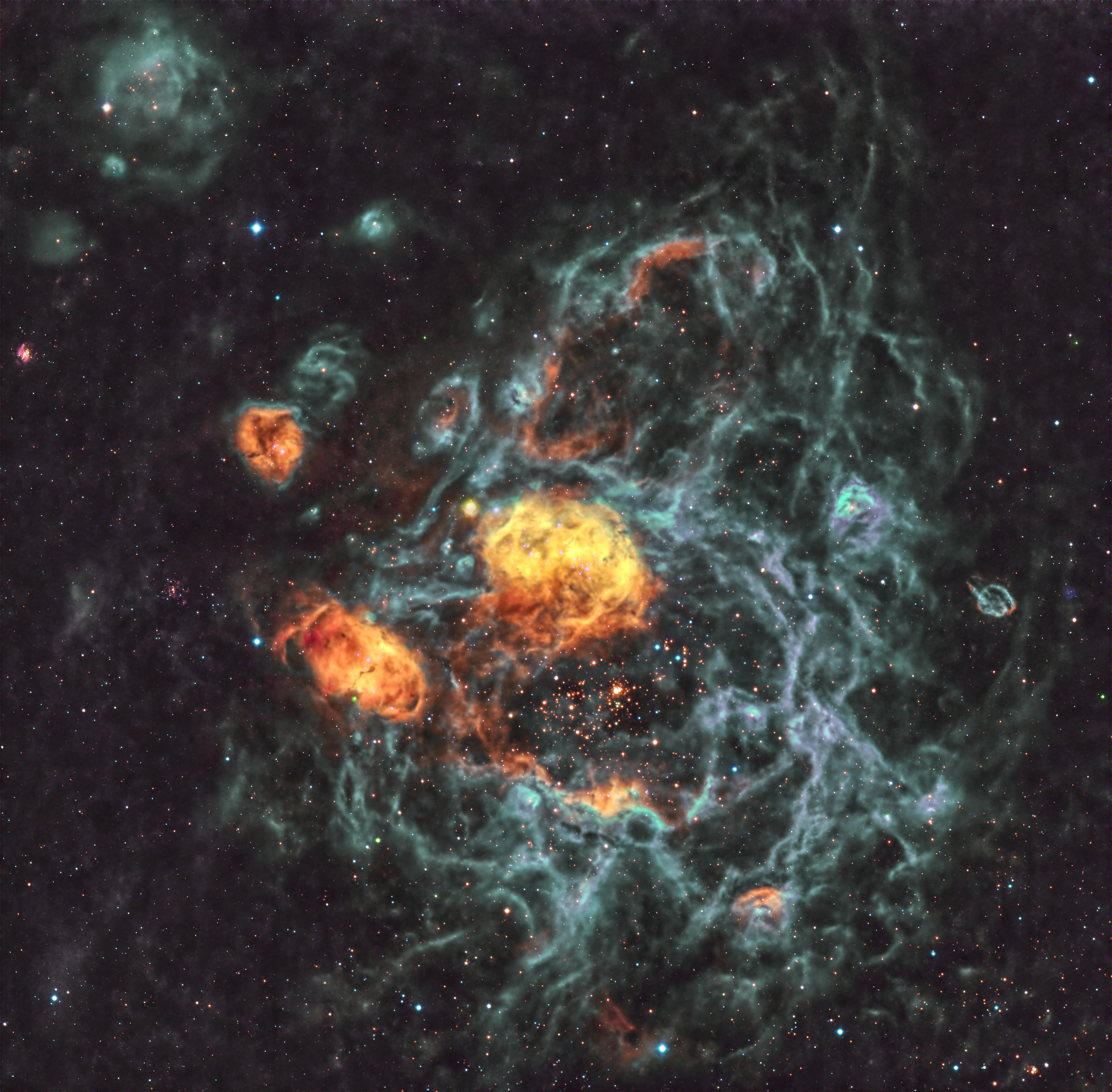
NGC 1763
This emission nebula is also known as the Bean Nebula.
It resides in the Large Magellanic Cloud in the constellation
Dorado. It also has an embedded open cluster
|
- Location: Heaven's Mirror Observatory, Australia
- Date: February - April 2024
- Mount: Paramount MX+
- Telescope: FSQ-106ED AUS-2
- Camera: QHY600m @-25c CMOS
- Exposure: 109x5 min HSO 8hrs 35min
|
- Location: Heaven's Mirror Observatory, Australia
- Date: February - April 2024
- Mount: Paramount MX+
- Telescope: FSQ-106ED AUS-2
- Camera: QHY600m @-25c CMOS
- Exposure: 109x5 min HSO 8hrs 35min
|
- Location: Heaven's Mirror Observatory, Australia
- Date: February - April 2024
- Mount: Paramount MX+
- Telescope: FSQ-106ED AUS-2
- Camera: QHY600m @-25c CMOS
- Exposure: 109x5 min HSO 8hrs 35min
|
- Location: El Sauce Observatory, Chile
- Date: August - December 2021
- Mount: Mathis MI-1000
- Telescope: Planewave CDK24 f/6.6
- Camera: FLI PL9000 @-25c CHI-1 CCD
- Exposure: 59x10 min LRGB 9hrs 50min
|
|
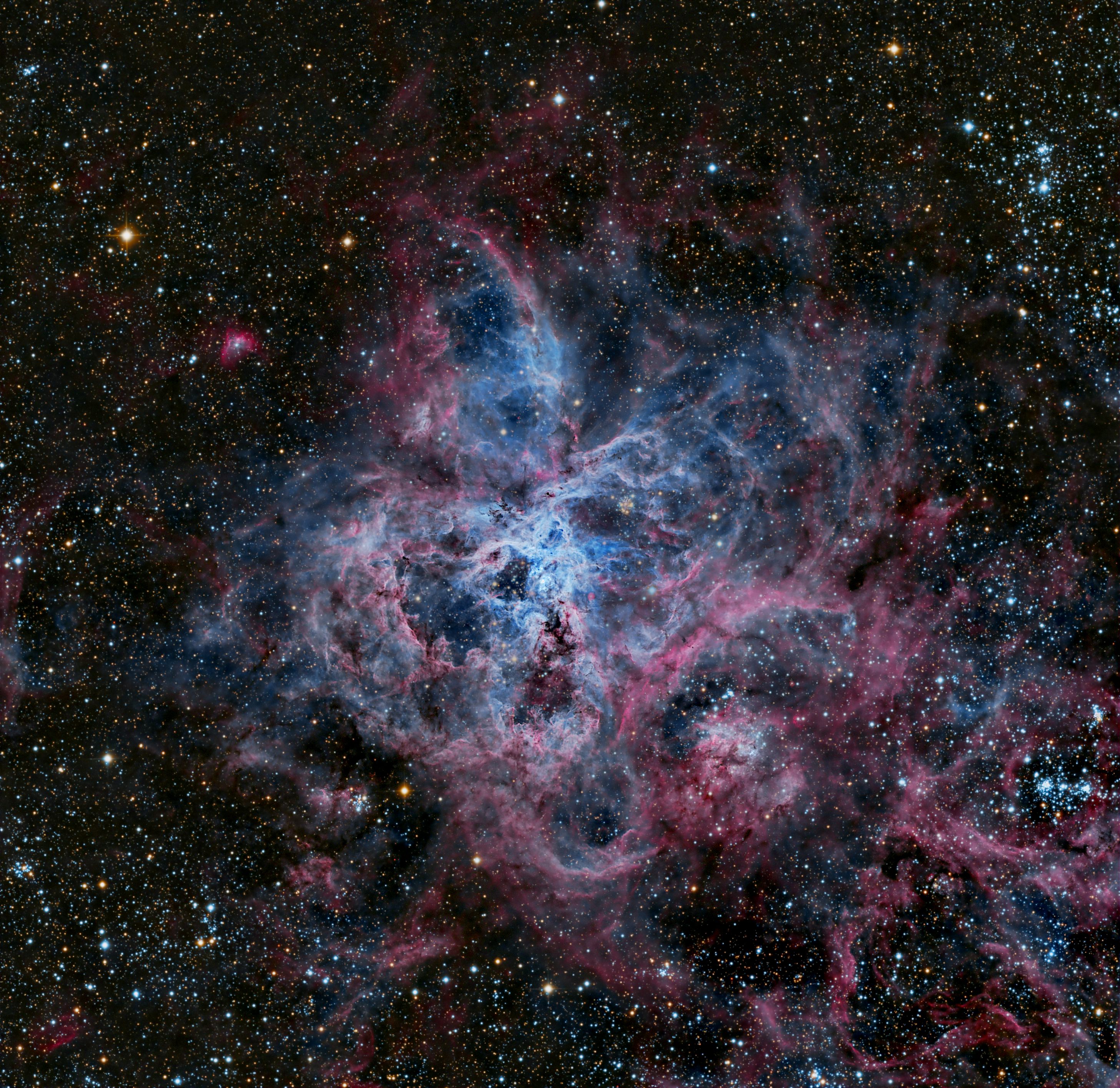
NGC 2070 - Tarantula Nebula
In our local group of galaxies, the Tarantula Nebula is the
largest star forming region as well as the largest
Hydrogen II regions. It is so bright that if it were as close
to us as the Orion Nebula (1600 Ly), it would produce visible
shadows in daylight. It is 160,000 light years away and is
931 light-years in size
|
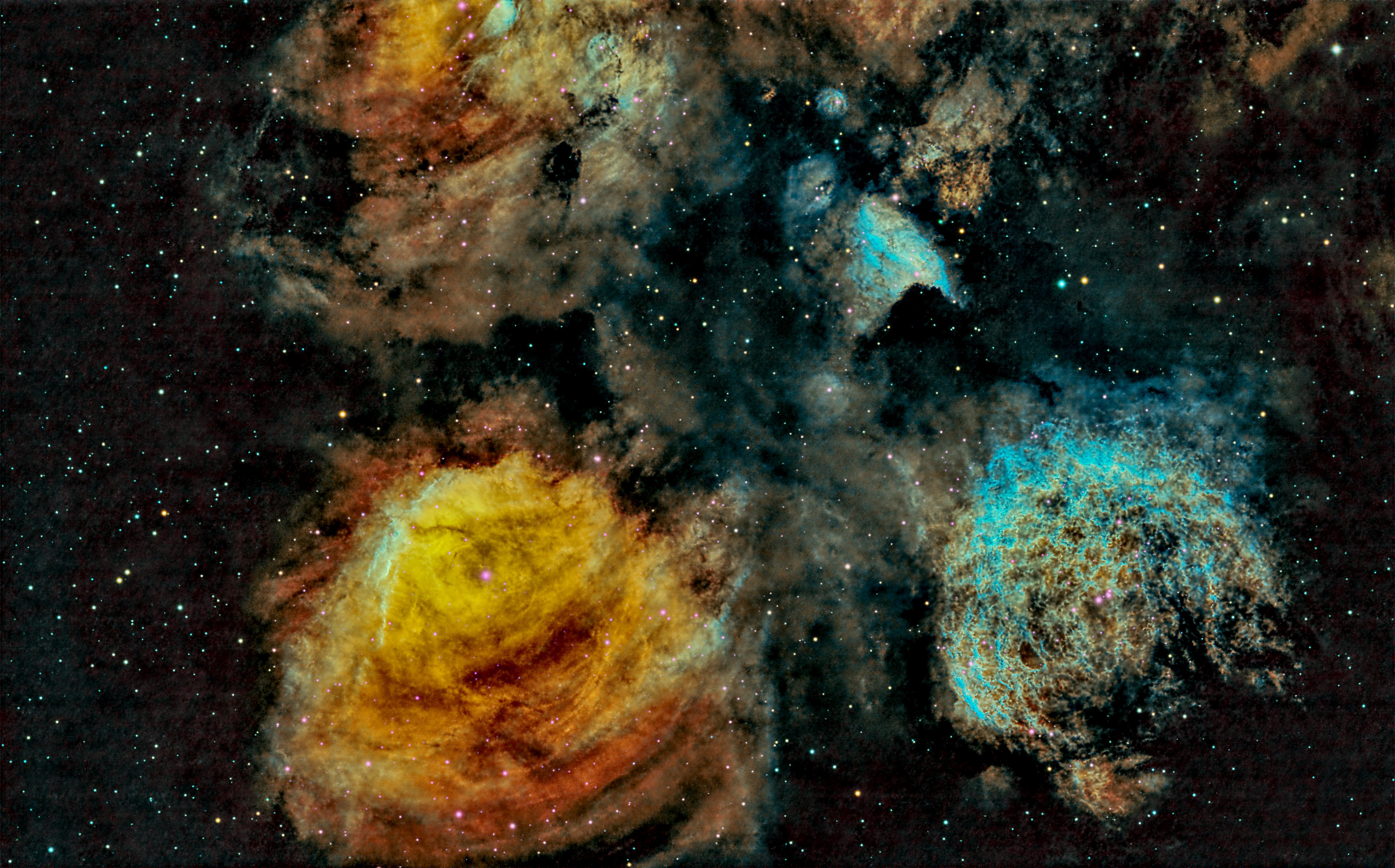
RCW 127 - The Cat's Paw Nebula
Commonly known as the Cat's Paw Nebula, it is composed of several
Hydrogen Alpha regions. This image was processed in the OHS palette.
It resides in the constellation Scorpius, and is about 6000
light-years away
|
Lupus Dust Panel #1
This, and the image next door are large dusty regions in the
constellation Lupus the Wolf. There is also a dark nebula
|
Lupus Dust Panel #2
A view of another part of the Lupus region
|
- Location: El Sauce Observatory, Chile
- Date: August - December 2021
- Mount: Mathis MI-1000
- Telescope: Planewave CDK24 f/6.6
- Camera: FLI PL9000 @-25c CHI-1 CCD
- Exposure: 59x10 min LRGB 9hrs 50min
|
- Location: El Sauce Observatory, Chile
- Date: August 2024
- Mount: Mathis MI-1000
- Telescope: Planewave CDK24 f/6.6
- Camera: QHY600m @-25c CHI-1
- Exposure: 35x5 min OHS 2hrs 55min
|
- Location: Heaven's Mirror Observatory, Australia
- Date: August 2024
- Mount: Paramount MX+
- Telescope: FSQ-106ED AUS-2
- Camera: QHY600m @-25c CMOS
- Exposure: 63x5 min LRGB 6hrs 5min
|
- Location: Heaven's Mirror Observatory, Australia
- Date: August 2024
- Mount: Paramount MX+
- Telescope: FSQ-106ED AUS-2
- Camera: QHY600m @-25c CMOS
- Exposure: 24x5 min LRGB 2hrs
|
|
LDN 1089 - Dark Nebula
A dusty area in the constellation Cepheus. There is a small
H II region on the left side, while the rest of the image
contains a lot of dusty areas as well as a few dark nebulae
|
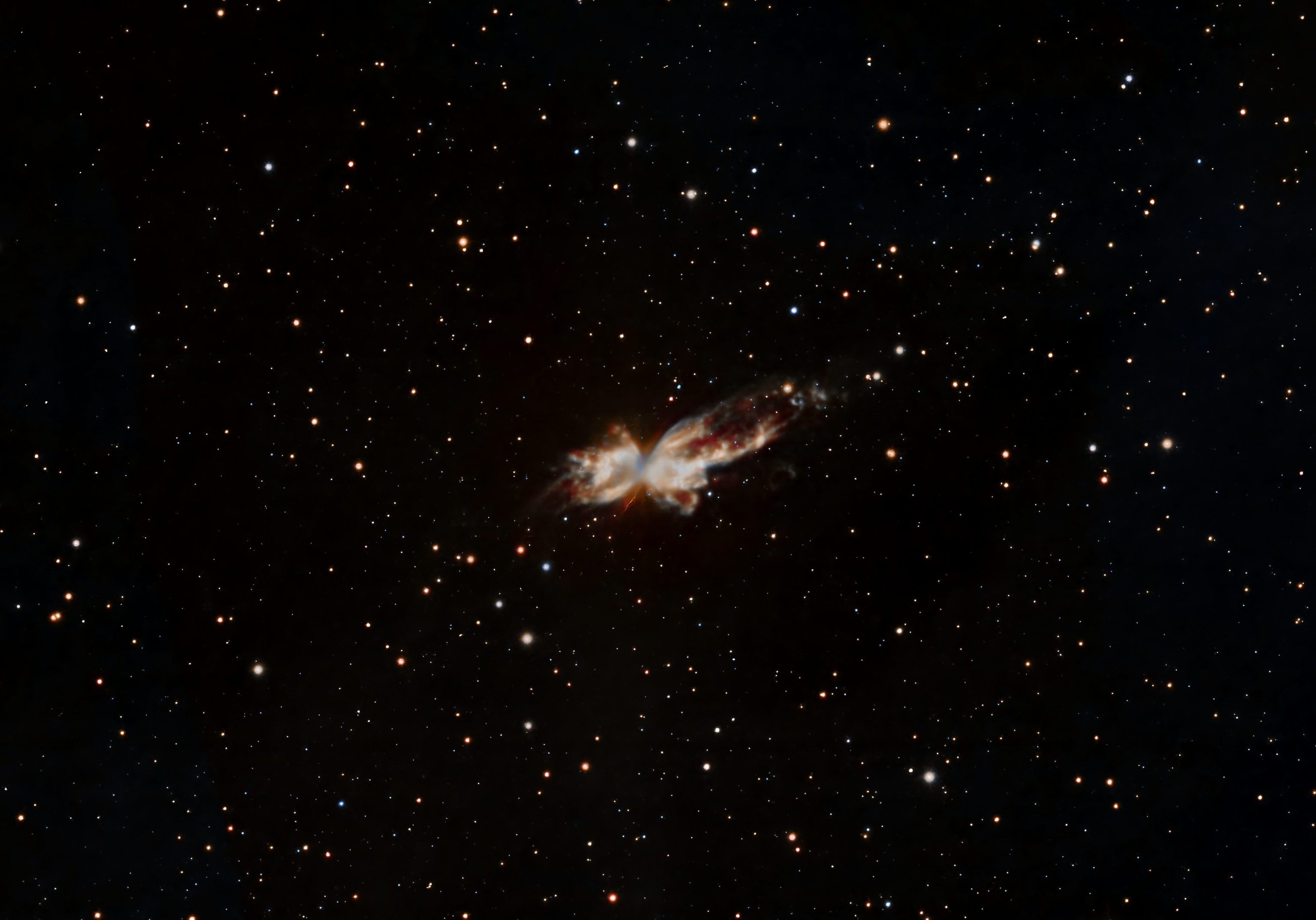
NGC 6302 - The Butterfly or Bug Nebula (CMOS)
This is a bipolar planetary nebula located in the constellation
Scorpius. Scientists are still unsure as to why a star would end
its life in this fashion as opposed to the more common spherical
planetary nebula. The surface of this white dwarf is around 250,000
degrees Celsius, which makes it one of the hottest bodies known to
us. This image was taken with a new CMOS camera
|
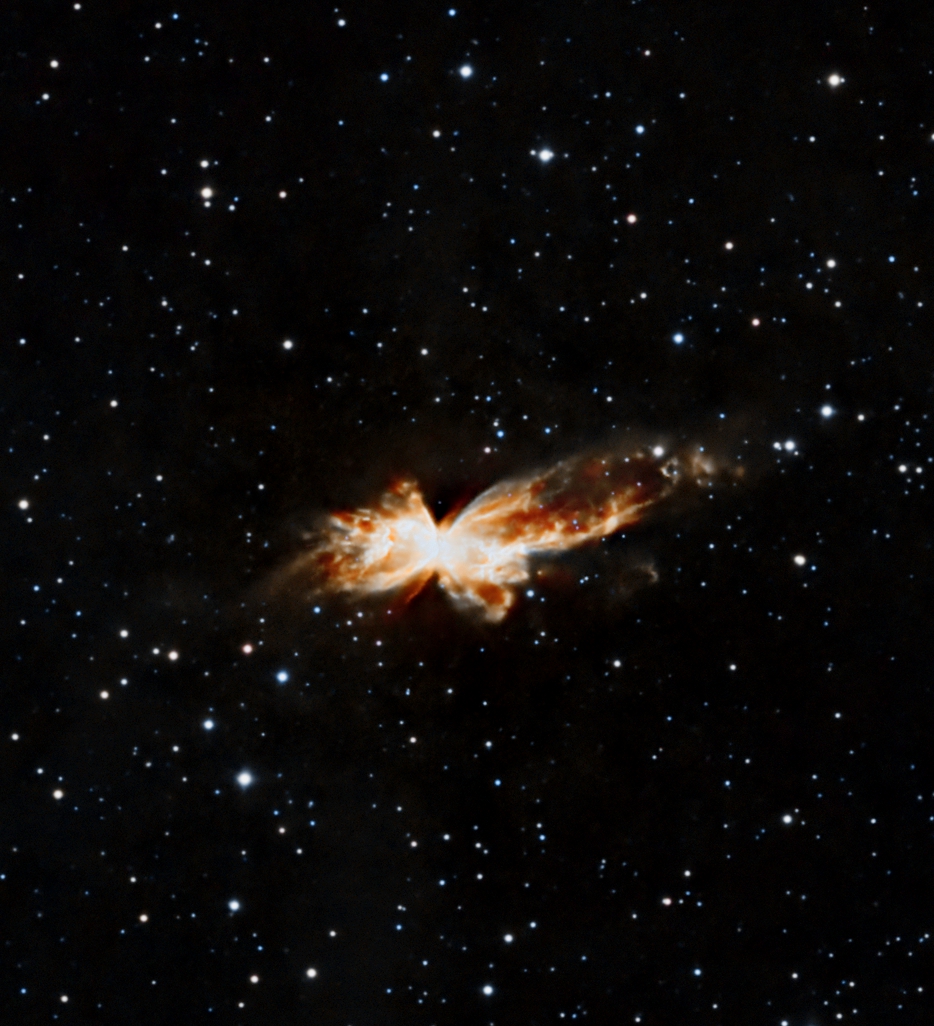
NGC 6302 - The Butterfly or Bug Nebula (CCD)
This image is of the same object as the one to the left.
The difference being that this image was taken with an older
CCD camera and tightly cropped
|
RCW 62
Unfortunately, there isn't much info out there for objects in
the RCW catalog. So here is what I was able to find. RCW 62
(IC 2944) corresponds to the body of the Running Chicken Nebula
in the constellation Centaurus. It is composed mostly of H II
and is an emission nebula. It sits approximately 6500 light-years
away. It also hosts a few star clusters as well as some bright
X-ray sources. This image was processed in the OHS palette
|
- Location: IC Astronomy Observatory, Spain
- Date: August 2024
- Mount: Paramount MX+
- Telescope: Takahashi FSQ-106ED SPA-1
- Camera: FLI PL16083
- Exposure: 35x5 min SHO 2hrs 55min
|
- Location: El Sauce Observatory, Chile
- Date: August 2024
- Mount: Mathis MI-1000
- Telescope: Planewave CDK24 f/6.6
- Camera: QHY600m @-25c CHI-1
- Exposure: 35x5 min OHS 3hrs
|
- Location: El Sauce Observatory, Chile
- Date: July 2021
- Mount: Mathis MI-1000
- Telescope: Planewave CDK24 f/6.6
- Camera: FLI PL9000 @-25c CHI-1 CCD
- Exposure: 86x10 min OHS 13hrs 50min
|
- Location: Heaven's Mirror Observatory, Australia
- Date: May 2024
- Mount: Paramount MX+
- Telescope: FSQ-106ED AUS-2
- Camera: QHY600m @-25c CMOS
- Exposure: 117x5 min OHS 9hrs 15min
|
|
RCW 62
This is another version of RCW 62. It was processed in the
OHS palette like the preceding one, but applying the colors
in a different way. When working with narrowband images, there
seems to be no end to the color possibilities
|
NGC 6914
In the constellation Cygnus, the Swan, lies NGC 6914, a
reflection nebula. It was discovered by Edouard Stephan on
August 29, 1881. The data set for this image was acquired
by an imager with the Sacramento Astronomical Society and
processed by Ron Yelton
|
Cederblad 214
CED 214 is part of a large molecular cloud and star-forming
region in the constellation Cepheus, the King of Aethiopia
|
The Coal Sack
This is a dark nebula in the constellation Crux. It is an
extremely large nebula that extends into both the Centaurus,
and Musca constellations. It was first reported back in 1499 and
was also noted by Magellan
|
- Location: Heaven's Mirror Observatory, Australia
- Date: May 2024
- Mount: Paramount MX+
- Telescope: FSQ-106ED AUS-2
- Camera: QHY600m @-25c CMOS
- Exposure: 117x5 min OHS 9hrs 15min
|
- Location: Blue Canyon Airport
- Date: 2024
- Mount: iOptron CEM120
- Telescope: Stellarvue SVX152
- Camera: QHY600m
- Exposure: 428x2 min OHS 14hrs 2min
|
- Location: IC Astronomy Observatory, Spain
- Date: June 2024
- Mount: Officina Stellare EQ Mount
- Telescope: Officina Stellare Pro RC 700
- Camera: QHY600m @-25c SPA-2
- Exposure: 96x10 min HSO 8hrs
|
- Location: Heaven's Mirror Observatory, Australia
- Date: May 28, 2024
- Mount: Paramount MX+
- Telescope: FSQ-106ED AUS-2
- Camera: QHY600m @-25c CMOS
- Exposure: 24x5 min LRGB 2hrs
|
|
IC 1396 - The Elephant Trunk Nebula
Located in the constellation of Cepheus, the Elephant Trunk
is part of a much larger region of ionized gas, IC 1396.
The tip of the trunk is a dark, dense globule called IC 1396A,
which has been hollowed out by radiation erosion. The nebula
is thought to be a star-forming region with several young, hot,
blue stars. These stars are thought to be only around 100,000
years old
|
DWB 111 - The Propeller Nebula
The Propeller Nebula is in the summer constellation of Cygnus,
the Swan. It is an emission nebula
|
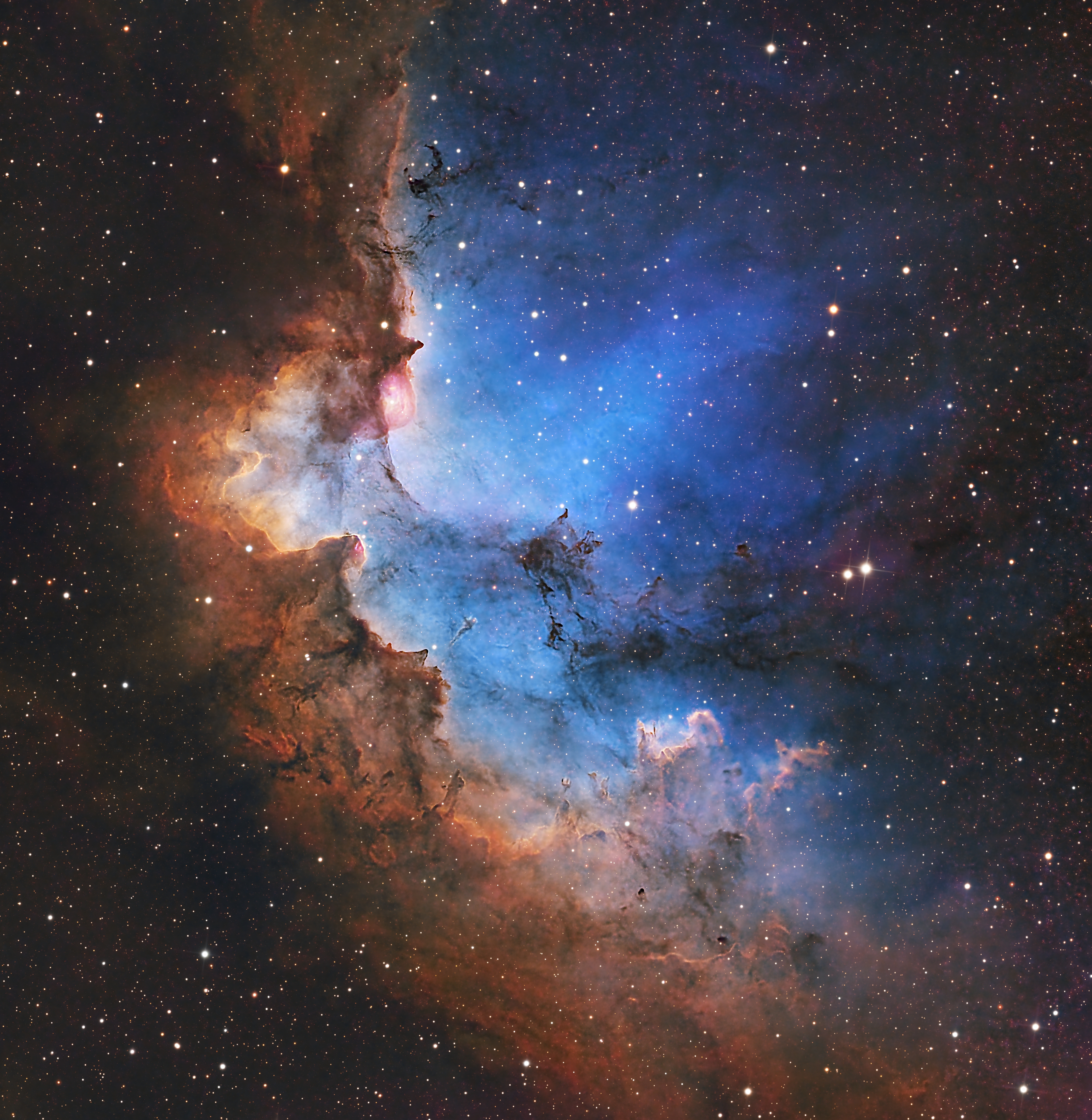
NGC 7380 - The Wizard Nebula
In 1787, Caroline Herschel discovered this nebula in the
constellation Cepheus. It is an emission nebula with an open
cluster. It is very faint and requires a very large aperture
telescope with an O III filter or the use of long exposure
imaging to see. Josep Drudis acquired the full data set, and
generously made it available to Adam Block to use in his
PixInsight tutorials. Thanks to both Adam and Josep for the
use of this data
|
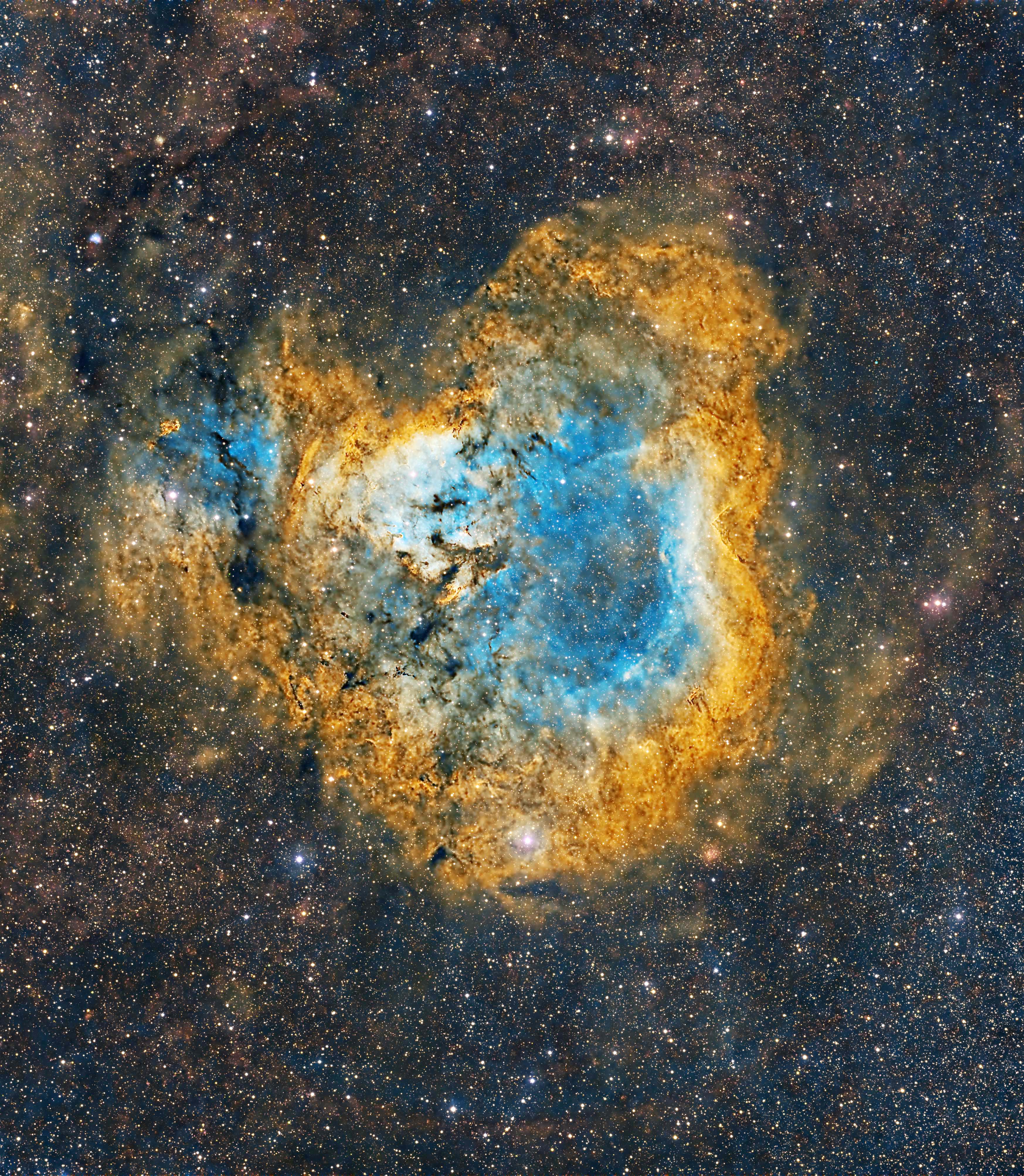
RCW 62
This is a third variation of this nebula complex. The other
two versions are just a couple of rows above this one. Again,
there is precious little information to be found on objects
in the RCW catalog. This version was done in the SHO palette
|
- Location: IC Astronomy Observatory, Spain
- Date: July 2024
- Mount: Paramount MX+
- Telescope: Takahashi FSQ-106ED SPA-1
- Camera: FLI PL16083
- Exposure: 35x5 min SHO 11hrs 50min
|
- Location: IC Astronomy Observatory, Spain
- Date: June 2022
- Mount: Officina Stellare EQ Mount
- Telescope: Officina Stellare Pro RC 700
- Camera: QHY600m @-25c SPA-2
- Exposure: 42x10 min HSO 7hrs
|
- Location: Mt. Lemmon, Tucson, AZ
- Date: November 17, 2021
- Mount: Unknown
- Telescope: Planewave 14" FL = 4000mm
- Camera: Unknown
- Exposure: SHO + RGB 31hrs 30min
|
- Location: Heaven's Mirror Observatory, Australia
- Date: May 2024
- Mount: Paramount MX+
- Telescope: FSQ-106ED AUS-2
- Camera: QHY600m @-25c CMOS
- Exposure: 114x5 min OHS 9hrs
|
|
NGC 1788
Out in the constellation Orion (the Hunter) lies this
beautiful emission nebula. It was processed as LRGB+Ha.
Which means that it is in natural color with a hydrogen
component added. The hydrogen is the red that surrounds the
blue nebula. There is also a dark nebula component that is
also part of NGC 1788 that is called LDN 1616. This nebula
lies about 1300 light-years away from us
|
NGC 6888 - The Crescent Nebula
About 500 light-years away, in the constellation Cygnus, the Swan,
lies the Crescent Nebula. It was discovered by William Herschel
in 1792. Somewhere between 250,000 and 400,000 years ago the
central star turned into a red giant and shed its outer atmosphere.
Later the star became a Wolf-Rayet star which throws off extremely
hot and faster moving radiation winds. So we end up with two shock
waves - one moving inward and one moving outward. This image was
processed in the OHS palette. Down in the lower-left corner is
what appears to be another nebula as well as a second one at about
the seven o'clock position
|
The Dark Tower
This interesting nebula in the constellation Scorpius is what
is known as a cometary globule. It is also considered to be a
dark nebula. Early astronomers thought that it looked somewhat
like a comet, thus the name. It is about 5000 light-years from
Earth. The Tower seems to be pointing at an open star cluster
on the right side. The intense radiation from this cluster erodes
the gases and leaves behind the globule which is usually a
star-making area of its own. This image was processed in natural
color
|
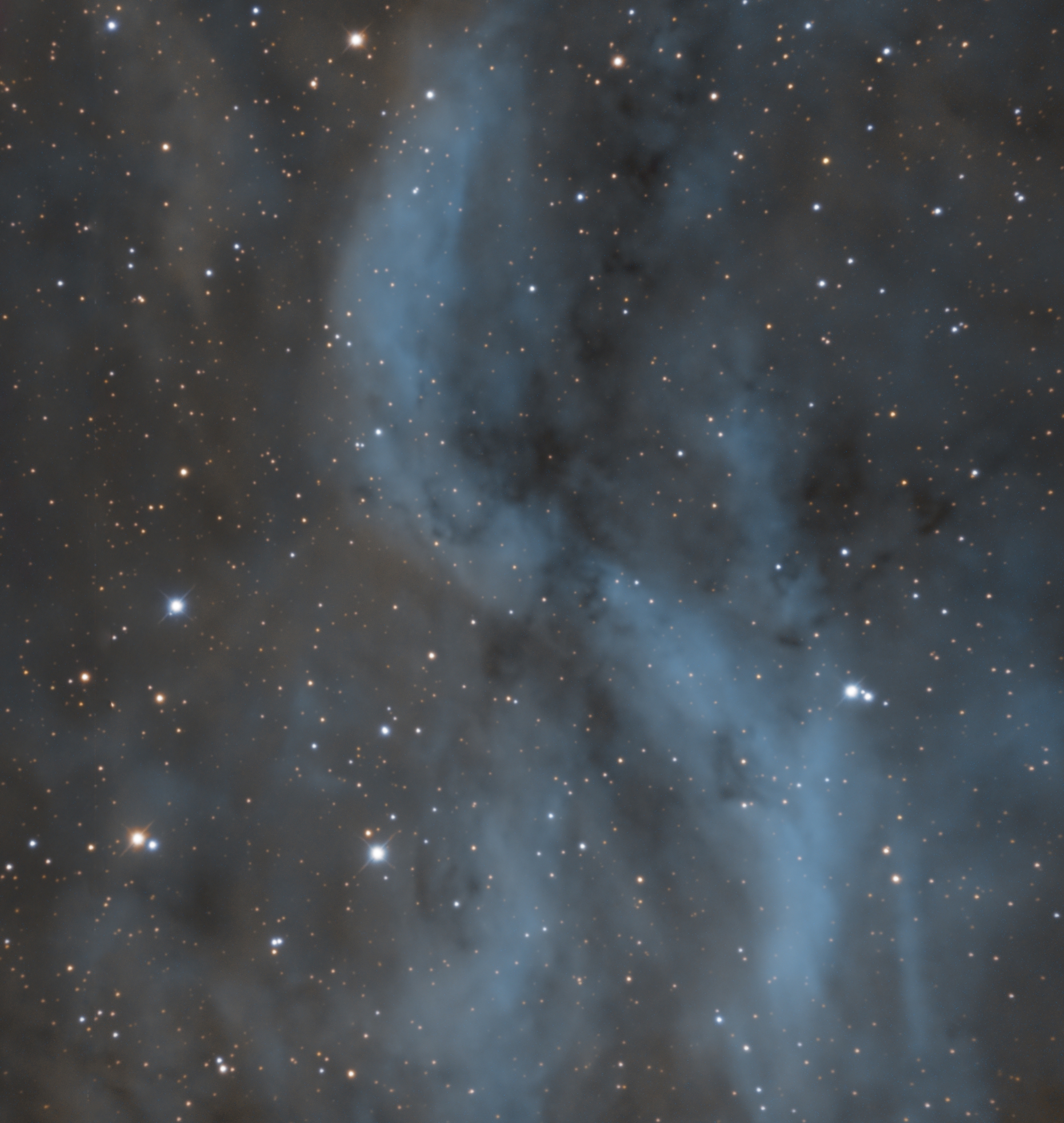
LDN 1089
This dusty region is in the constellation Cepheus, the King.
The challenge here is that there are several very bright stars
with their light diffused through the dust and gas. How to
brighten up the darker dust without saturating the stars.
This is the first time I've dealt with this kind of challenge
|
- Location: El Sauce Observatory, Chile
- Date: September 2024
- Mount: Mathis MI-1000
- Telescope: Planewave CDK24 f/6.6
- Camera: QHY600m @-25c CHI-1
- Exposure: 125x5 min LRGB / 42x5 min Ha 13hrs 55min
|
- Location: IC Astronomy Observatory, Spain
- Date: April 2024
- Mount: Paramount MX+
- Telescope: Takahashi FSQ-106ED SPA-1
- Camera: FLI PL16083
- Exposure: 69x5 min OHS 5hrs 45min
|
- Location: Heaven's Mirror Observatory, Australia
- Date: October 2024
- Mount: Paramount MX+
- Telescope: FSQ-106ED AUS-2
- Camera: QHY600m @-25c CMOS
- Exposure: 88x5 min LRGB+Ha 5hrs 20min
|
- Location: IC Astronomy Observatory, Spain
- Date: August 2024
- Mount: Paramount MX+
- Telescope: Takahashi FSQ-106ED SPA-1
- Camera: FLI PL16083
- Exposure: 44x5 min LRGB 3hrs 40min
|
|
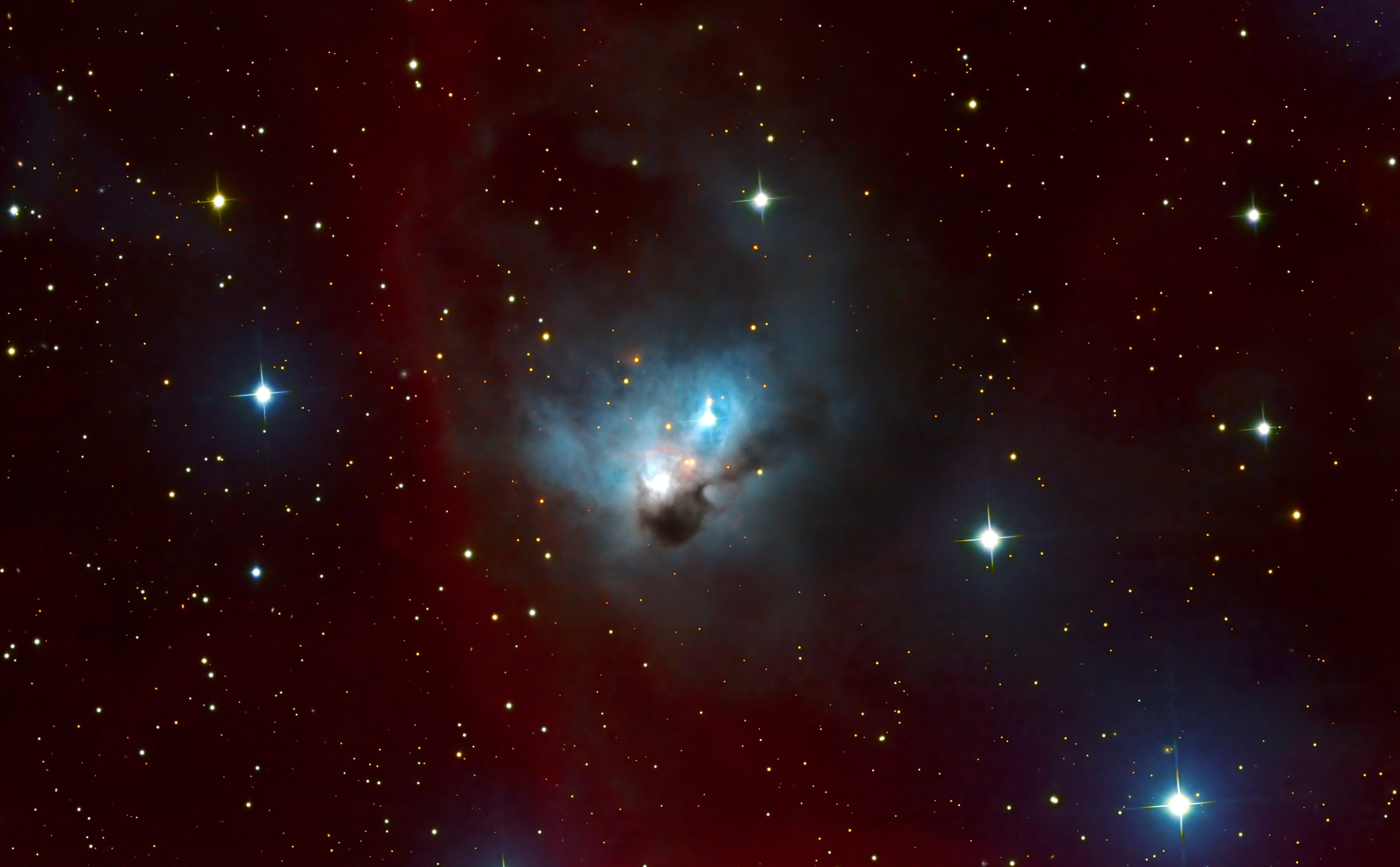
IC 4592 - The Blue Horsehead Nebula
This beautiful nebula is a reflection nebula lit by Nu
Scorpii in the constellation Scorpius. It is about 400
light-years away from us
|
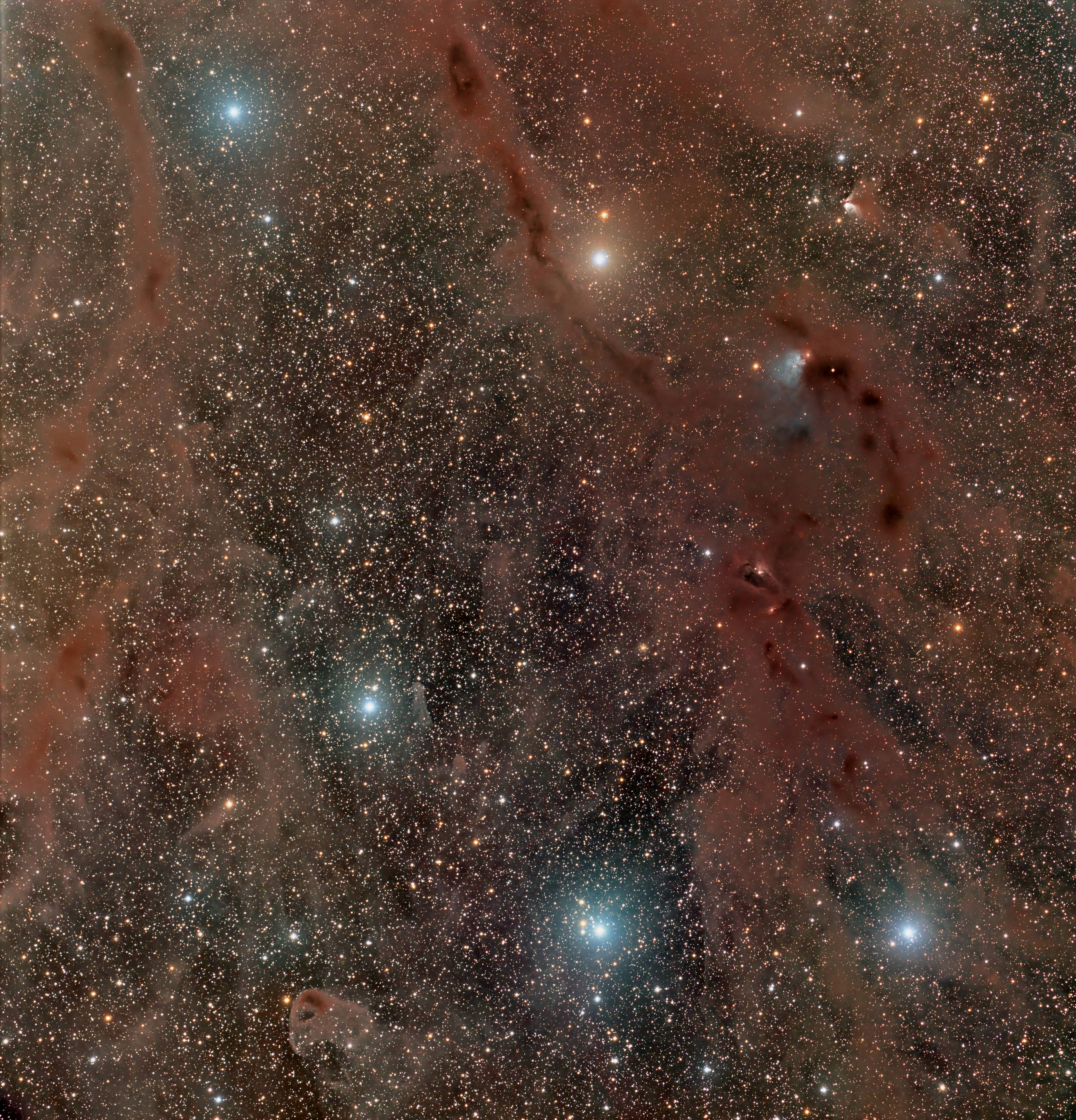
Barnard 7
This dark nebula is just one of many that wander through
the constellation Taurus. It's part of a group of molecular
clouds called the Taurus Molecular Cloud Complex
|
Messier 6 - The Butterfly Cluster
This is an open cluster in the southern constellation of
Scorpius. It was first recorded as being observed by Giovanni
Battista Hodierna in 1654, but credit is usually given to
Jean-Philippe Loys de Cheseaux in 1746. Charles Messier added
it to his catalog in 1764. It's estimated to be about 1600
light-years away and is high in metallicity. Which means that
the majority of the stars are relatively young. Its estimated
age is around 92 million years
|
placeholder |
- Location: Heaven's Mirror Observatory, Australia
- Date: May 2023
- Mount: Paramount MX+
- Telescope: FSQ-106ED AUS-2
- Camera: QHY600m @-25c CMOS
- Exposure: 165x5 min LRGB 13hrs 15min
|
- Location: IC Astronomy Observatory, Spain
- Date: December 2021
- Mount: Paramount MX+
- Telescope: Takahashi FSQ-106ED SPA-1 CCD
- Camera: FLI PL16083 @-25c
- Exposure: 44x10 min RGB 7hrs 20min
|
- Location: Heaven's Mirror Observatory, Australia
- Date: September 2024
- Mount: Paramount MX+
- Telescope: FSQ-106ED AUS-2
- Camera: QHY600m @-25c CMOS
- Exposure: 72x5 min LRGB 6hrs
|
|