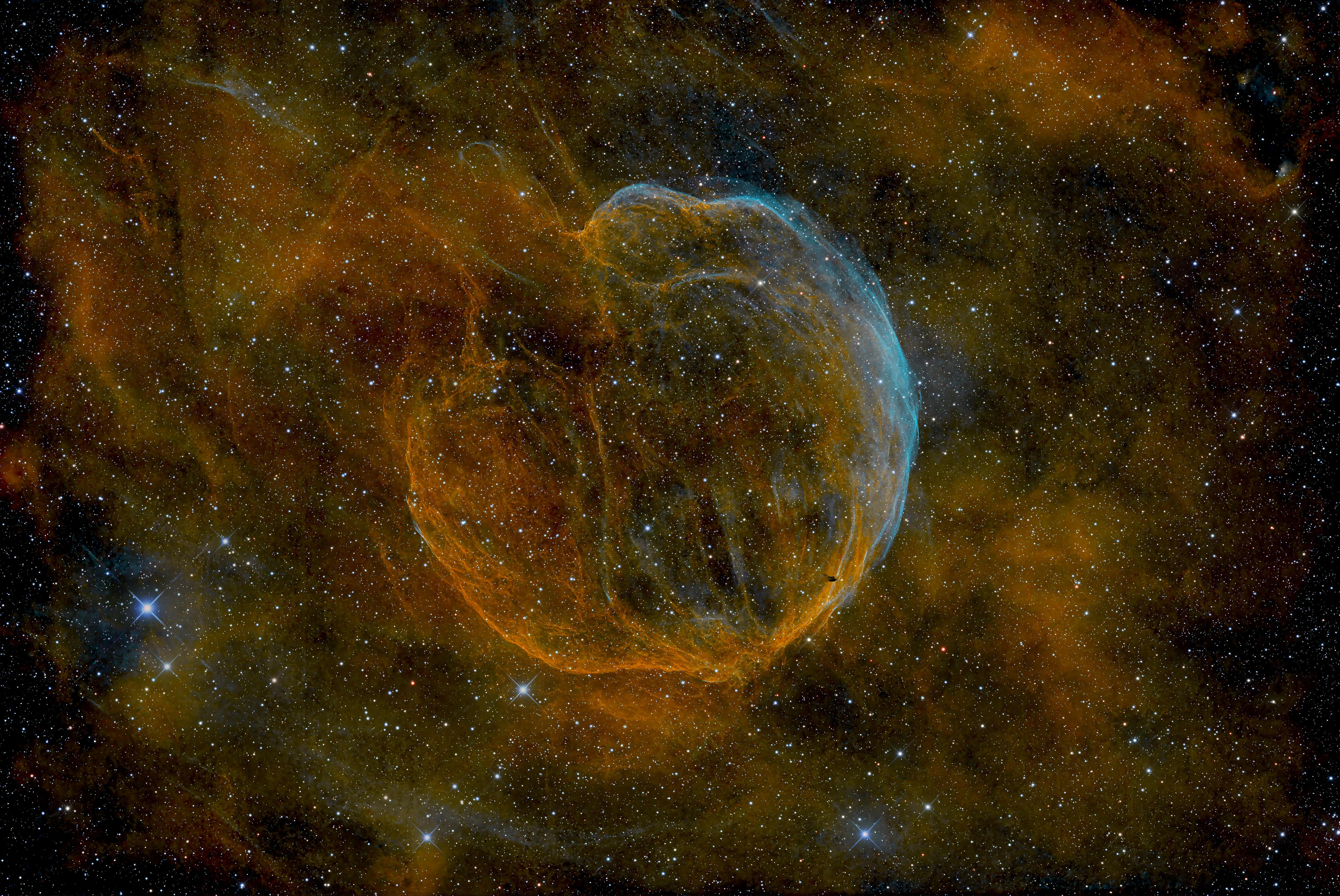
|
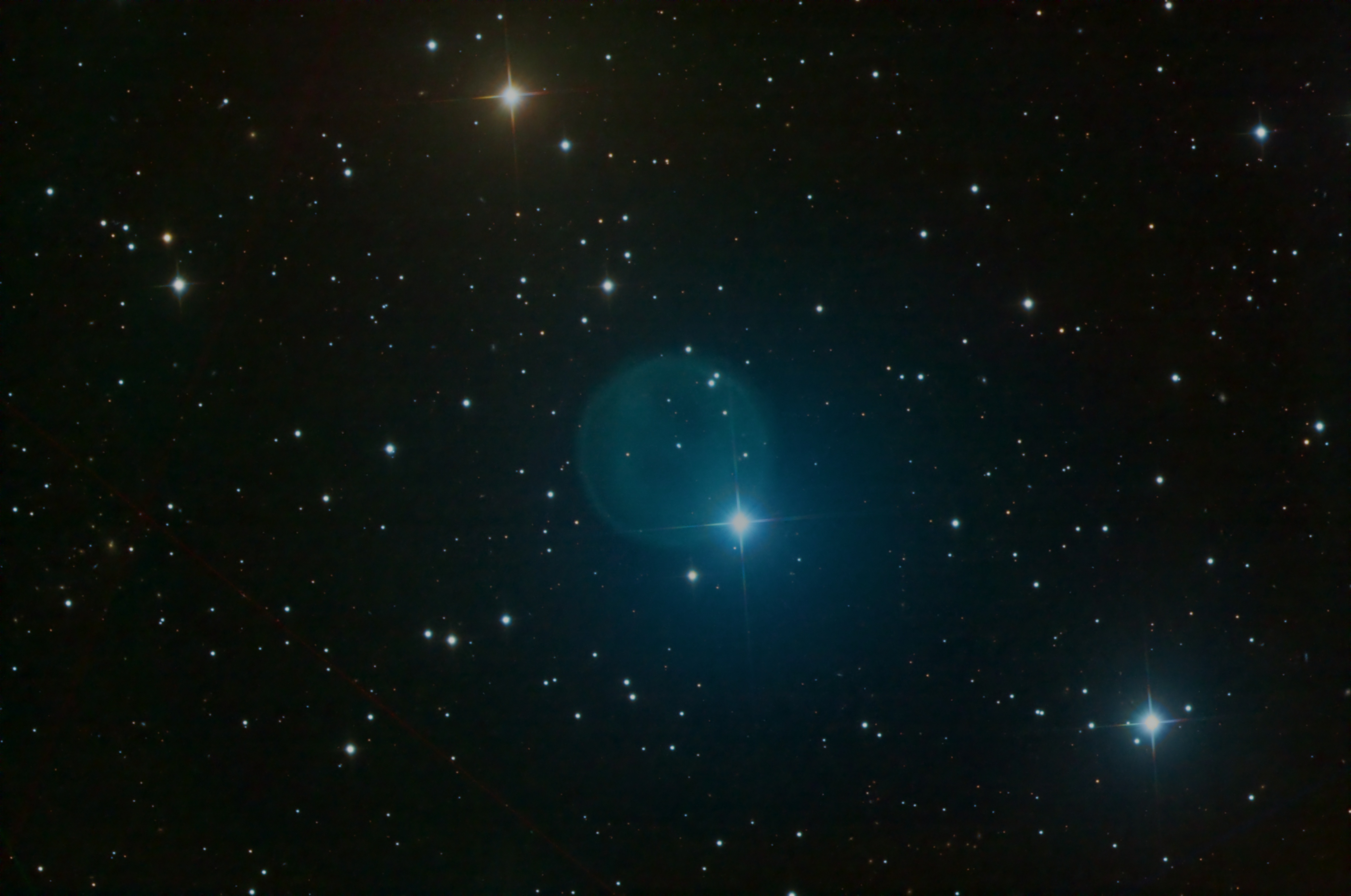
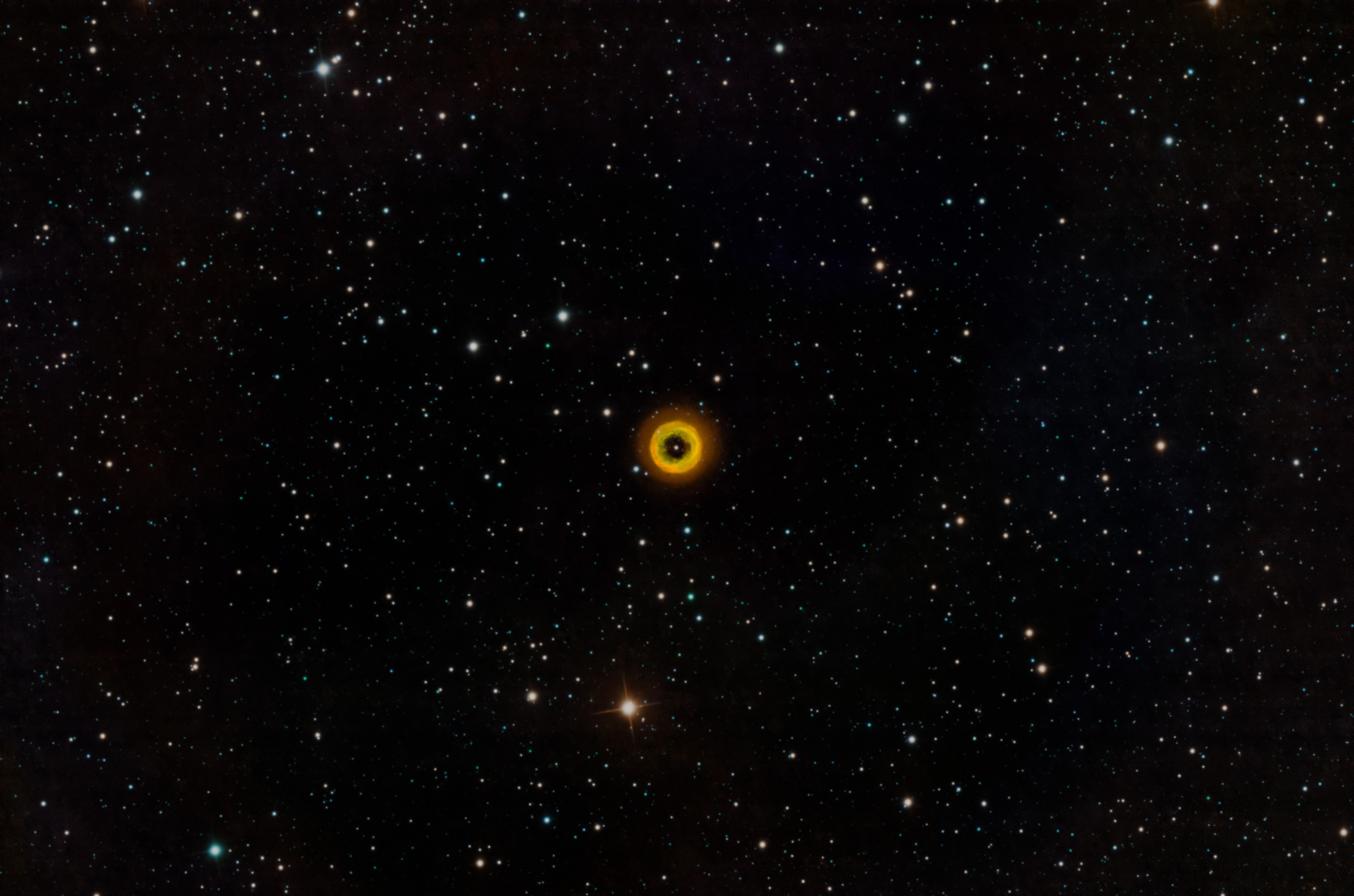
Abell 33 - The Diamond Ring Nebula
The Diamond Ring Nebula is a very faint spherical planetary nebula in
the constellation Hydra. It gets its bluish color from doubly ionized
oxygen. The star in the lower-right corner of the nebula is not associated
with the nebula, but actually considerably closer to us. Since the nebula
is so faint, one can only see it with a timed exposure. It lies about 2700
light-years away from us
|
Gamma Cygni Nebula
The image of this nebula is just part of the nebulosity that surrounds
the star Navi, in the constellation Cassiopeia. The hot stars embedded in
the nebulosity excite (heat) the surrounding gases enough that they
begin to glow. That makes most of the nebula an emission nebula. This one
is about 1500 light-years away
|
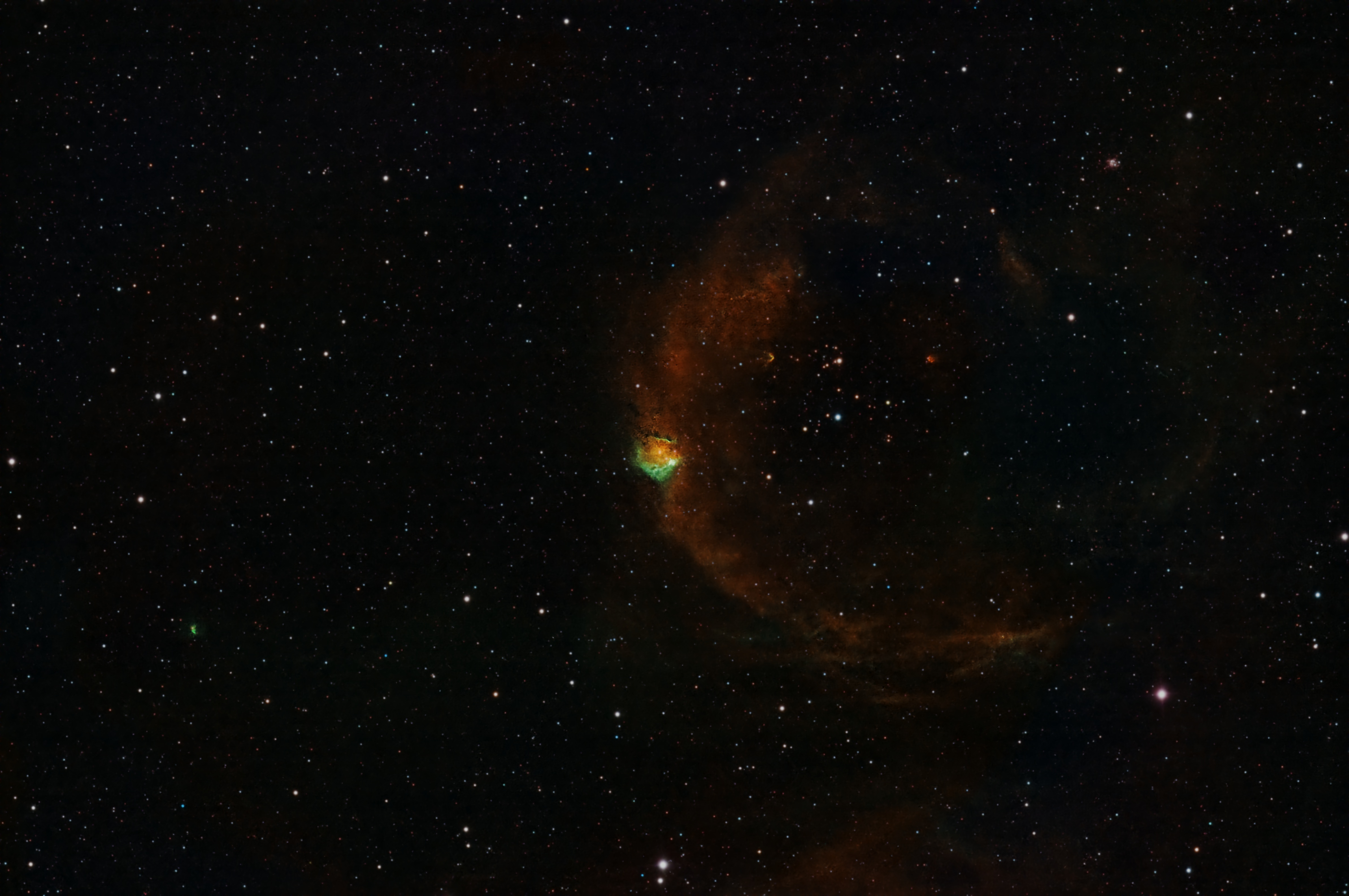
NGC 1923
This particular object is a combination of a star cluster and nebula
located in the constellation Dorado. Unfortunately, I couldn't find any
more information on this object
|
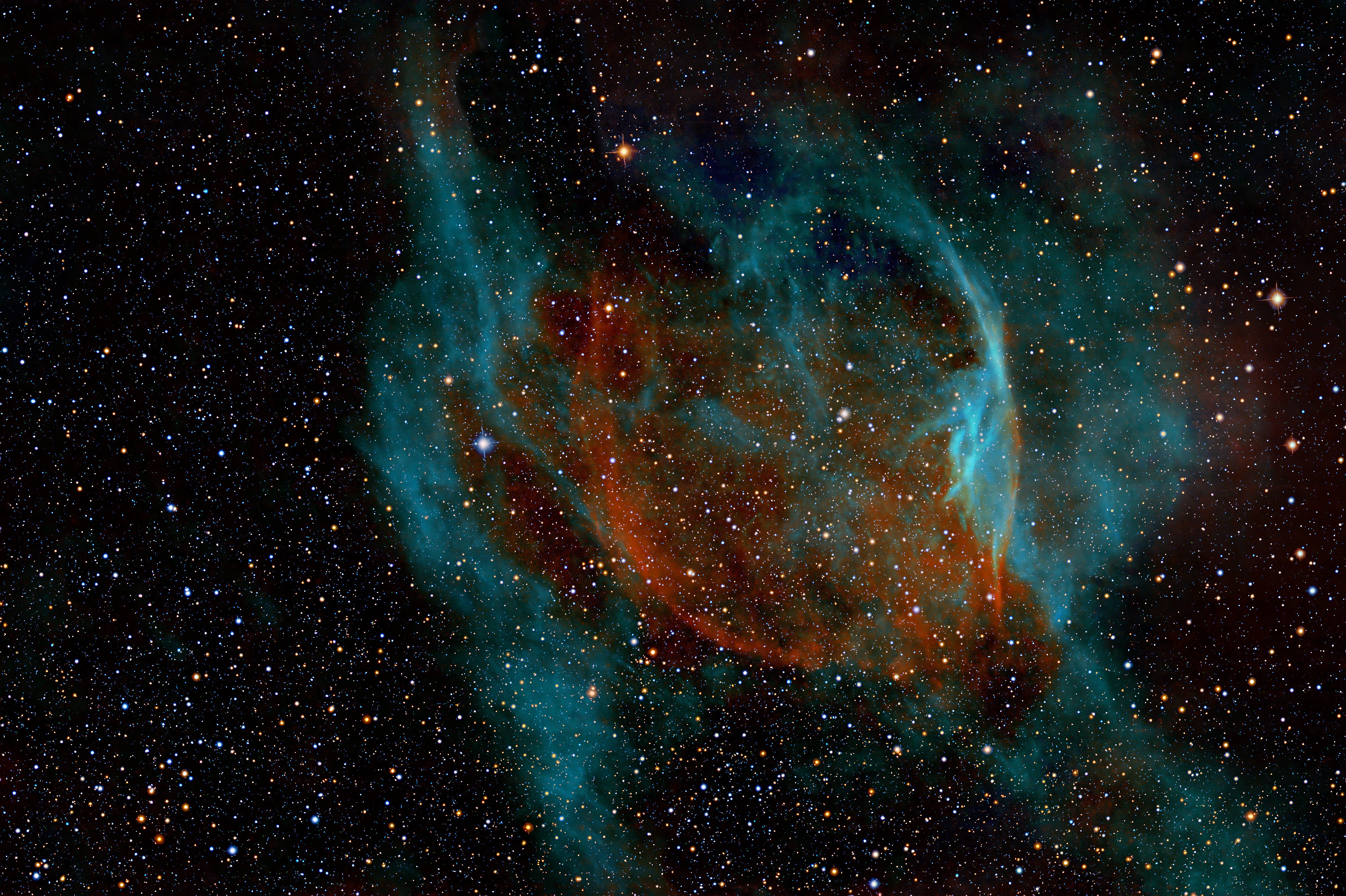
RCW 104
This nebula is located in the southern constellation of Norma
(the Carpenter's Square). It's known as a ring type nebula that
surrounds a Wolf-Rayet star that emits large amounts of radiation
that shapes the surrounding gas clouds. In this image, the blue
represents ionized hydrogen (HII)
|
- Location: El Sauce Observatory, Chile
- Date: January 2025
- Mount: Mathis MI-1000
- Telescope: Planewave CDK24 f/6.6
- Camera: FLI PL9000 @-25c CHI-1 CCD
- Exposure: 18x5 min LRGB 1hr 30min
|
- Location: IC Astronomy Observatory, Spain
- Date: June 2024
- Mount: Paramount MX+
- Telescope: Takahashi FSQ-106ED SPA-1
- Camera: FLI PL16083
- Exposure: 36x5 min SHO 3hrs
|
- Location: El Sauce Observatory, Chile
- Date: November 2024
- Mount: Mathis MI-1000
- Telescope: Planewave CDK24 f/6.6
- Camera: QHY600m @-25c CHI-1
- Exposure: 81x5 min RGB 6hrs 45min
|
- Location: El Sauce Observatory, Chile
- Date: March 2025
- Mount: Mathis MI-1000
- Telescope: Planewave CDK24 f/6.6
- Camera: QHY600m @-25c CHI-1
- Exposure: 54x5 min OHS 4hrs 30min
|
|
IC 405 - The Flaming Star Nebula
Both an emission and reflection nebula, this nebula is only 1500
light-years away in the constellation Auriga (the Charioteer).
Its diameter is about 5 light-years. The central star is thought
to have originated in the area of Orion's Belt and then wandered
off to Auriga
|
The Flaming Star Nebula - Starless
This one is the same image of the Flaming Star Nebula, just without
the stars. Removing the stars sometimes gives the image a completely
different feel
|
RCW 16 - Skull and Crossbones Nebula
RCW 16 is an emission nebula located in the constellation Puppis.
It is also known as the Skull and Crossbones Nebula or the Mandrill
Nebula. It is roughly 15,000 light-years away from us and has a diameter
of about 200 light-years. It is also an active star-making factory
|
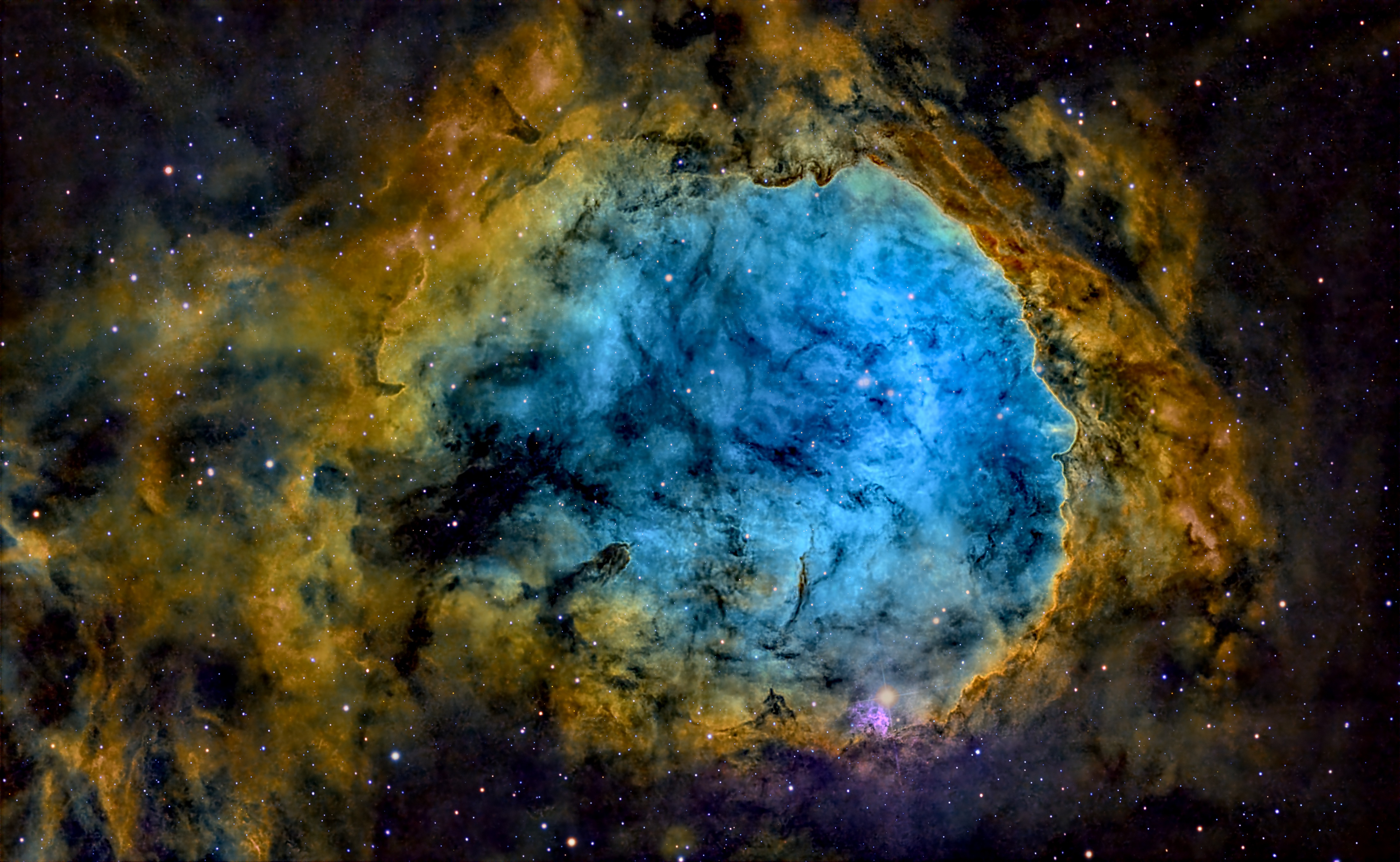
NGC 3324 (IC 2599)
NGC 3324 is actually an open star cluster that is mistakenly associated
with IC 2599 which is an emission nebula. Together they have been nicknamed
The Gabriela Mistral Nebula. The entire area is an active star-making region.
Its age has been estimated at about 12 million years. It is 9,100
light-years away from Earth. Post-processed in the OHS palette
|
- Location: IC Astronomy Observatory, Spain
- Date: July 2023
- Mount: Paramount MX+
- Telescope: Takahashi FSQ-106ED SPA-1
- Camera: FLI PL16083
- Exposure: 31x5 min OHS 2hrs 35min
|
- Location: IC Astronomy Observatory, Spain
- Date: July 2023
- Mount: Paramount MX+
- Telescope: Takahashi FSQ-106ED SPA-1
- Camera: FLI PL16083
- Exposure: 31x5 min OHS 2hrs 35min
|
- Location: Heaven's Mirror Obs, Australia
- Date: March 2025
- Mount: Paramount MX+
- Telescope: FSQ-106ED AUS-2
- Camera: QHY600m @-25c CMOS
- Exposure: 80x5 min OHS 6hrs 40min
|
- Location: El Sauce Observatory, Chile
- Date: April 2025
- Mount: Mathis MI-1000
- Telescope: Planewave CDK24 f/6.6
- Camera: QHY600m @-25c CHI-1
- Exposure: 32x5 min OHS 2hrs 40min
|
|
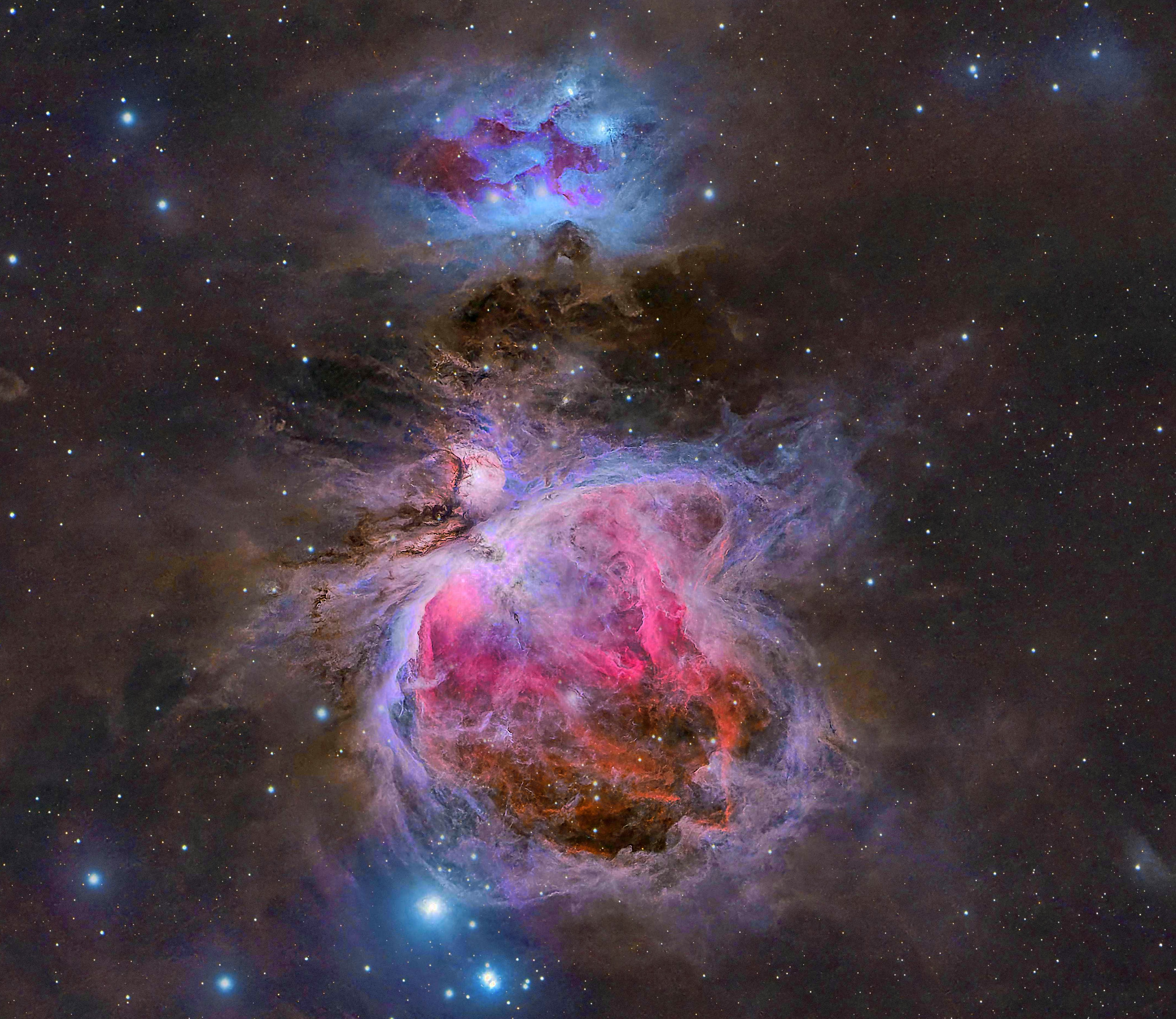
Messier 42 - The Great Orion Nebula
This famous nebula is an emission nebula and an active star-making region
in the constellation Orion (The Hunter). It is so bright that it is usually
mistaken as the middle "star" in Orion's sword. Inside the bright spot in
the center are a number of stars that are referred to as the Trapezium.
With a good medium-sized telescope, at least 4 stars can be seen there.
All of the stars in this nebula are relatively young, very hot stars,
whose radiant energy heats the surrounding gases to the point that
they glow. It is one of the most observed and photographed deep sky
objects. It is 1500 light-years away and 25 light-years across. Just above
the nebula is another nebula by the name of The Running Man Nebula
|
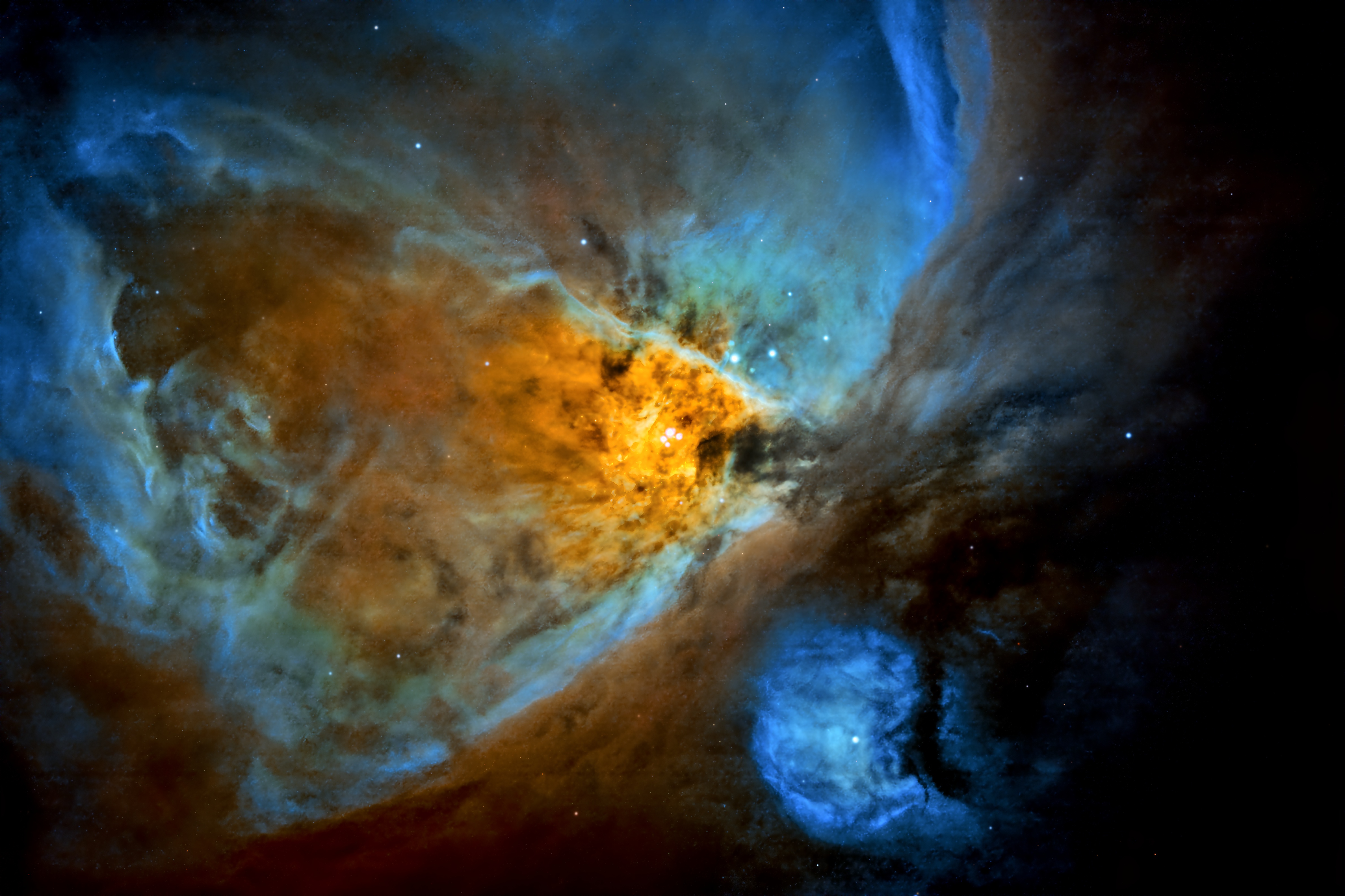
Messier 42 - The Great Orion Nebula
One of the most popular observing and imaging objects in our nighttime
sky is the Orion Nebula. Please see the info in the preceding panel.
Usually, this object is imaged using visible light filters. This version
was done using narrowband filters in the OHS scheme (Ha, OIII and SII)
|
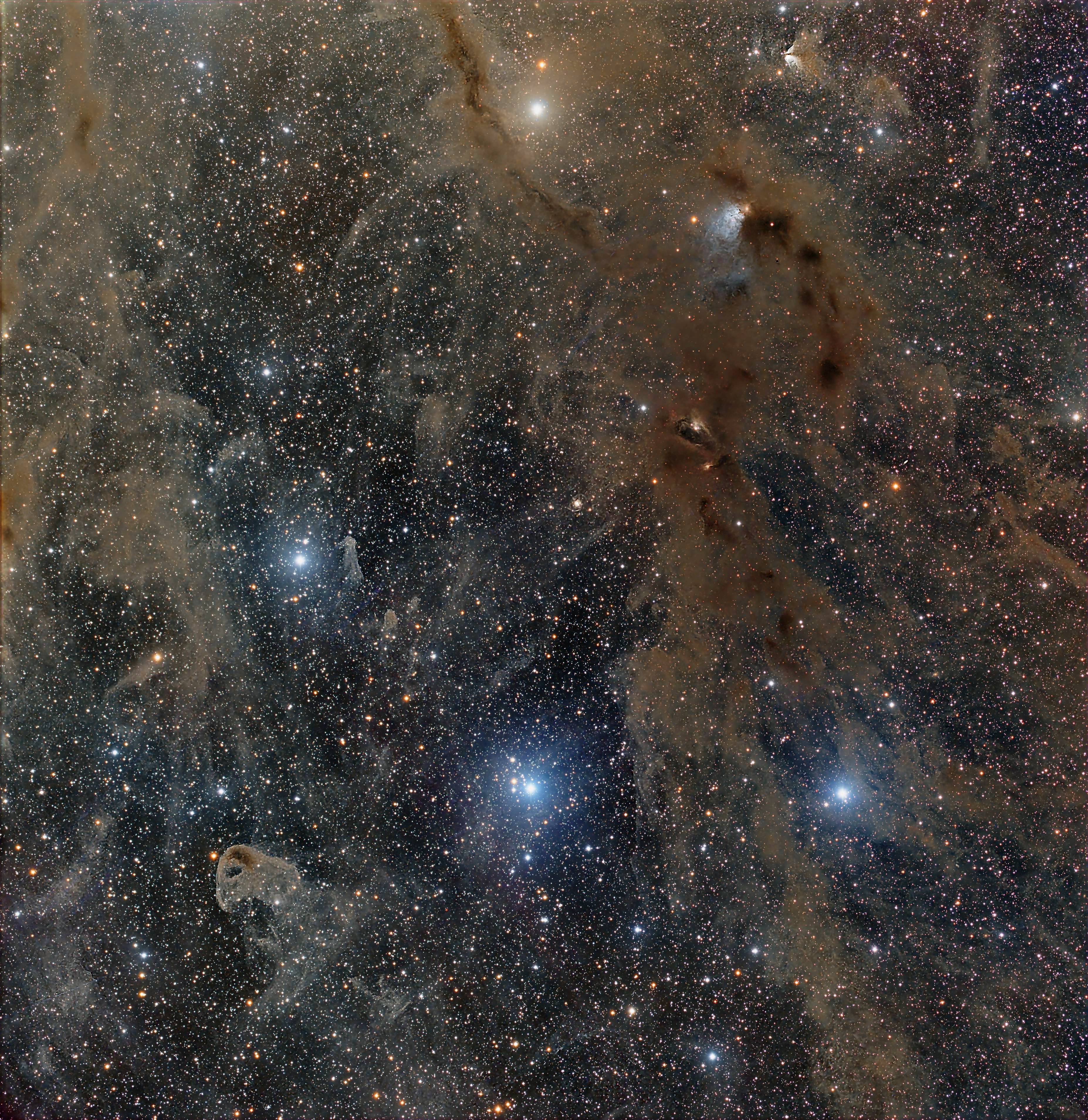
IC-359
I was unable to find any information on this nebula. This data set from
Telescope Live is labeled as IC 359, but the only thing I could find
online is a galaxy designated as IC 359. Anyway, this looks to me to be a
field of dust. There is some nebulosity around the three blue stars
that appear to be not close enough to the dusty areas to make this a
reflection nebula
|
IC 4628 - The Prawn Nebula
This one is an emission nebula located in the constellation Scorpius.
It sits about 6,000 light-years from Earth
|
- Location: Heaven's Mirror Obs, Australia
- Date: May 2024
- Mount: Paramount MX+
- Telescope: FSQ-106ED AUS-2
- Camera: QHY600m @-25c CMOS
- Exposure: 131x5 min LRGB 10hrs 55min
|
- Location: Heaven's Mirror Obs, Australia
- Date: August 2023
- Mount: Paramount MX+
- Telescope: FSQ-106ED AUS-2
- Camera: QHY600m @-25c CMOS
- Exposure: 150x30 sec OHS 1hr 15min
|
- Location: IC Astronomy Observatory, Spain
- Date: December 2021
- Mount: Paramount MX+
- Telescope: Takahashi FSQ-106ED SPA-1
- Camera: FLI PL16083 @-25c CCD
- Exposure: 48x5 min Ha, OIII and SII 8hrs
|
- Location: Heaven's Mirror Obs, Australia
- Date: March 2024
- Mount: Paramount MX+
- Telescope: FSQ-106ED AUS-2
- Camera: QHY600m @-25c CMOS
- Exposure: 63x5 min OHS 5hrs 15min
|
|
IC 2944
This is another instance where I've processed an image twice in two different
palettes. This one was done in SHO. Most of the image is taken up by the
Running Chicken emission nebula, while IC 2944 is actually the open cluster
up near the top of the image. In the lower part of the blue region there
are a number of Bok globules (small black dots), which are active star-forming
areas. It sits about 6,500 light-years away from us
|
IC 2944
Here is the other version of IC 2944 to the left. This one was processed
using the OHS palette
|
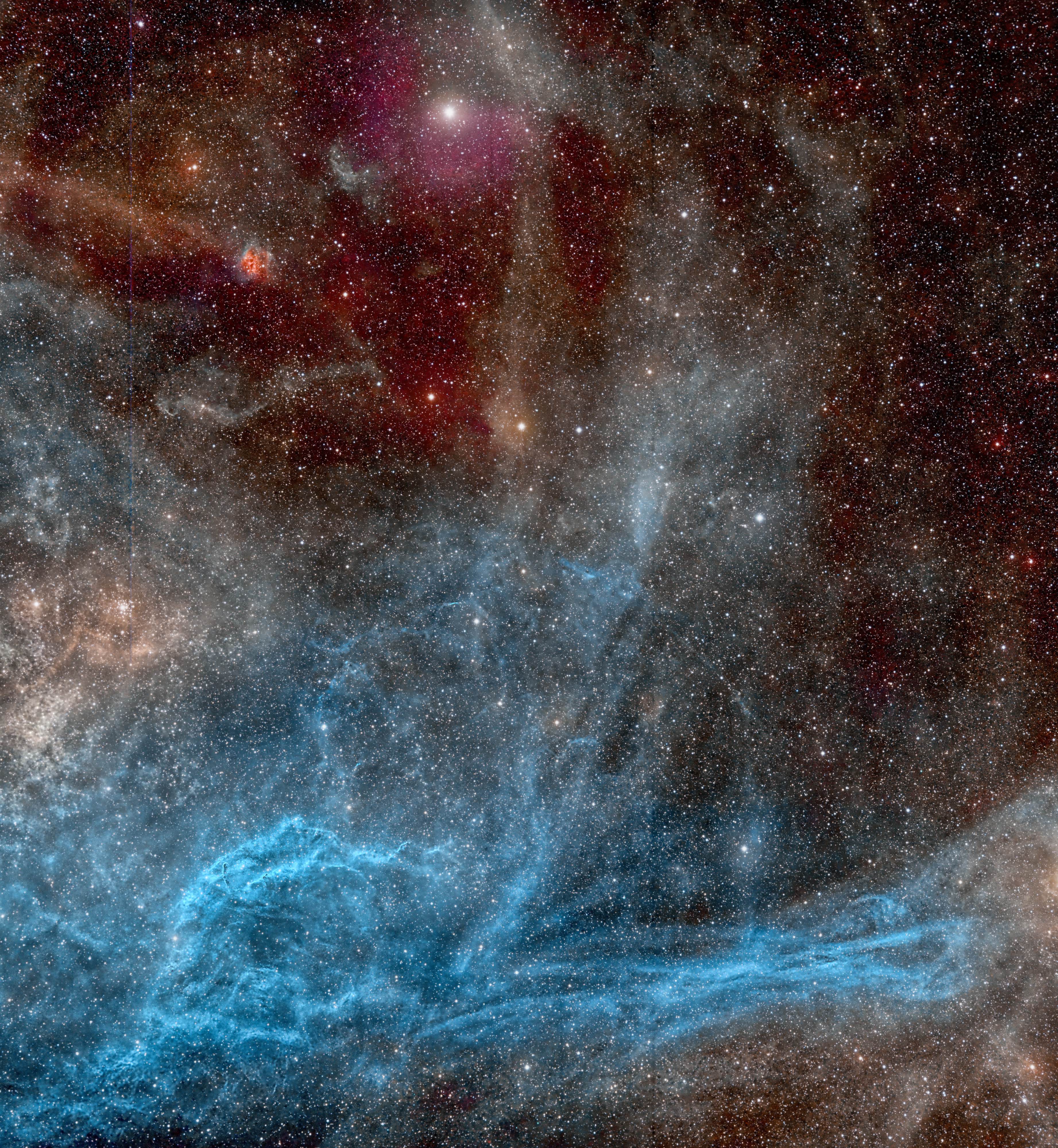
NGC 6888 - The Crescent Nebula (HOO)
This is a wide-field view of the Crescent Nebula and its surroundings.
It is located in the constellation Cygnus (The Swan) and lies about 5000
light-years away from us. This one was post-processed in the HOO palette.
That is, Hydrogen assigned to the Red channel and Oxygen to both the Green
and Blue channels, which makes for some interesting colors. There is a
little red circle down at the bottom-left of the image. That is Sharpless
104 (Sh2-104), which is a small emission nebula
|
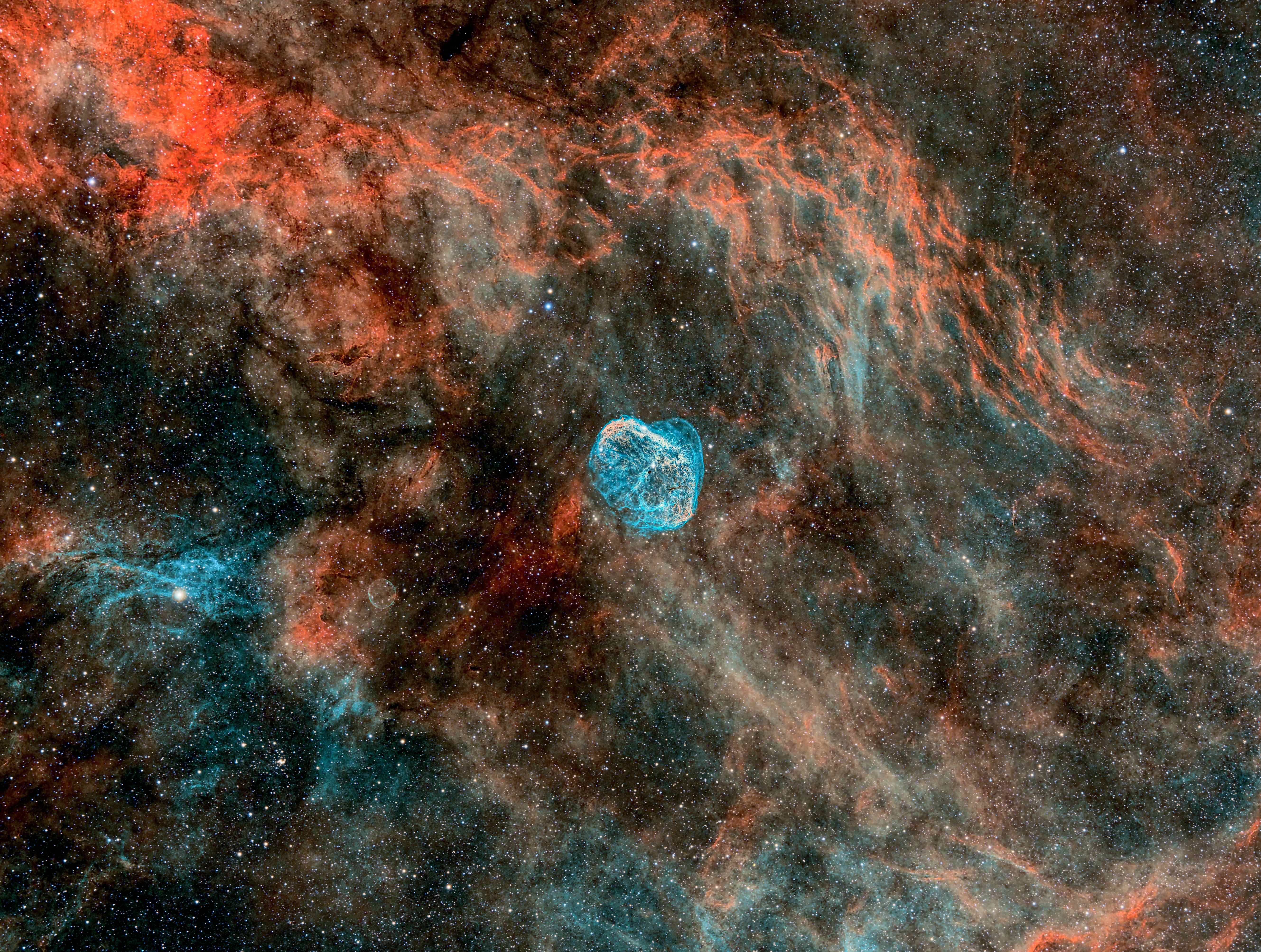
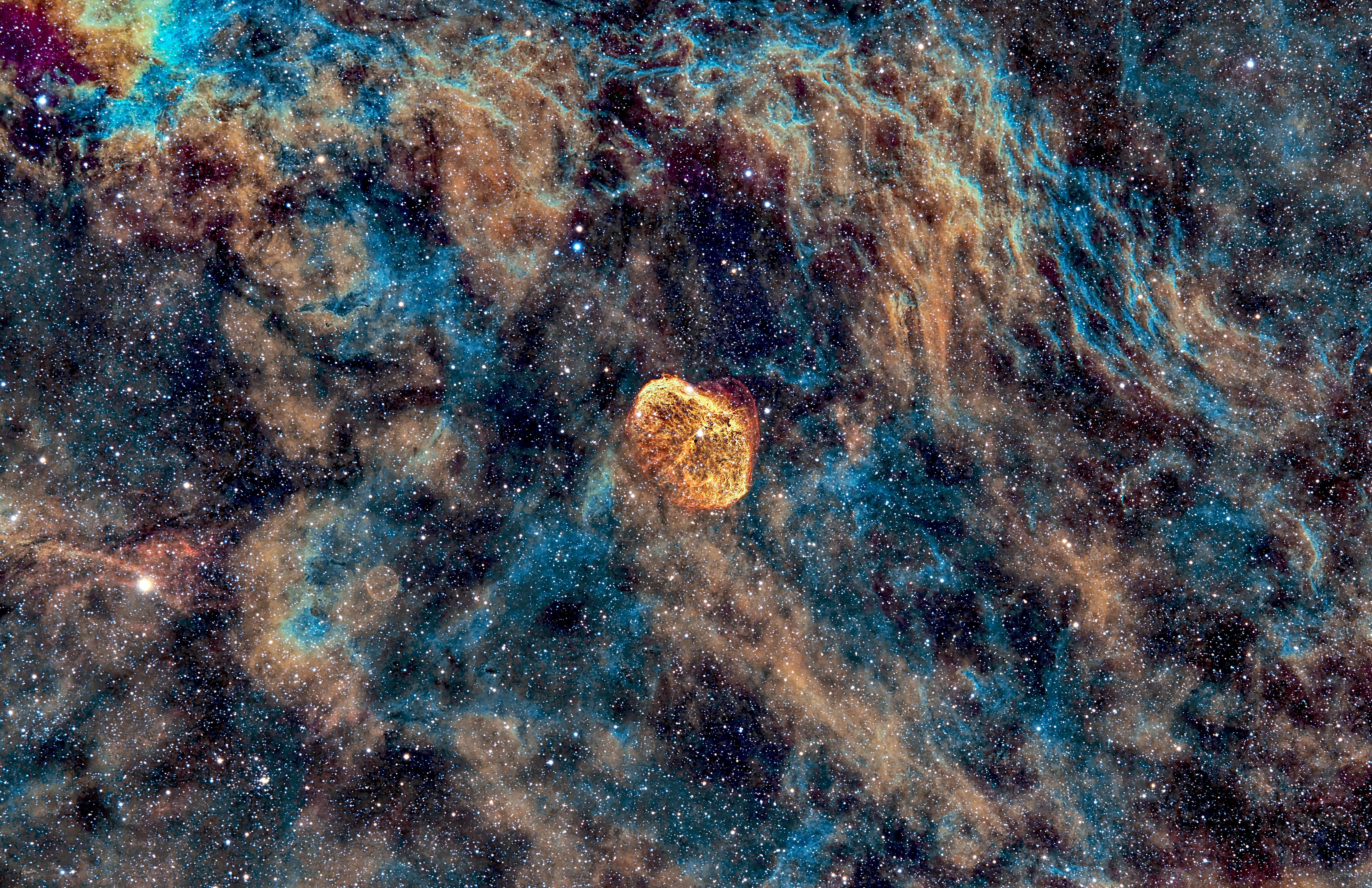
NGC 6888 - The Crescent Nebula (HOO)
This is a cropped version of the preceding image of NGC 6888. If you click on
the image you can see a blown-up version. Just to the Crescent's 8 o'clock
position is another small nebula. This one is called the Soap Bubble Nebula.
It is very faint and difficult to see except with a moderately large telescope
and long exposure times. It was discovered in 2007 by amateur astronomer Dave
Jurasevich using an Astro-Physics 100 mm refractor telescope. This little
nebula is a planetary nebula
|
- Location: Heaven's Mirror Obs, Australia
- Date: April 2025
- Mount: Paramount MX+
- Telescope: FSQ-106ED AUS-2
- Camera: QHY600m @-25c CMOS
- Exposure: 91x5 min SHO 7hrs 35min
|
- Location: Heaven's Mirror Obs, Australia
- Date: April 2025
- Mount: Paramount MX+
- Telescope: FSQ-106ED AUS-2
- Camera: QHY600m @-25c CMOS
- Exposure: 91x5 min OHS 7hrs 35min
|
- Location: IC Astronomy Observatory, Spain
- Date: May 2023
- Mount: Paramount MX+
- Telescope: Takahashi FSQ-106ED SPA-1
- Camera: FLI PL16083
- Exposure: 61x5 min HOO 5hrs 5min
|
- Location: IC Astronomy Observatory, Spain
- Date: May 2023
- Mount: Paramount MX+
- Telescope: Takahashi FSQ-106ED SPA-1
- Camera: FLI PL16083
- Exposure: 61x5 min HOO 5hrs 5min
|
|
NGC 6888 - The Crescent Nebula (OHS)
Here we are continuing this series on the Crescent Nebula. With this one
and the next, I've changed the color palette to OHS: red = oxygen,
green = hydrogen and blue = sulfur. You can get some pretty interesting
and wacky looking images, but with a palette change you can always see
a completely new set of details in the image
|
NGC 6888 - The Crescent Nebula (OHS)
A zoomed-in view of the image to the left.
|
NGC 3324 The Gabriela Mistral Nebula
At a distance of 9100 light-years from Earth, in the southern constellation
of Carina (the keel of the ship Argo Navis from the story of Jason and
the Argonauts), is the Gabriela Mistral Nebula. It was named after the
Chilean poet. Carina also holds the second brightest star in our nighttime
sky, Canopus. The nebula is about 12 million years old
|
RCW 49 - The Whirling Dervish Nebula
This nebula is located in the constellation Carina and consists of a large
cloud of hydrogen gas. It lies about 13,700 light-years away and is between
300-400 light-years across. Also known as the Whirling Dervish Nebula, it
contains about 2200 new stars, making it an active star-making factory
|
- Location: IC Astronomy Observatory, Spain
- Date: May 2023
- Mount: Paramount MX+
- Telescope: Takahashi FSQ-106ED SPA-1
- Camera: FLI PL16083
- Exposure: 61x5 min OHS 5hrs 5min
|
- Location: IC Astronomy Observatory, Spain
- Date: May 2023
- Mount: Paramount MX+
- Telescope: Takahashi FSQ-106ED SPA-1
- Camera: FLI PL16083
- Exposure: 61x5 min OHS 5hrs 5min
|
- Location: El Sauce Observatory, Chile
- Date: April 2025
- Mount: Mathis MI-1000
- Telescope: Planewave CDK24 f/6.6
- Camera: QHY600m @-25c CHI-1
- Exposure: 47x5 min HSO 3hrs 55min
|
- Location: El Sauce Observatory, Chile
- Date: April 2025
- Mount: Mathis MI-1000
- Telescope: Planewave CDK24 f/6.6
- Camera: QHY600m @-25c CHI-1
- Exposure: 81x5 min OHS 6hrs 45min
|
|
RCW 100 - The Fine Ring Nebula
This unusual planetary nebula is in the very small southern constellation
of Norma (the Latin word for a carpenter's square, ruler, or level). It's
about 2500 light-years away from us. What makes it unusual is that it was
formed from a star that was part of a binary system. Most planetary nebulae
are either spherical, elliptical or bi-polar (displaying two symmetric lobes).
This binary pair is almost face-on to us and have an orbital time of 2.9 days
|
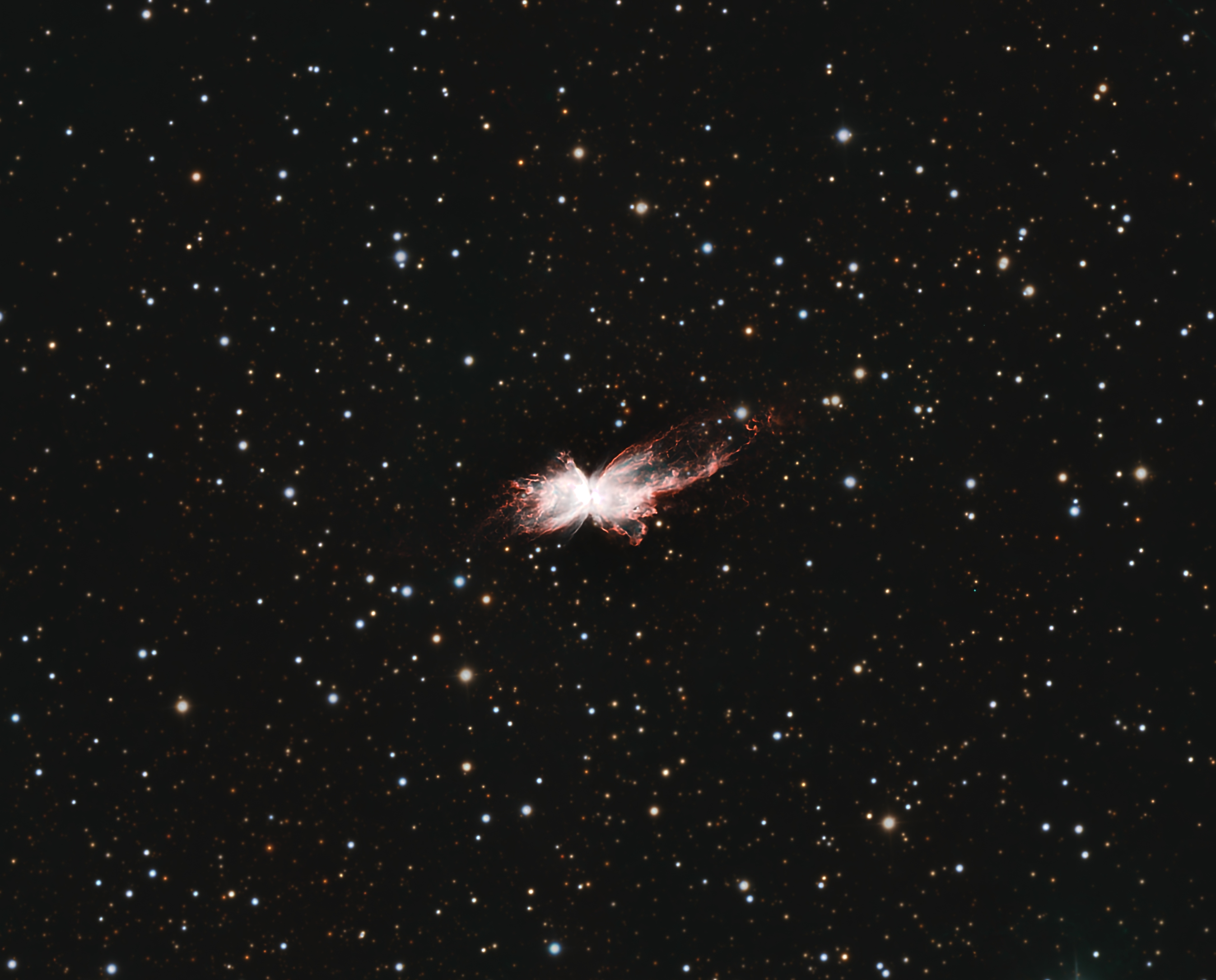
NGC 6302 - The Bug Nebula
This is a bipolar planetary nebula located in the constellation Scorpius.
Scientists are still unsure as to why a star would end its life in this
fashion as opposed to the more common spherical planetary nebula. The
surface of this white dwarf is around 250,000 degrees Celsius, which makes
it one of the hottest bodies known to us. This particular image is a new
rendering of the ones on the Nebula 5 page
|
RCW 19 (GUM 10)
This is an emission nebula in the southern constellation of Puppis. It is
part of an enormous molecular cloud complex and sits about 10,760 light-years
away. There is a lot of active star formation in its interior
|
RCW 19 (GUM 10)
This is a different view of the object to the left. That one was processed
with the HSO palette. This one is done with the OHS palette
|
- Location: El Sauce Observatory, Chile
- Date: April 2025
- Mount: Mathis MI-1000
- Telescope: Planewave CDK24 f/6.6
- Camera: QHY600m @-25c CHI-1
- Exposure: 90x5 min OHS 7hrs 30min
|
- Location: El Sauce Observatory, Chile
- Date: August 2024
- Mount: Mathis MI-1000
- Telescope: Planewave CDK24 f/6.6
- Camera: QHY600m @-25c CHI-1
- Exposure: 85x5 min OHS 7hrs 5min
|
- Location: Heaven's Mirror Obs, Australia
- Date: May 2025
- Mount: Paramount MX+
- Telescope: FSQ-106ED AUS-2
- Camera: QHY600m @-25c CMOS
- Exposure: 90x5 min HSO 7hrs 30min
|
- Location: Heaven's Mirror Obs, Australia
- Date: May 2025
- Mount: Paramount MX+
- Telescope: FSQ-106ED AUS-2
- Camera: QHY600m @-25c CMOS
- Exposure: 90x5 min OHS 7hrs 30min
|
|
NGC 3324
Buried in the heart of the Gabriela Mistral Nebula is the open cluster
NGC 3324. Just down and left of center is a round, orange area. The cluster
(difficult to see) is inside this bright area. The surrounding nebula is
an emission nebula. Its age is estimated to be around 12 million years
|
NGC 2264
This nebula is in the constellation Monoceros. It contains the Cone Nebula and the
Christmas Tree Nebula. Also within this huge reflection nebula are the Fox Fur
and Snowflake Nebulae. I did a real-time processing of this object as a
presentation for our local astronomy club in April 2024. I processed it at
least once a day for a month in order to recreate the first version. I never
could duplicate that first effort, but this one turned out just as nice. I've
done this image a number of times all with different telescopes and cameras
|
LDN 1667
This dark nebula is part of the greater Orion Molecular Cloud Complex. It
sits about 600 light-years away from us
|
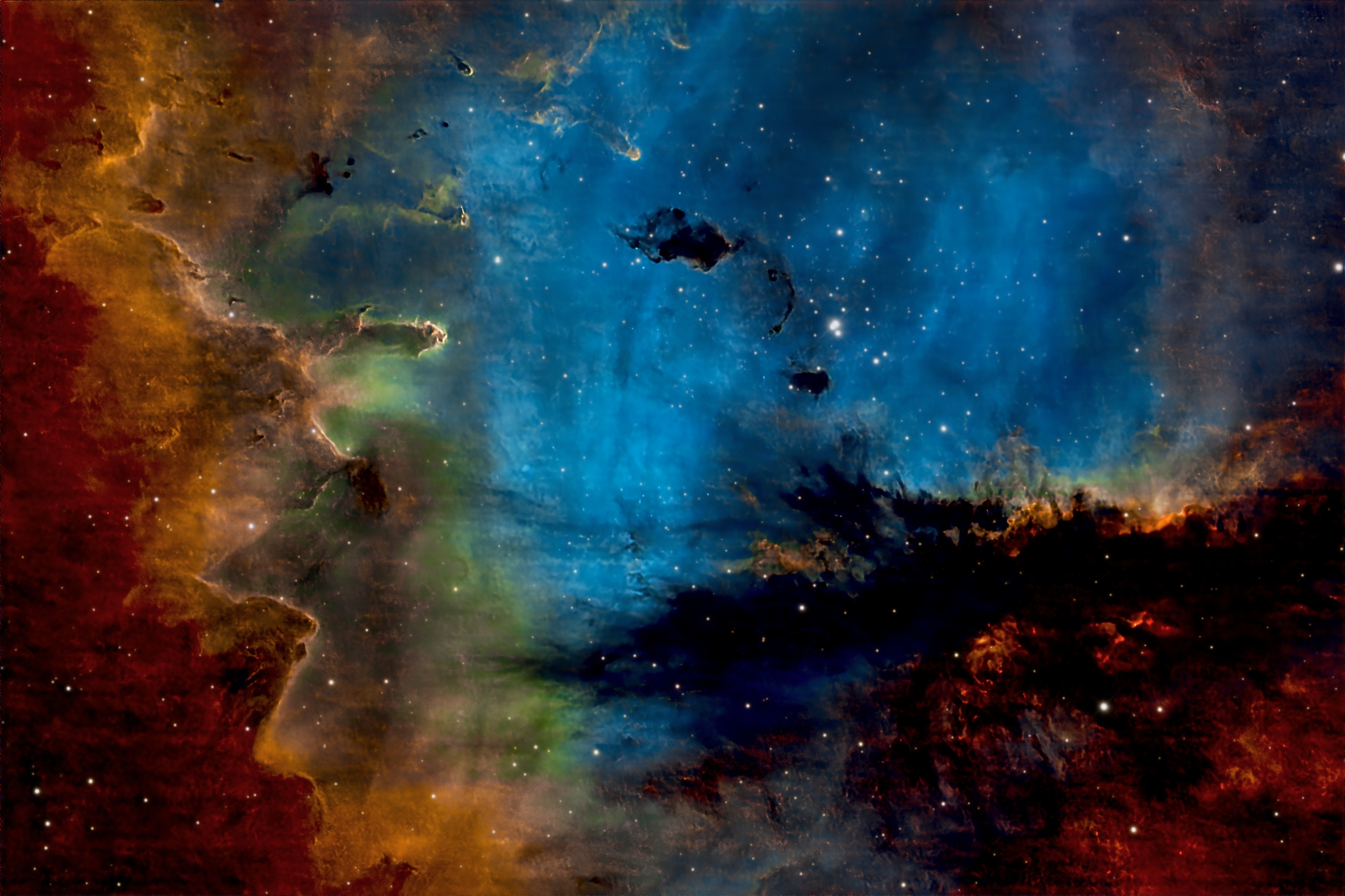
NGC 281 - The
Pac-Man Nebula
A bright emission nebula resides in the northern part of the constellation
Cassiopeia. It is also known as the Pac-Man Nebula and sits about 9500
light-years away
|
- Location: El Sauce Observatory, Chile
- Date: April 2025
- Mount: Mathis MI-1000
- Telescope: Planewave CDK24 f/6.6
- Camera: QHY600m @-25c CHI-1
- Exposure: 90x5 min OHS 7hrs 30min
|
- Location: El Sauce Observatory, Chile
- Date: August 2024
- Mount: Mathis MI-1000
- Telescope: Planewave CDK24 f/6.6
- Camera: QHY600m @-25c CHI-1
- Exposure: 85x5 min OHS 7hrs 5min
|
- Location: Heaven's Mirror Obs, Australia
- Date: May 2025
- Mount: Paramount MX+
- Telescope: FSQ-106ED AUS-2
- Camera: QHY600m @-25c CMOS
- Exposure: 90x5 min HSO 7hrs 30min
|
- Location: Heaven's Mirror Obs, Australia
- Date: May 2025
- Mount: Paramount MX+
- Telescope: FSQ-106ED AUS-2
- Camera: QHY600m @-25c CMOS
- Exposure: 90x5 min OHS 7hrs 30min
|
|
CTB 1 (Abell 85) - The Medulla Nebula
About 10,000 years ago a massive star exploded in the constellation Cassiopeia.
What remained afterward was this supernova remnant and a high-velocity pulsar
at its center. The outer, expanding shell is a rich radio and X-ray source.
It sits just shy of 10,000 light-years away from us and has a diameter of about
98 light-years. Its very low surface brightness makes it a difficult object to
image. It is also known as the Garlic Nebula. If you look closely at the shell's
4 o'clock position, there is an interesting "small" cloud of dark nebulosity
|
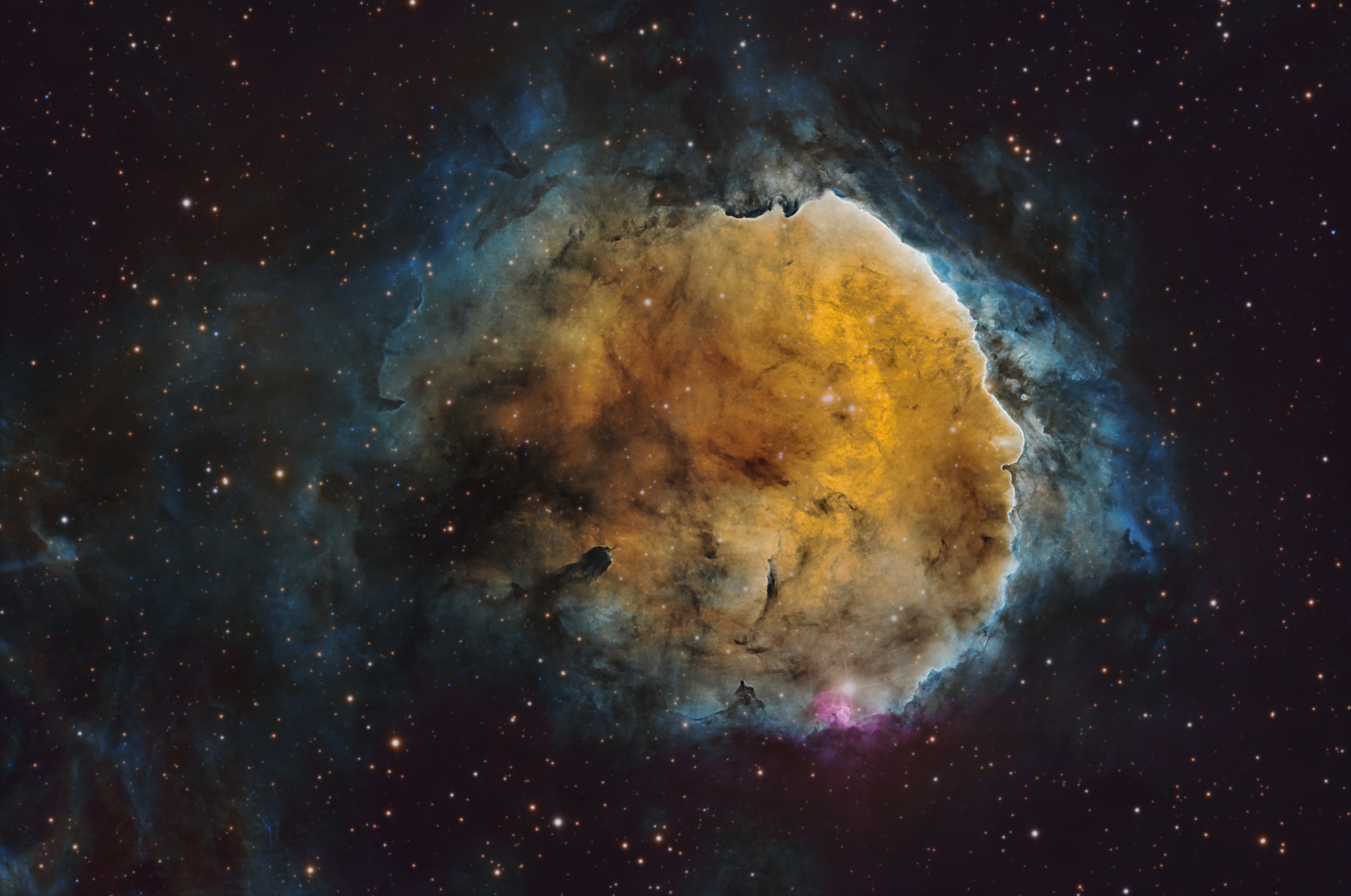
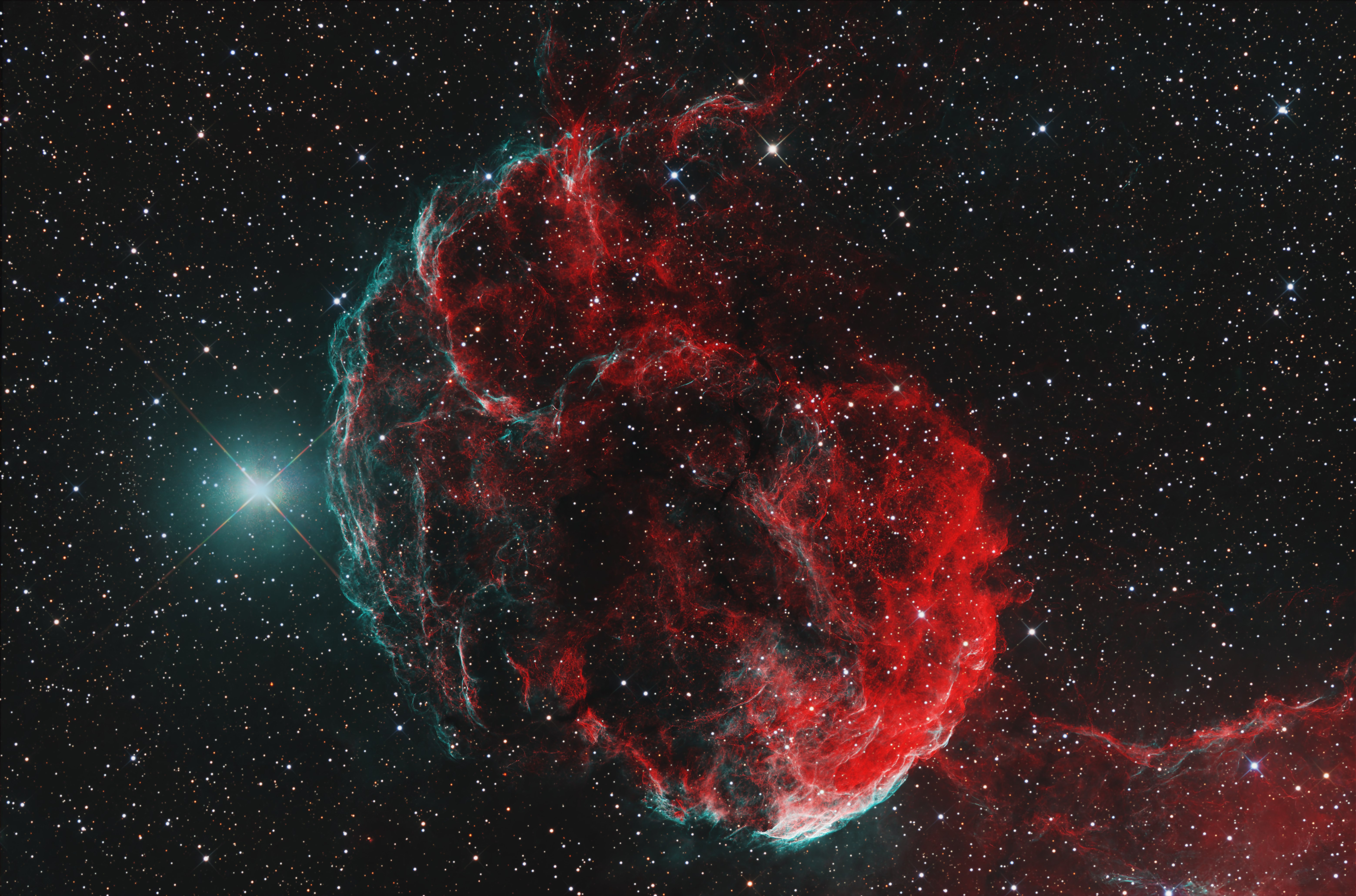
IC 443 - The Jellyfish Nebula
IC 443, also known as the Jellyfish Nebula and Sh3-248 is a galactic supernova
remnant (SNR) in the constellation Gemini. It is located near the star Eta
Geminorum. Its distance is roughly 5,000 light-years from Earth. IC 443 may be
the remains of a supernova that occurred 3,000-30,000 years ago. The same
supernova event likely created its neutron star, the collapsed remnant of the
stellar core. IC 443 is one of the best studied cases of supernova remnants
interacting with its surrounding molecular clouds. This image has almost 50
hours of exposure and was taken with a telescope with a wider field of view
than my original image on the Nebula-2 page. It was taken with both Hydrogen
and Oxygen filters
|
placeholder |
placeholder |
- Location: Italy
- Date: July 2025
- Mount: Unknown
- Telescope: ASA N10 T-23
- Camera: Player One Mono 571
- Exposure: 511x10 min HOO+Ha 17hrs 25min
|
- Location: Italy
- Date: December 2025
- Mount: Unknown
- Telescope: ASA N10 T-23
- Camera: Player One Mono 571
- Exposure: 258x10 min HOO+Ha 42hrs 40min
|
|
|